
Dinosaur
Tyrannosaurus rex
A giant head, balanced by a powerful tail
Meet the North American predator whose enormous skull and tiny, muscular arms made a remarkably specialized body.
Three stages. One companion.
Game artwork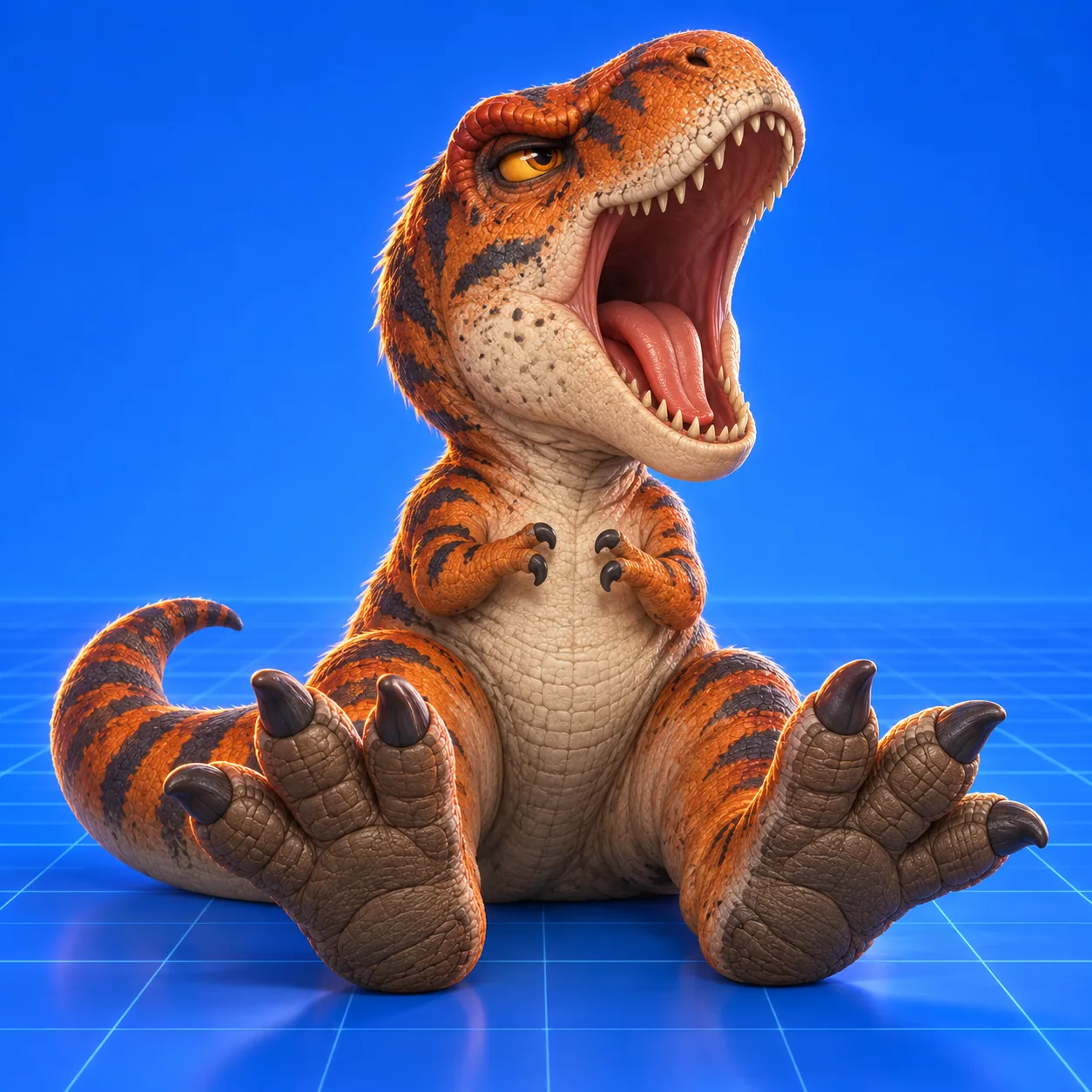
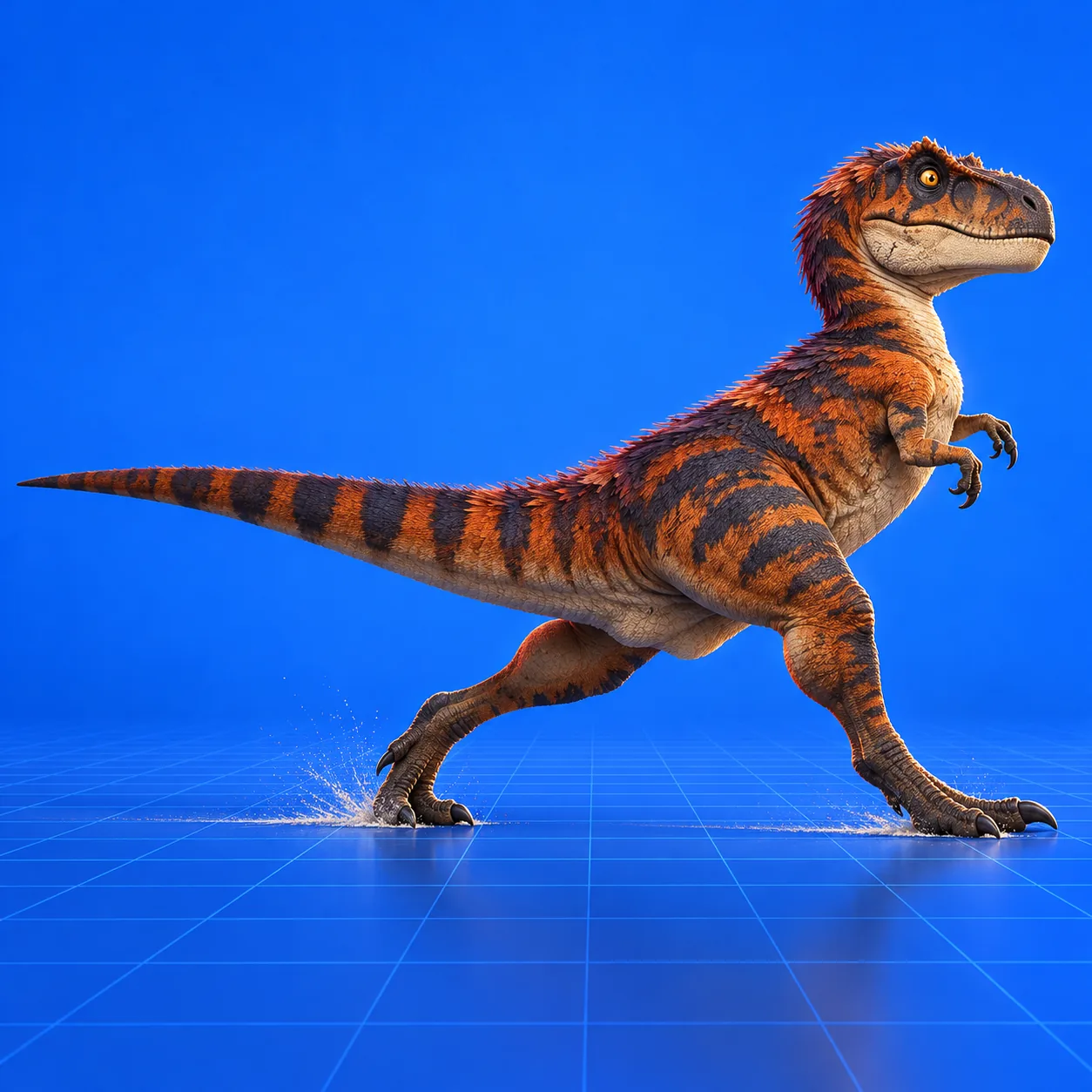
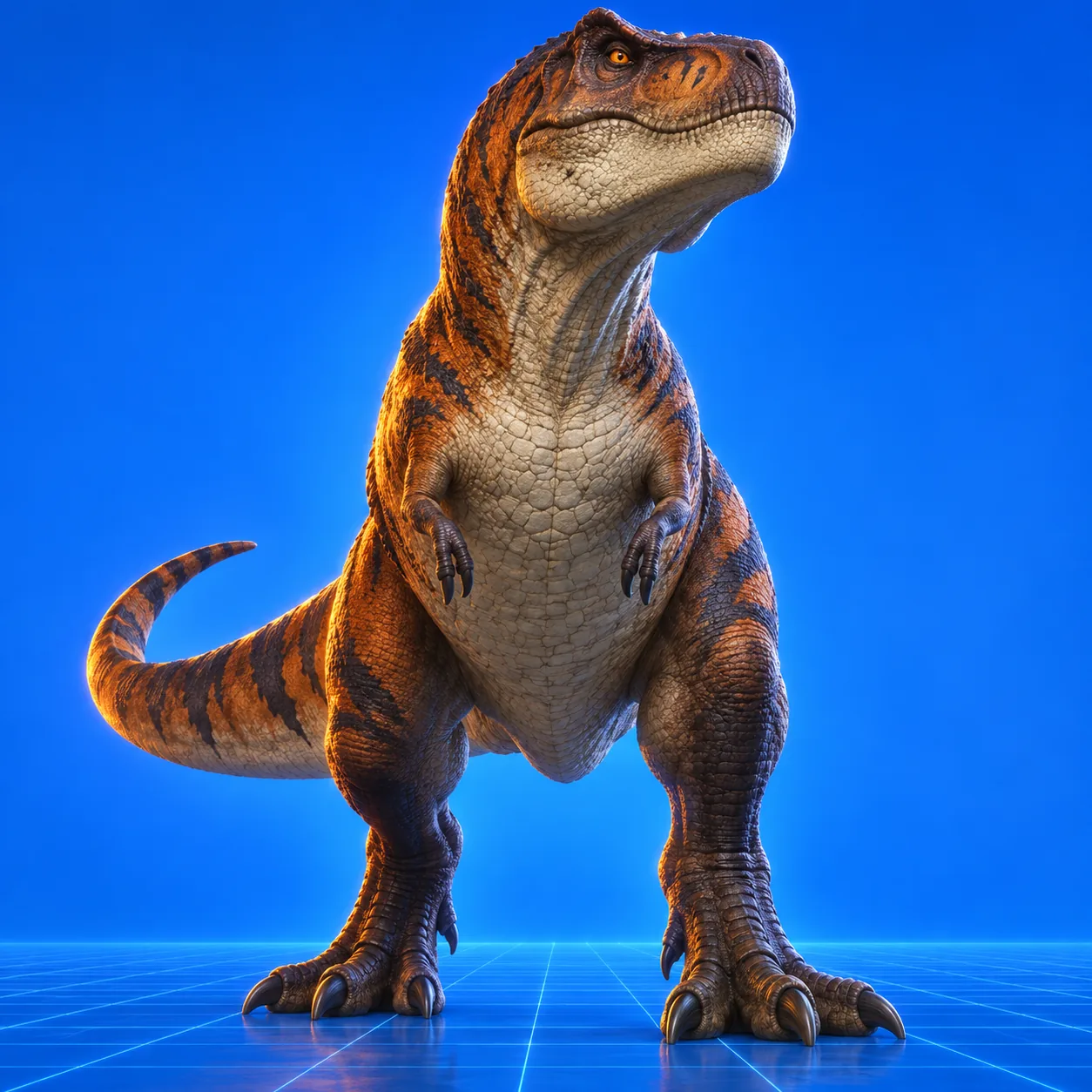
AI-generated, stylized game illustrations. These designs and growth stages are imaginative, not scientific reconstructions.
Tyrannosaurus rex at a glance
- Diet
- Meat eater
- Interpreted as a consumer of other animals. Hunting and scavenging are compatible ways to obtain food.
- When it lived
- Late Cretaceous
- Geological period represented by its fossil record. Dates and assignments can be refined through further study.
- Group
- Tyrannosauridae
- Tyrannosaurids
- Fossil locations
- North America
- Places where fossils have been found
Beyond the game
The real Tyrannosaurus rex
Tyrannosaurus rex lived in North America near the end of the Cretaceous. Its enormous head was balanced by a long, heavy tail as it walked on two legs. Looking beyond the teeth reveals an animal whose posture depended on the whole skeleton.
The arms were short, but muscular, and each hand ended in two clawed fingers. Small limbs were still part of its specialized anatomy. Tyrannosaurus belonged to the tyrannosaurids, a particular family of theropods; a large meat-eating dinosaur from another family was not automatically a tyrannosaur.
Its bones help researchers reconstruct its body, while behavior requires more interpretation. Hunting and scavenging are compatible ways for a carnivore to obtain food, rather than mutually exclusive identities.
A family of theropods with robust skulls. Many other large carnivorous dinosaurs belonged to different families.
Get to know Tyrannosaurus rex
Questions, answered.
Did T. rex hunt or scavenge?
It could do both. Powerful jaws and teeth suited it to taking animal prey, while a strong sense of smell could also help it find carcasses. Hunting and scavenging are not mutually exclusive ways of feeding. [1]
What were its tiny arms for?
The arms were muscular despite their size. Suggested uses include helping the animal rise, handling food or gripping during mating, but fossils do not establish one definitive function. [1]
Did T. rex have feathers?
No feather covering has been demonstrated directly for T. rex. Known skin impressions preserve scales. Feathered relatives make the question interesting, but they do not prove that an adult T. rex had the same covering. [1]
Research sources · reviewed
Fossil discoveries
Selected fossil records · present-day map
Map references
Map: Natural Earth, public domain. Fossil records: linked collections and publications.A note on the science
Fossils reveal anatomy more directly than individual behavior. A pictured hunt is an interpretation, not a recorded encounter.
Sources & text credits
Explore the references behind this profile.
- Tyrannosaurus
Wikipedia contributors · Spanish source
Adapted and translated from Tyrannosaurus by Wikipedia contributors. See the linked revision for the source text and contributor history.
- Tyrannosaurus
Wikipedia contributors · English source
Adapted and translated from Tyrannosaurus by Wikipedia contributors. See the linked revision for the source text and contributor history.
- Tyrannosauridae
Wikipedia contributors · English source
Group information adapted from Wikipedia contributors.
Educational text adapted in English from the existing Wikipedia-backed Dinosgacha catalogue and the linked Wikipedia articles by Wikipedia contributors.
Translated, shortened and edited for this encyclopedia; uncertain interpretations are identified. Selected museum and research references supplement verification.
The adapted educational text is available under CC BY-SA 4.0. This text license does not apply to the game illustrations.