
Dinosaur
Carnotaurus
Two horns above the eyes
A well-preserved Argentine skeleton revealed a distinctive horned predator from a different family than Tyrannosaurus.
Three stages. One companion.
Game artwork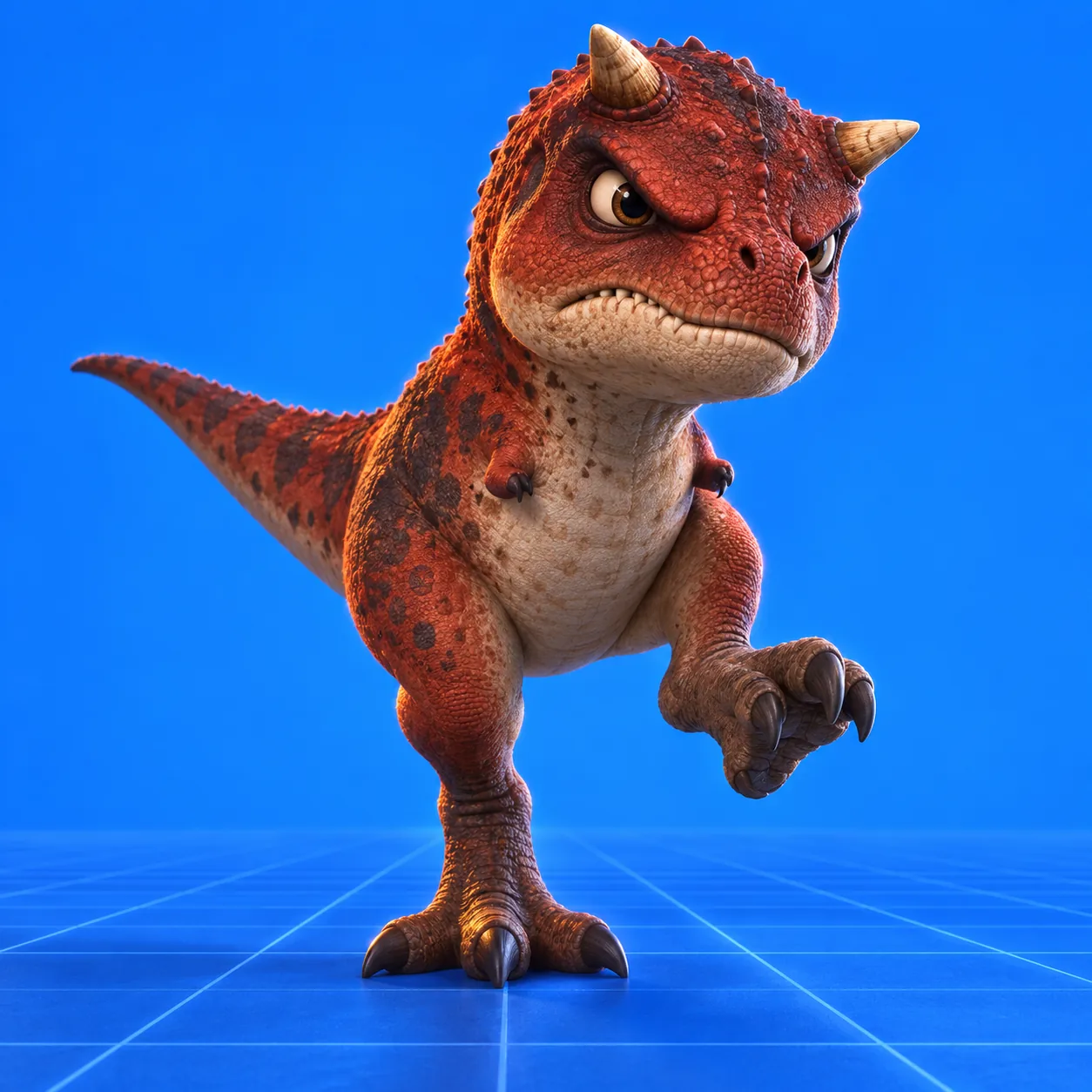
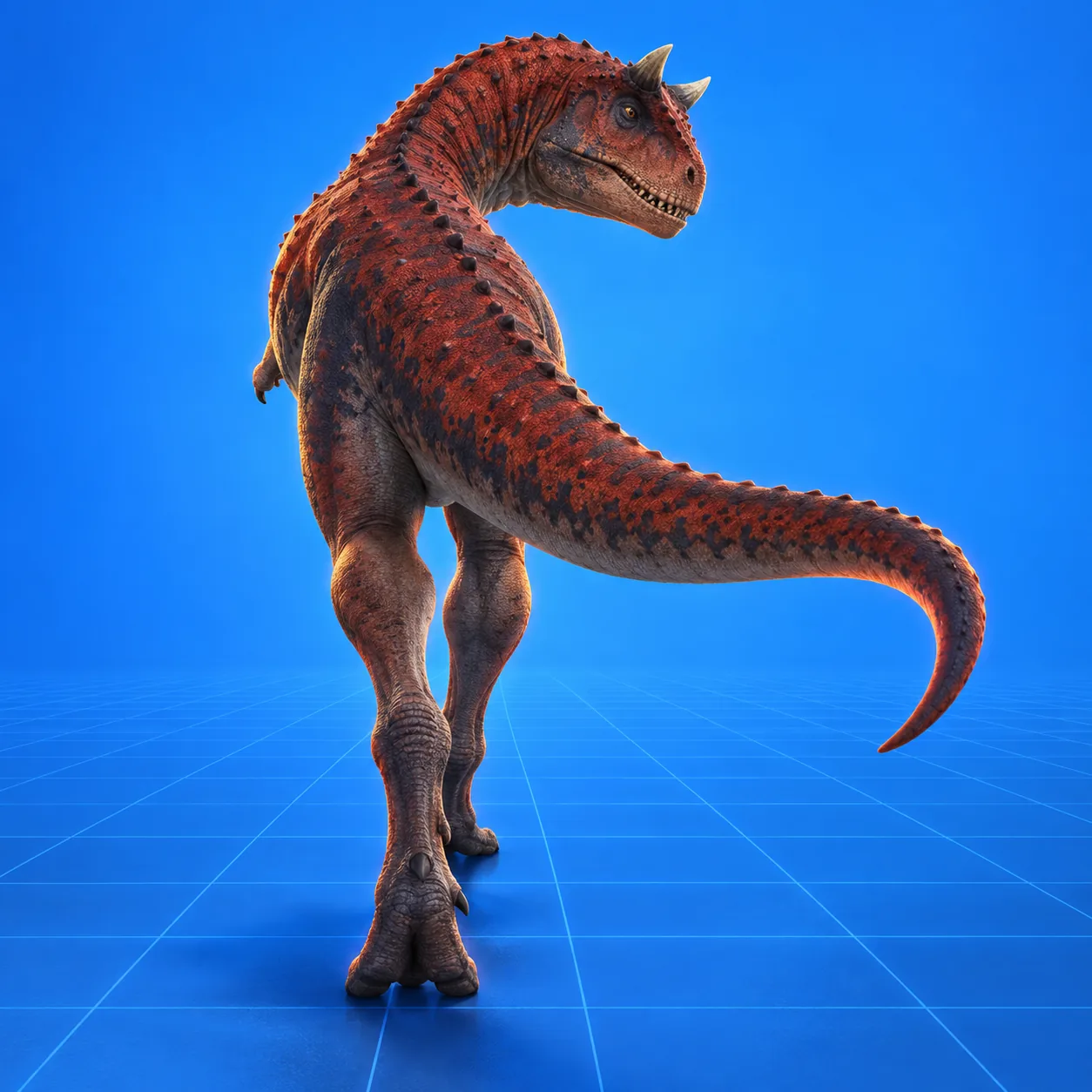
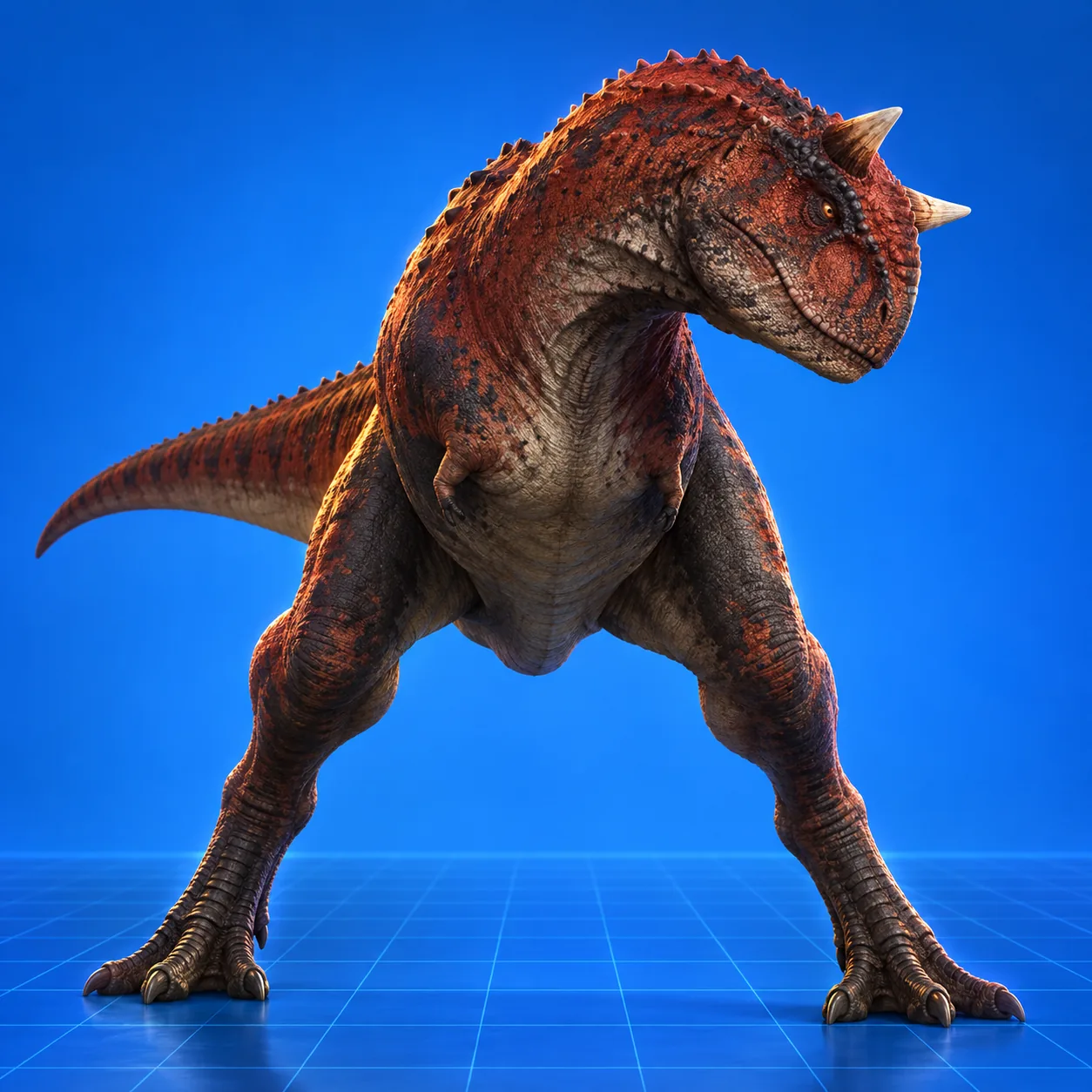
AI-generated, stylized game illustrations. These designs and growth stages are imaginative, not scientific reconstructions.
Carnotaurus at a glance
- Diet
- Meat eater
- Interpreted as a consumer of other animals. Hunting and scavenging are compatible ways to obtain food.
- When it lived
- Late Cretaceous
- Geological period represented by its fossil record. Dates and assignments can be refined through further study.
- Group
- Abelisauridae
- Abelisaurids
- Fossil locations
- Chubut, Argentina
- Places where fossils have been found
Beyond the game
The real Carnotaurus
Carnotaurus carried two striking horns above its eyes. It was a meat-eating dinosaur that walked on two legs and is usually reconstructed at around eight meters long. Its head makes it easy to distinguish from other large theropods at a glance.
A remarkably well-preserved skeleton was discovered in Chubut, Argentina, in 1984. Having many bones from the same individual is particularly useful: researchers can study how the parts fitted together without combining animals of different sizes into a single body.
Carnotaurus belonged to the abelisaurids, a family especially well represented on the ancient southern continents. Its relationship to these dinosaurs is studied through skeletal details. Sharing a diet with Tyrannosaurus did not mean belonging to the same family.
A family of carnivorous theropods particularly well known from the ancient southern continents.
Get to know Carnotaurus
Questions, answered.
What makes Carnotaurus different from other large predators?
A pair of horns above the eyes, a short snout and exceptionally small arms give Carnotaurus its distinctive outline. The name refers to a meat-eating bull; it does not mean this dinosaur was related to cattle. [1]
Do we know what Carnotaurus skin looked like?
Unusually, parts of its skin survived as impressions. A detailed study found larger raised scales scattered among smaller scales. These fossils reveal surface texture, but they do not establish the animal’s original colours. [2]
Where and when did Carnotaurus live?
Carnotaurus lived in what is now Argentina during the Late Cretaceous. Its fossil skeleton was discovered in Chubut, in Patagonia, with preserved patches of skin beside the bones. [1] [3]
Fossil discoveries
Selected fossil records · present-day map
Map references
Map: Natural Earth, public domain. Fossil records: linked collections and publications.A note on the science
Horns are preserved anatomical structures; their exact role in the behavior of Carnotaurus is less certain.
Sources & text credits
Explore the references behind this profile.
- Carnotaurus sastrei
Wikipedia contributors · Spanish source
Adapted and translated from Carnotaurus sastrei by Wikipedia contributors. See the linked revision for the source text and contributor history.
- Carnotaurus
Wikipedia contributors · English source
Adapted and translated from Carnotaurus by Wikipedia contributors. See the linked revision for the source text and contributor history.
- Abelisauridae
Wikipedia contributors · English source
Group information adapted from Wikipedia contributors.
Educational text adapted in English from the existing Wikipedia-backed Dinosgacha catalogue and the linked Wikipedia articles by Wikipedia contributors.
Translated, shortened and edited for this encyclopedia; uncertain interpretations are identified. Selected museum and research references supplement verification.
The adapted educational text is available under CC BY-SA 4.0. This text license does not apply to the game illustrations.