Dinosaur
Giganotosaurus
A huge predator, known from an incomplete skeleton
This Argentine theropod ranks among the largest meat-eating dinosaurs, while its exact dimensions remain estimates.
Three stages. One companion.
Game artwork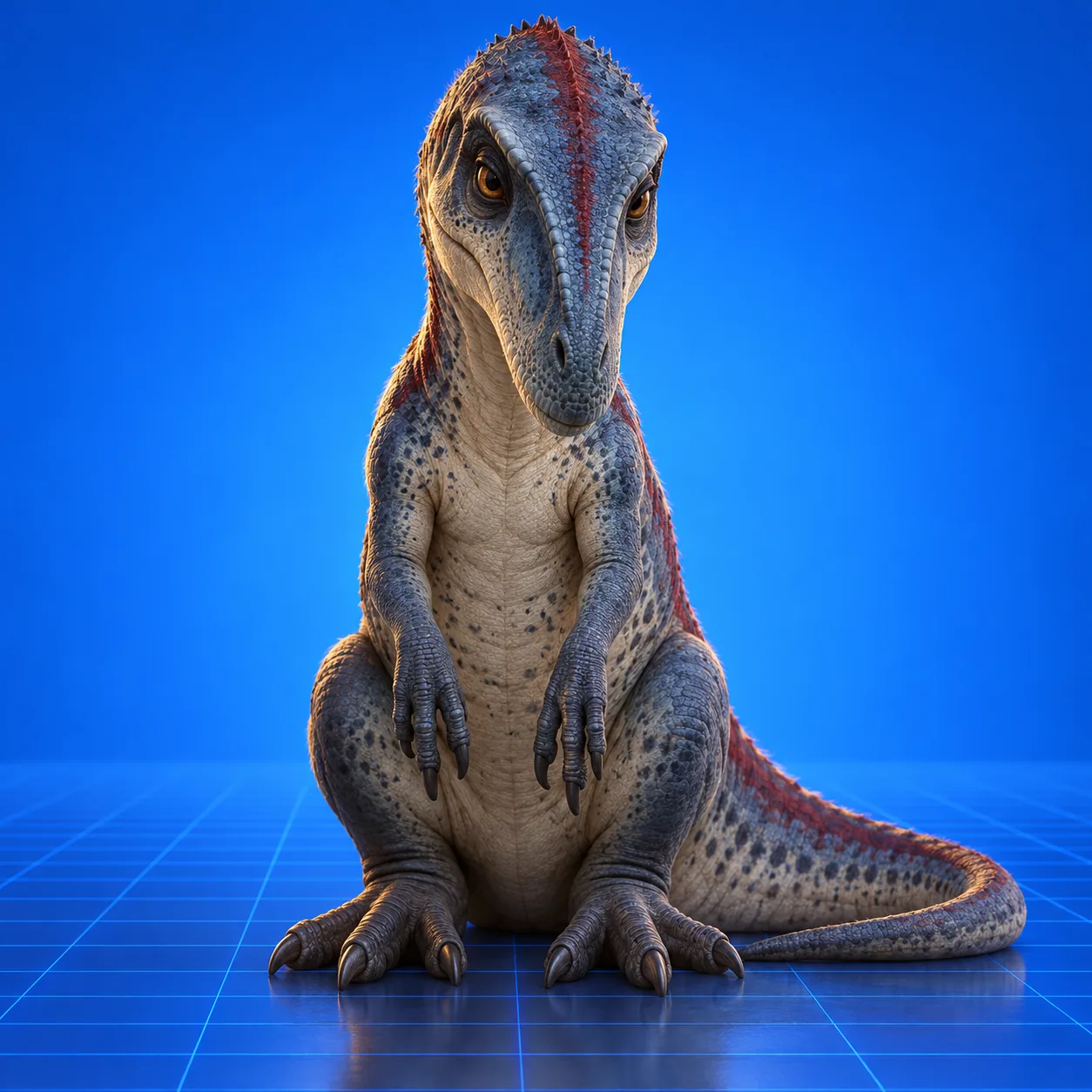
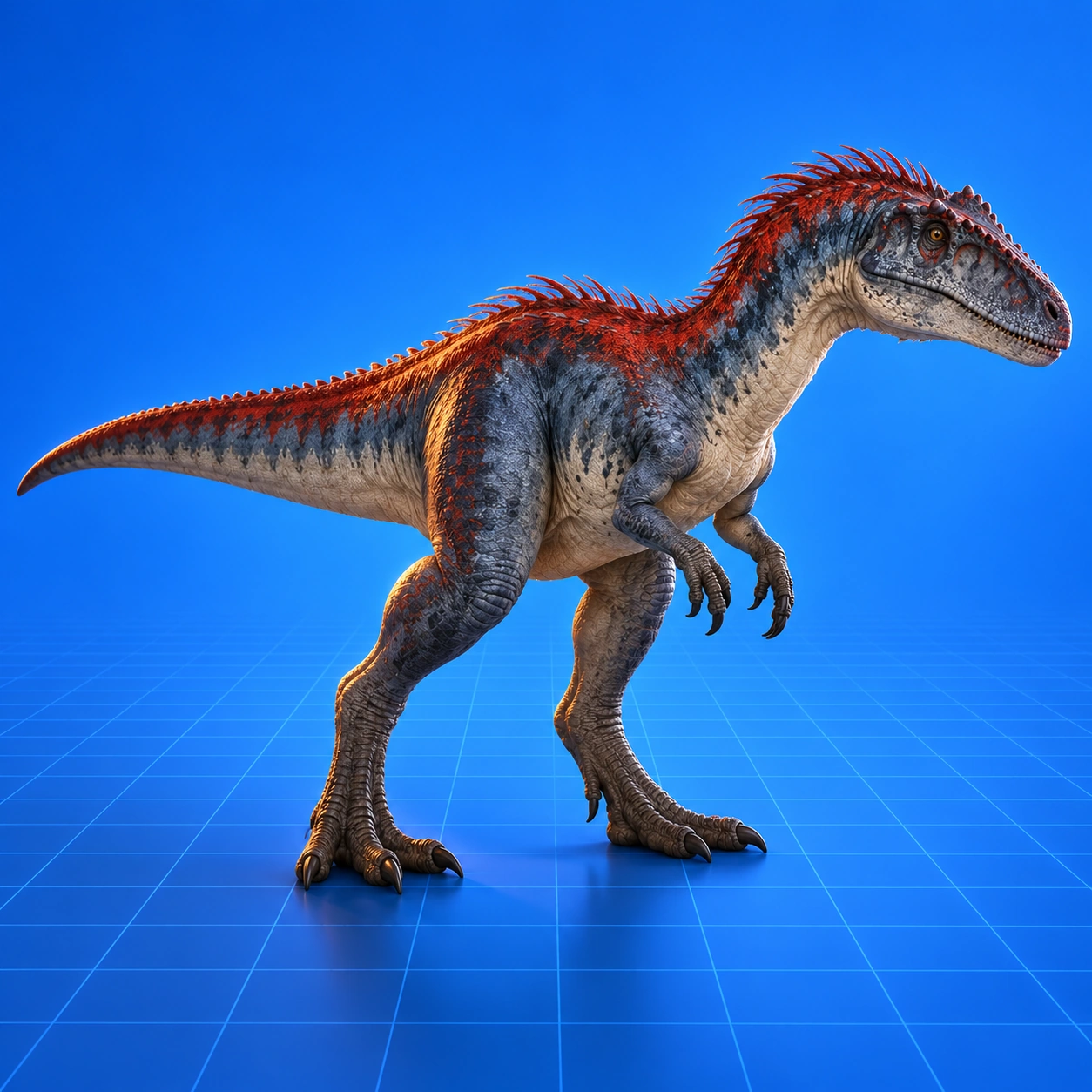
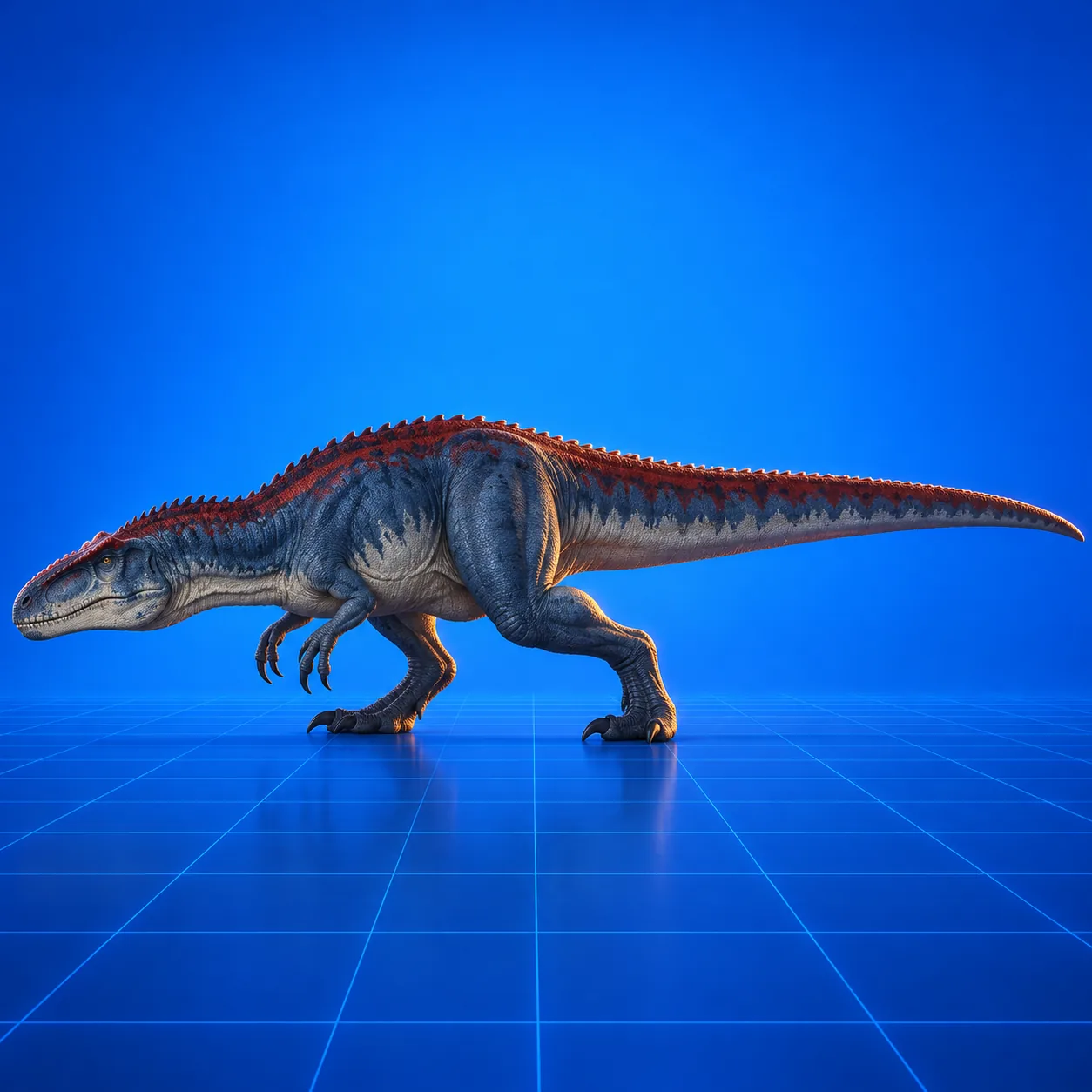
AI-generated, stylized game illustrations. These designs and growth stages are imaginative, not scientific reconstructions.
Giganotosaurus at a glance
- Diet
- Meat eater
- Interpreted as a consumer of other animals. Hunting and scavenging are compatible ways to obtain food.
- When it lived
- Late Cretaceous
- Geological period represented by its fossil record. Dates and assignments can be refined through further study.
- Group
- Carcharodontosauridae
- Carcharodontosaurids
- Fossil locations
- Patagonia, Argentina
- Places where fossils have been found
Beyond the game
The real Giganotosaurus
Giganotosaurus was one of the largest terrestrial carnivores. Its fossils come from Patagonia in Argentina. The reference skeleton was discovered in 1993, and the species Giganotosaurus carolinii was described in 1995. It belonged to the carcharodontosaurids, a different family from the tyrannosaurids.
The skeleton is incomplete, so its full length and mass must be reconstructed. Preserved bones and comparisons with related dinosaurs guide those estimates. Different assumptions about missing parts can produce different results without changing the actual fossil evidence.
Its great size is clear, but precise rankings against other giant predators deserve caution. Length and mass are also different measurements: an animal could be longer than another without necessarily being heavier.
An evolutionary family whose members share ancestors. This grouping does not imply that one named dinosaur directly became another.
Get to know Giganotosaurus
Questions, answered.
Was Giganotosaurus bigger than Tyrannosaurus rex?
Giganotosaurus belongs among the largest known meat-eating dinosaurs, but a simple winner is misleading. Estimates depend on incomplete fossils and on whether length or body mass is compared. Its exact size remains uncertain. [1]
Where did Giganotosaurus live?
Its fossils come from Patagonia in Argentina. The original scientific description identified Giganotosaurus carolinii from Upper Cretaceous rocks in northwestern Patagonia; it was not a North American contemporary of T. rex. [2] [3]
What kind of teeth did Giganotosaurus have?
Its teeth were long, flattened and edged with serrations. That blade-like shape was suited to cutting flesh. Giganotosaurus walked on two legs and was a carnivore, rather than a plant-eating giant. [3]
Fossil discoveries
Selected fossil records · present-day map
Map references
Map: Natural Earth, public domain. Fossil records: linked collections and publications.A note on the science
No complete specimen is known. Claims about its exact size or a definitive largest-predator ranking depend on reconstruction.
Sources & text credits
Explore the references behind this profile.
- Giganotosaurus carolinii
Wikipedia contributors · Spanish source
Adapted and translated from Giganotosaurus carolinii by Wikipedia contributors. See the linked revision for the source text and contributor history.
- Giganotosaurus
Wikipedia contributors · English source
Adapted and translated from Giganotosaurus by Wikipedia contributors. See the linked revision for the source text and contributor history.
- Carcharodontosauridae
Wikipedia contributors · English source
Group information adapted from Wikipedia contributors.
- Giganotosaurus — Dino Directory
Natural History Museum, London
Additional verification of scientific interpretation and geological period.
Educational text adapted in English from the existing Wikipedia-backed Dinosgacha catalogue and the linked Wikipedia articles by Wikipedia contributors.
Translated, shortened and edited for this encyclopedia; uncertain interpretations are identified. Selected museum and research references supplement verification.
The adapted educational text is available under CC BY-SA 4.0. This text license does not apply to the game illustrations.