Dinosaur
Brachiosaurus
Long front legs shaped its towering profile
Brachiosaurus stood apart from many long-necked dinosaurs through the proportions of its limbs and sloping trunk.
Three stages. One companion.
Game artwork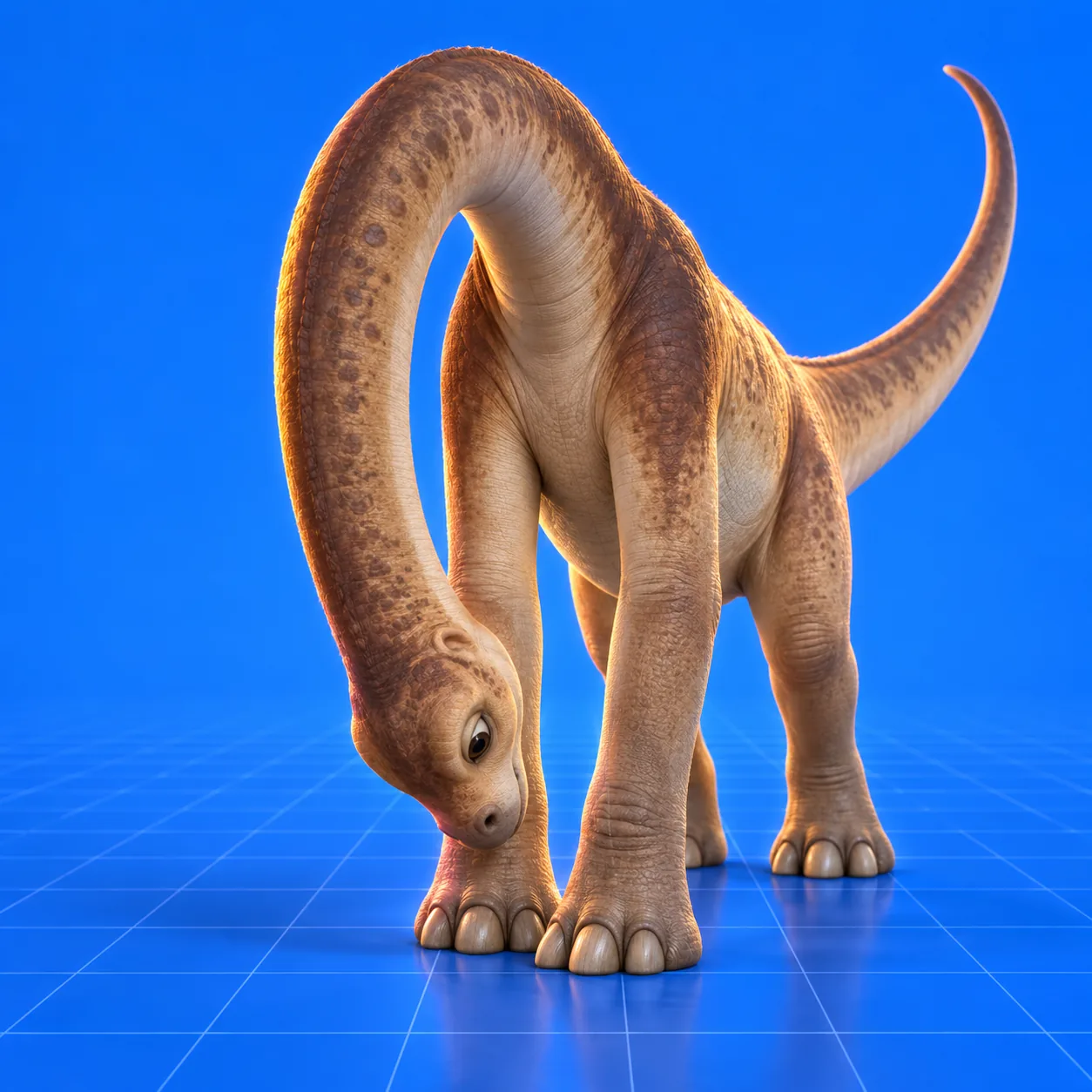
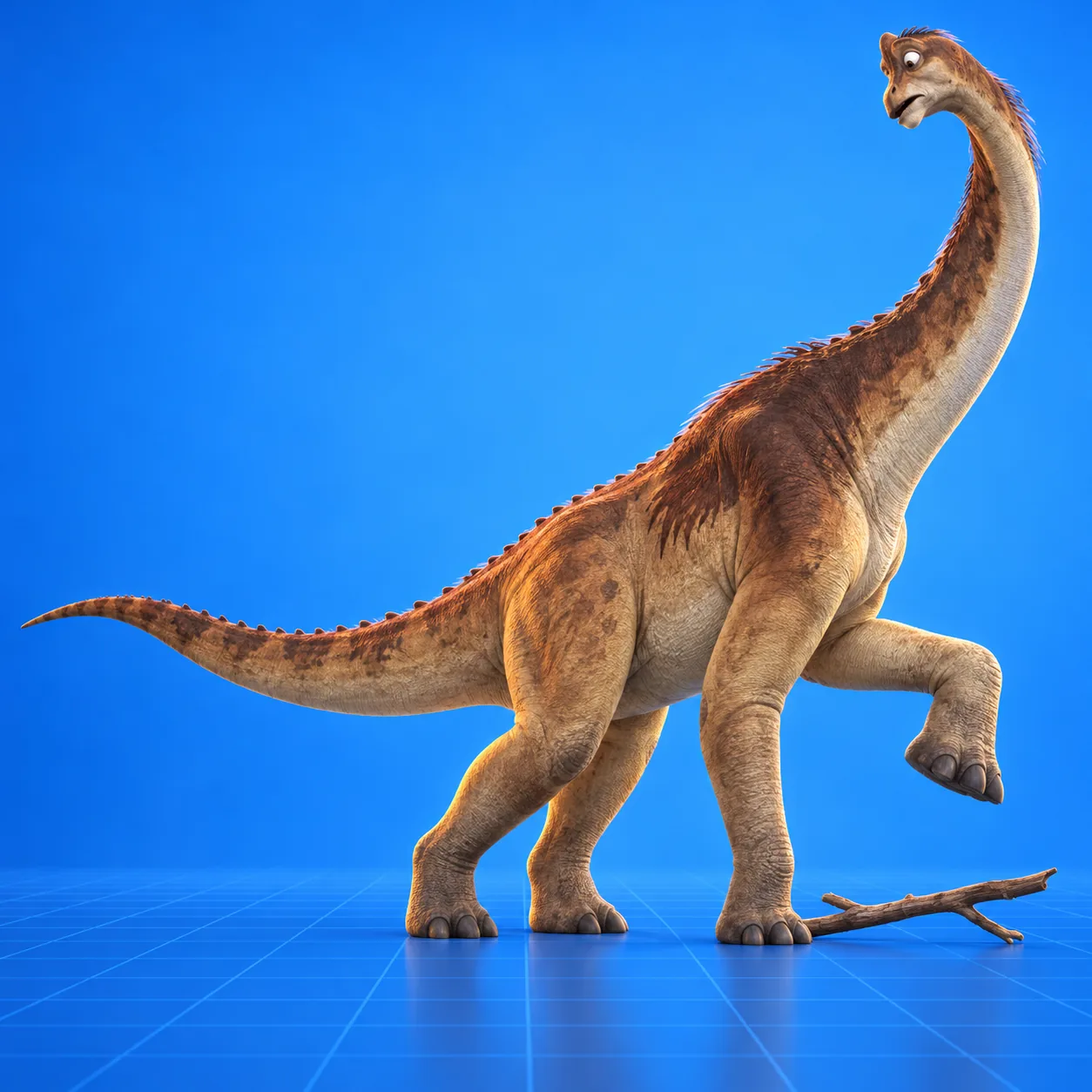
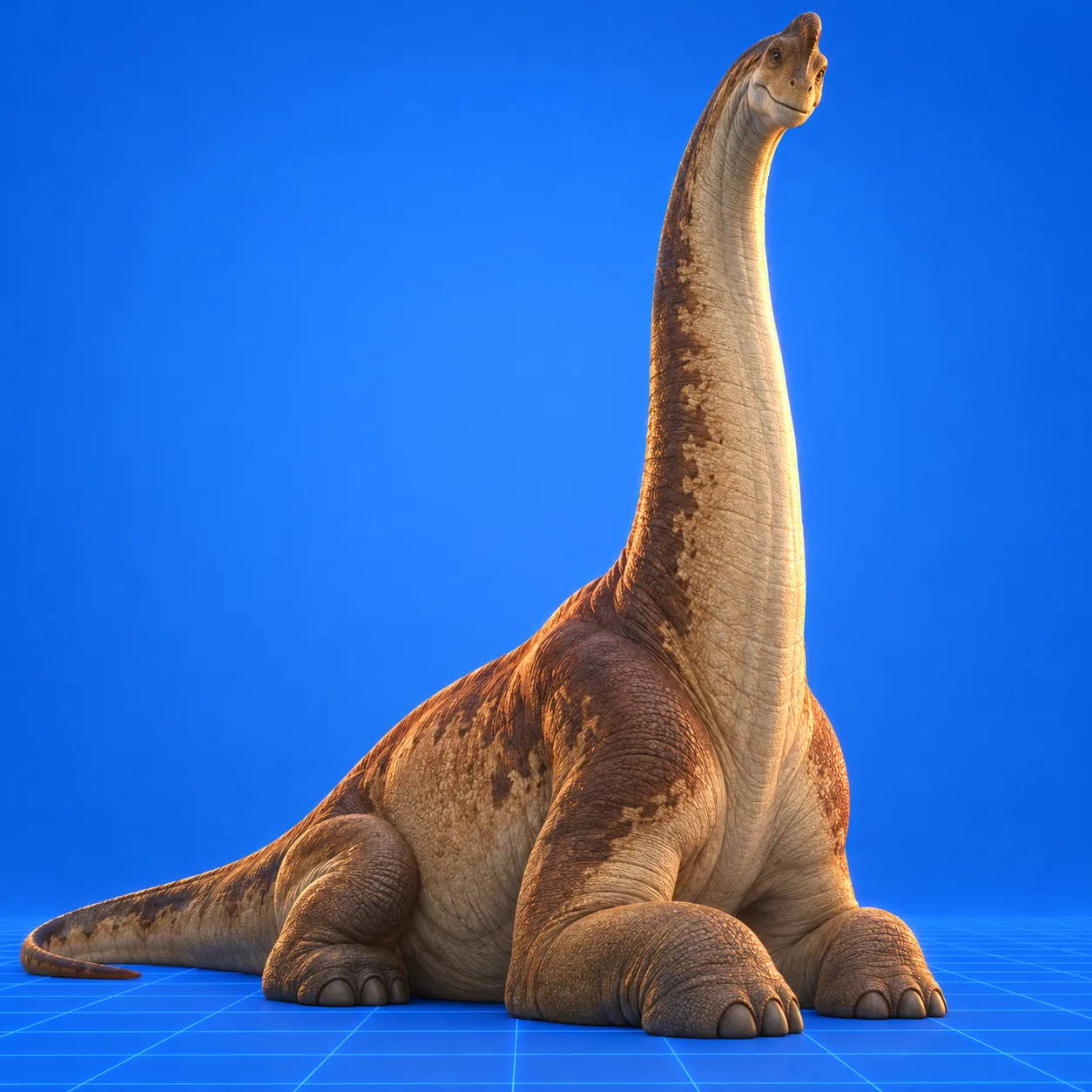
AI-generated, stylized game illustrations. These designs and growth stages are imaginative, not scientific reconstructions.
Brachiosaurus at a glance
- Diet
- Plant eater
- A plant-based diet is inferred from anatomy and comparisons with related animals. Herbivores did not all eat the same plants.
- When it lived
- Late Jurassic
- Geological period represented by its fossil record. Dates and assignments can be refined through further study.
- Group
- Brachiosauridae
- Brachiosaurids
- Fossil locations
- Colorado, United States
- Places where fossils have been found
Beyond the game
The real Brachiosaurus
Brachiosaurus was a long-necked sauropod whose front legs were longer than its hind legs. That difference tilted its trunk and gave it a profile distinct from many other enormous plant-eating dinosaurs. A small head sat at the end of the long neck.
The reference remains were described in 1903, from material found in Colorado. Like other sauropods, Brachiosaurus is interpreted as a herbivore through its anatomy and comparisons with related animals. Sharing a plant-based diet did not make all sauropod bodies alike.
Comparing its limbs with those of Diplodocus or Apatosaurus reveals why a single standard silhouette cannot represent every long-necked dinosaur. Posture and proportions are important parts of identifying the animal, alongside its impressive size.
An evolutionary family whose members share ancestors. This grouping does not imply that one named dinosaur directly became another.
Get to know Brachiosaurus
Questions, answered.
Why did Brachiosaurus stand so tall at the shoulders?
Its front limbs were longer than its hind limbs, raising the front of the body. Combined with a long neck, that build suited reaching vegetation above the feeding height of many other herbivores. [1]
Was Brachiosaurus the same as Giraffatitan?
No. The African animal now called Giraffatitan was once grouped within Brachiosaurus but is now generally separated. Some familiar full-body reconstructions relied heavily on the more complete African material. [1]
How did it eat so much plant food?
Brachiosaurus likely gathered leaves from tall vegetation and swallowed them without chewing. Microbes in its digestive system helped break down the tough plant material, rather than a mammal-like chewing process in the mouth. [1]
Research sources · reviewed
Fossil discoveries
Selected fossil records · present-day map
Map references
Map: Natural Earth, public domain. Fossil records: linked collections and publications.A note on the science
Long-necked dinosaurs varied in proportions and posture. A stylized illustration simplifies details that researchers study from bones.
Sources & text credits
Explore the references behind this profile.
- Brachiosaurus altithorax
Wikipedia contributors · Spanish source
Adapted and translated from Brachiosaurus altithorax by Wikipedia contributors. See the linked revision for the source text and contributor history.
- Brachiosaurus
Wikipedia contributors · English source
Adapted and translated from Brachiosaurus by Wikipedia contributors. See the linked revision for the source text and contributor history.
- Brachiosauridae
Wikipedia contributors · English source
Group information adapted from Wikipedia contributors.
Educational text adapted in English from the existing Wikipedia-backed Dinosgacha catalogue and the linked Wikipedia articles by Wikipedia contributors.
Translated, shortened and edited for this encyclopedia; uncertain interpretations are identified. Selected museum and research references supplement verification.
The adapted educational text is available under CC BY-SA 4.0. This text license does not apply to the game illustrations.