Dinosaur
Triceratops
Three horns and a remarkable bony frill
A large four-legged plant eater shared the final Cretaceous landscapes of North America with Tyrannosaurus.
Three stages. One companion.
Game artwork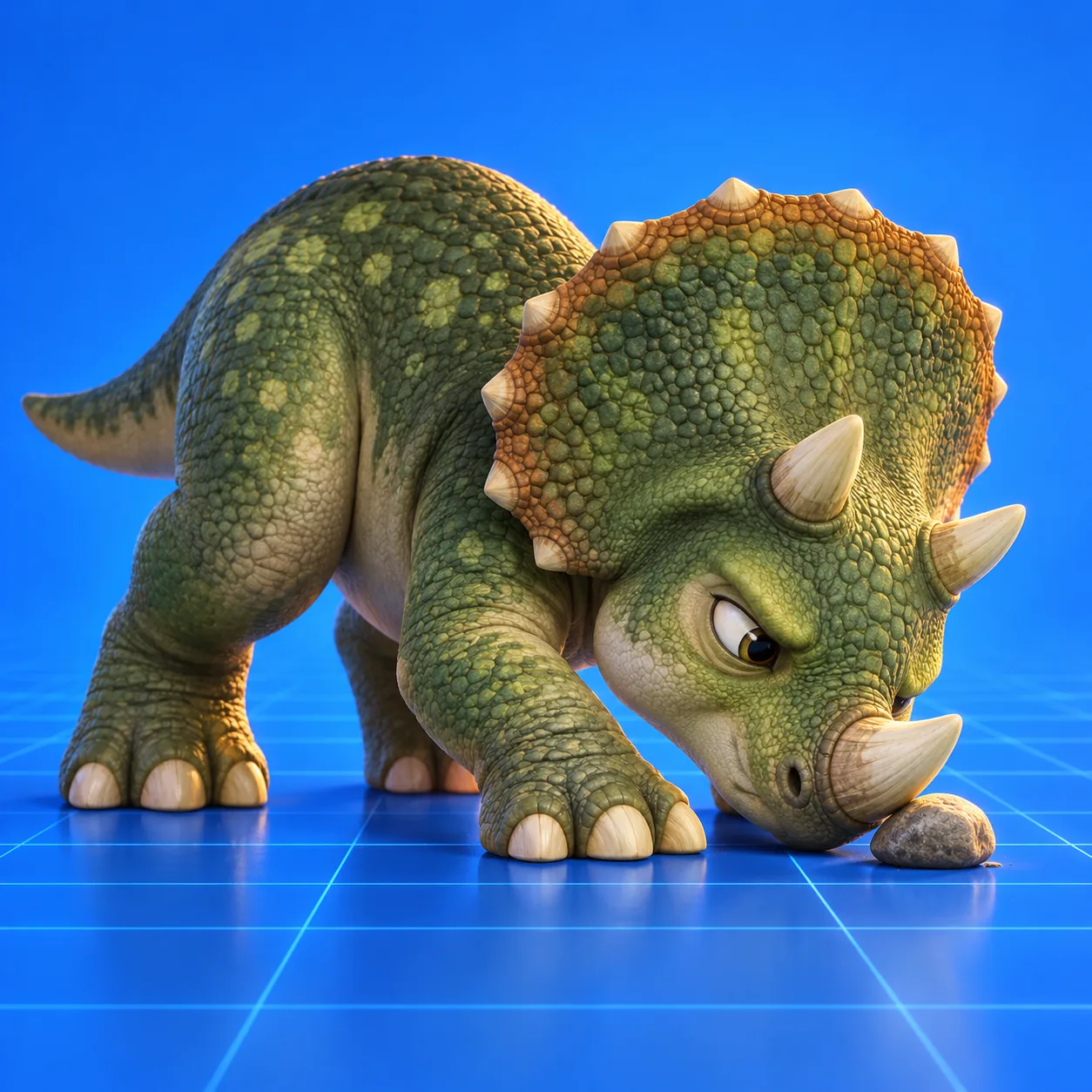
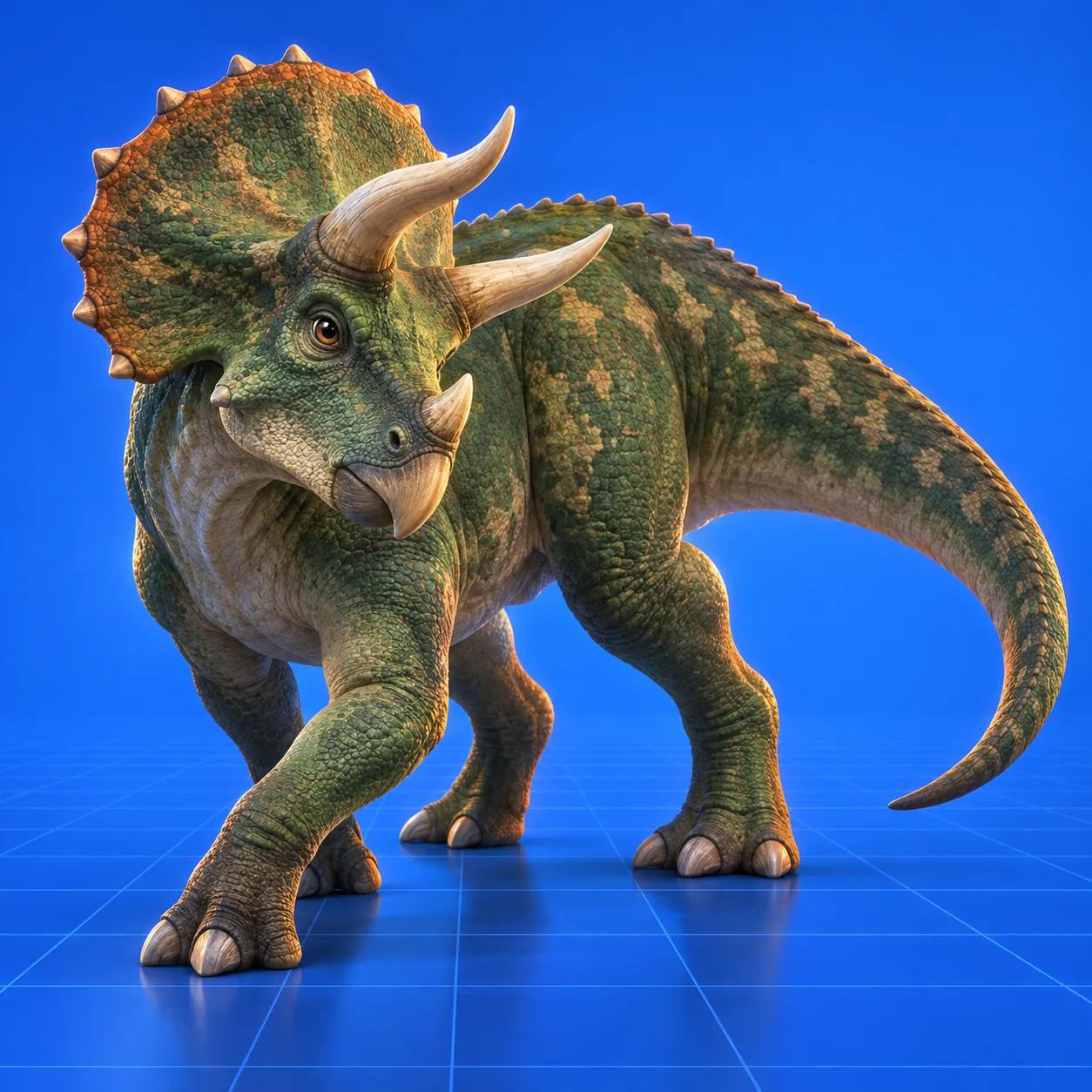
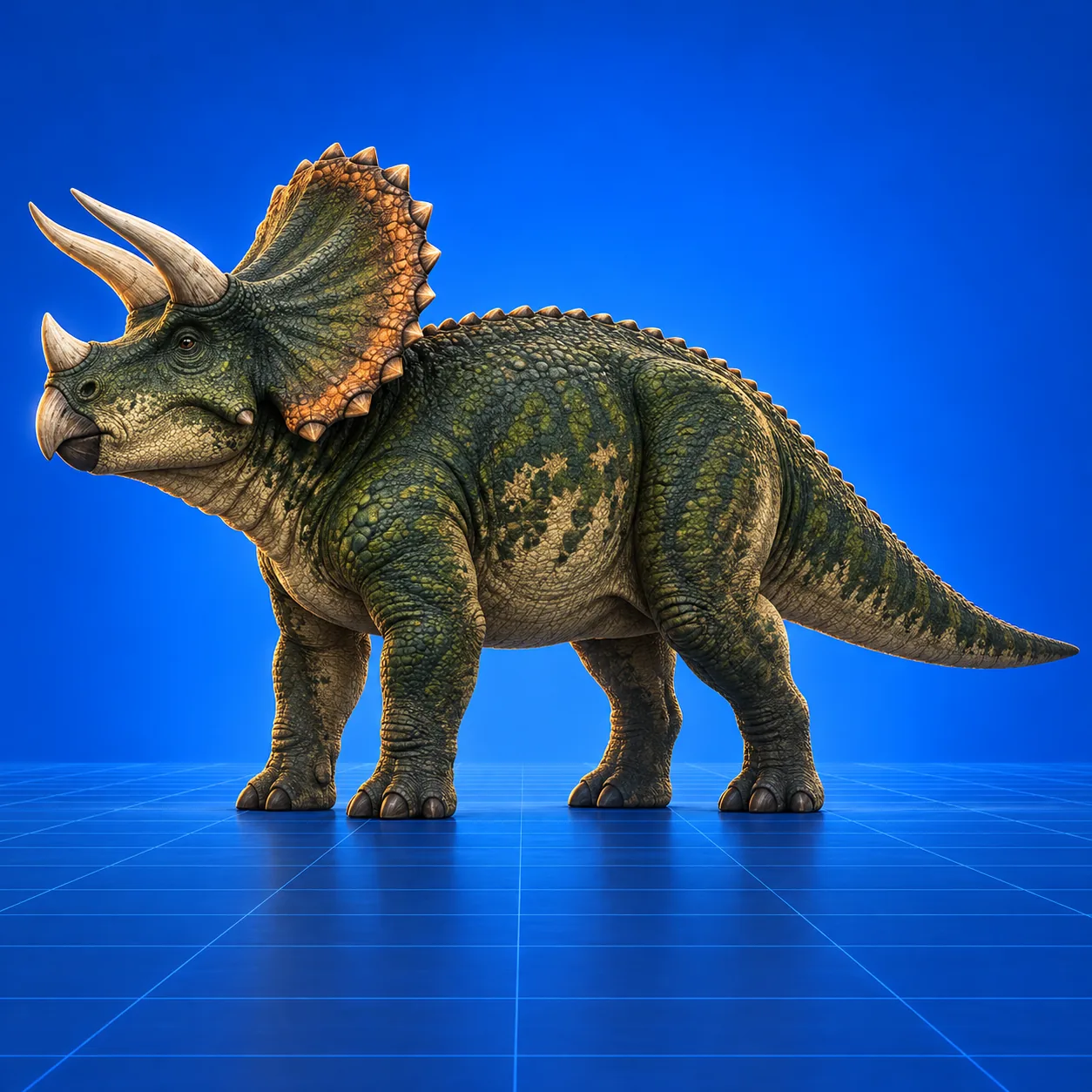
AI-generated, stylized game illustrations. These designs and growth stages are imaginative, not scientific reconstructions.
Triceratops at a glance
- Diet
- Plant eater
- A plant-based diet is inferred from anatomy and comparisons with related animals. Herbivores did not all eat the same plants.
- When it lived
- Late Cretaceous
- Geological period represented by its fossil record. Dates and assignments can be refined through further study.
- Group
- Ceratopsidae
- Ceratopsids
- Fossil locations
- North America
- Places where fossils have been found
Beyond the game
The real Triceratops
Triceratops was a huge herbivore, usually reconstructed at about eight to nine meters long. It walked on four legs and carried a large head with two horns above the eyes, a smaller nasal horn and a broad bony frill extending behind the skull.
The frill was an expansion of the skull over the back of the neck. Comparing the horns and frills of different ceratopsians helps researchers distinguish their evolutionary branches. The shape of an ornament does not, by itself, establish every behavior associated with it.
Triceratops and Tyrannosaurus lived in the same broad landscapes near the end of the Cretaceous. Their overlap makes comparisons useful, but an illustration of one particular confrontation remains an imagined scene.
A family of large beaked dinosaurs with bony frills and horns or other skull ornaments.
Get to know Triceratops
Questions, answered.
Could Triceratops meet T. rex?
Yes. Both lived in western North America near the end of the Cretaceous. Tyrannosaur bite damage on a Triceratops horn, followed by healing, provides evidence that at least one animal survived such an encounter. [1]
What were the horns and frill for?
The horns could help in defence, and injuries suggest encounters with other Triceratops too. The frill may also have served display or recognition. These functions need not exclude each other; its appearance alone cannot settle behaviour. [1]
Was Triceratops related to a rhinoceros?
No close relationship connects them. Triceratops was a horned dinosaur; rhinoceroses are mammals. Their bulky bodies and horns offer a useful example of superficially similar features arising in separate animal lineages. [1]
Research sources · reviewed
Fossil discoveries
Selected fossil records · present-day map
Map references
Map: Natural Earth, public domain. Fossil records: linked collections and publications.A note on the science
Horns and frills can be studied as anatomy without treating every proposed use as a demonstrated behavior.
Sources & text credits
Explore the references behind this profile.
- Triceratops
Wikipedia contributors · Spanish source
Adapted and translated from Triceratops by Wikipedia contributors. See the linked revision for the source text and contributor history.
- Triceratops
Wikipedia contributors · English source
Adapted and translated from Triceratops by Wikipedia contributors. See the linked revision for the source text and contributor history.
- Ceratopsidae
Wikipedia contributors · English source
Group information adapted from Wikipedia contributors.
Educational text adapted in English from the existing Wikipedia-backed Dinosgacha catalogue and the linked Wikipedia articles by Wikipedia contributors.
Translated, shortened and edited for this encyclopedia; uncertain interpretations are identified. Selected museum and research references supplement verification.
The adapted educational text is available under CC BY-SA 4.0. This text license does not apply to the game illustrations.