Dinosaur
Pachycephalosaurus
A thick dome with unanswered questions
This two-legged dinosaur is best known for its extraordinary skull, while much of the body is reconstructed through comparisons.
Three stages. One companion.
Game artwork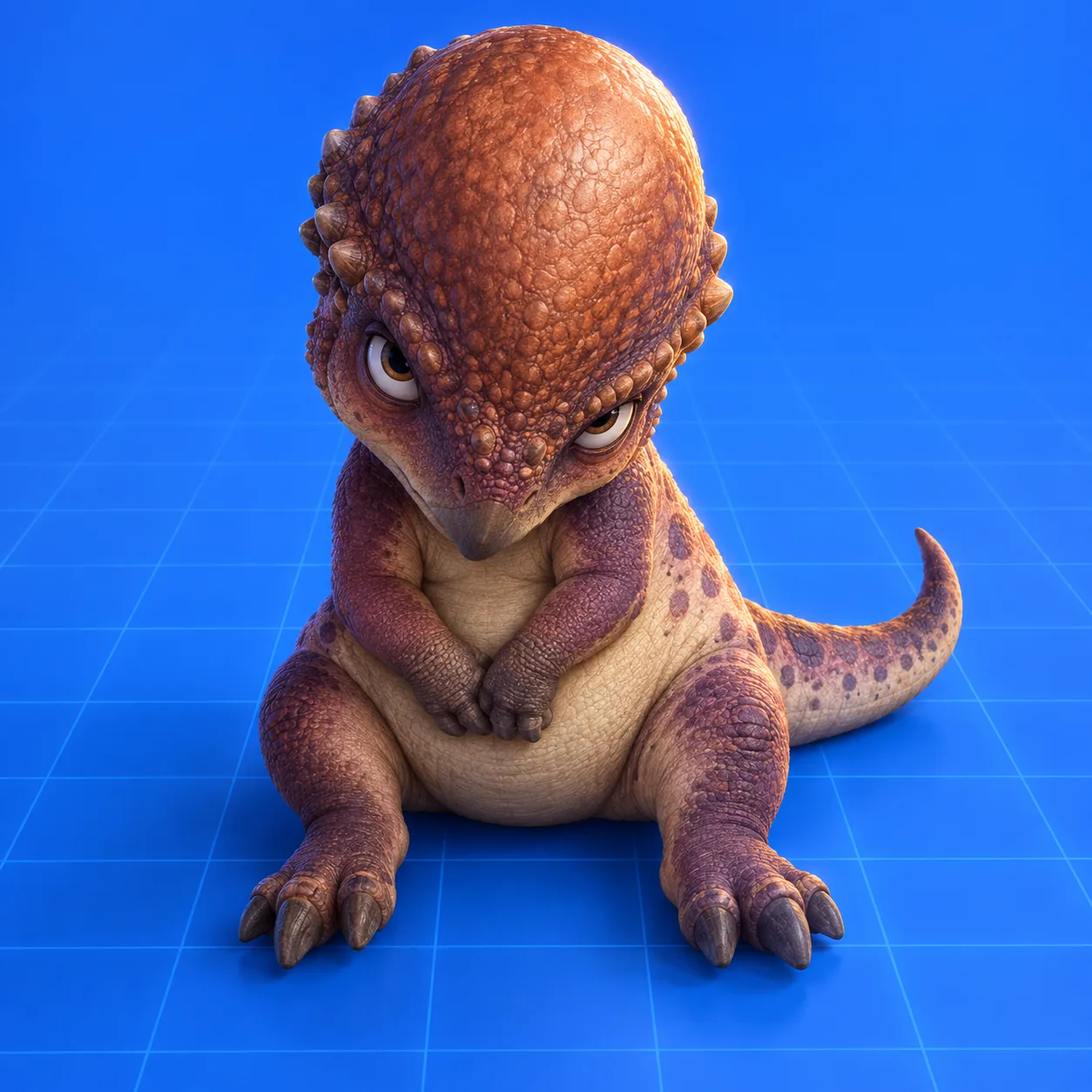
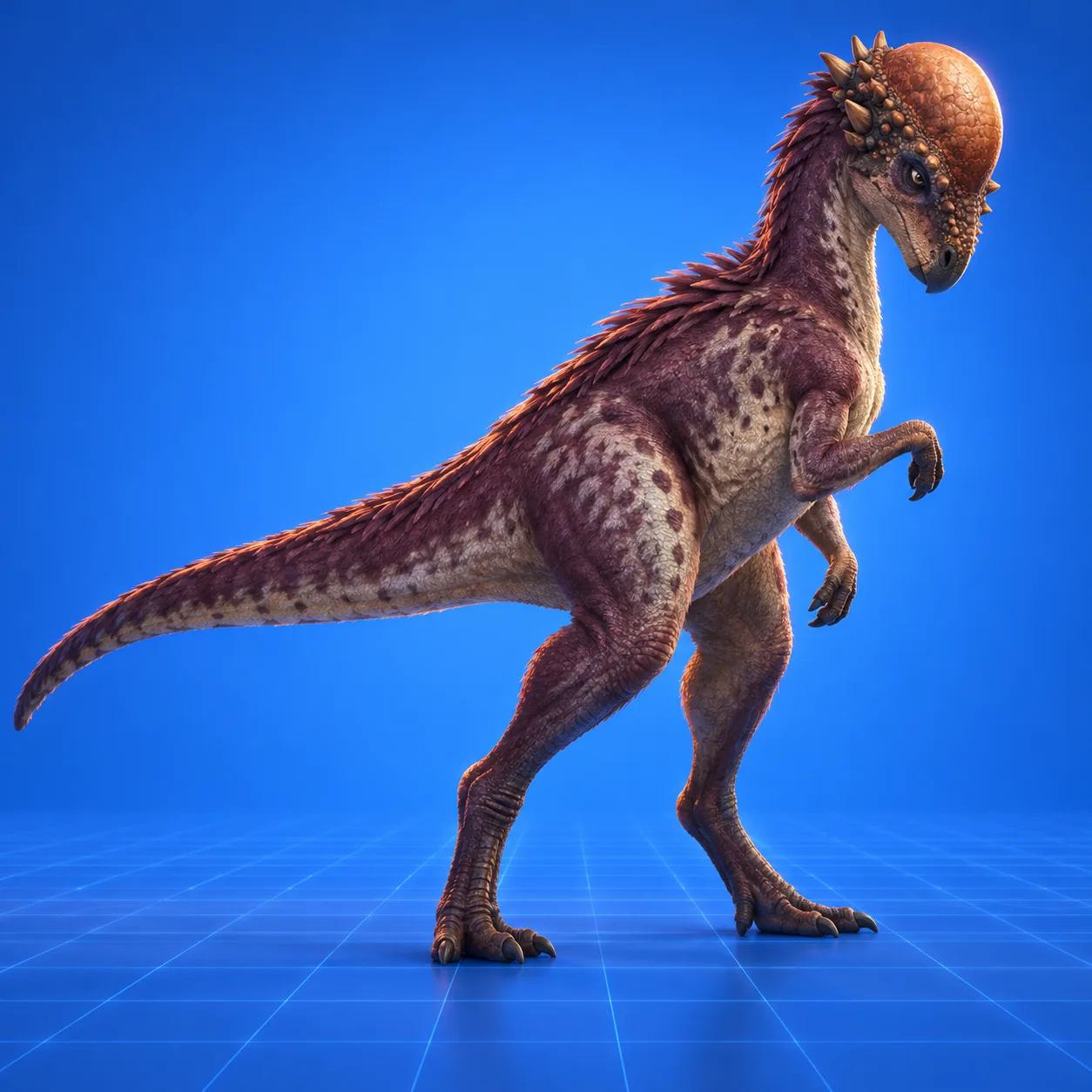
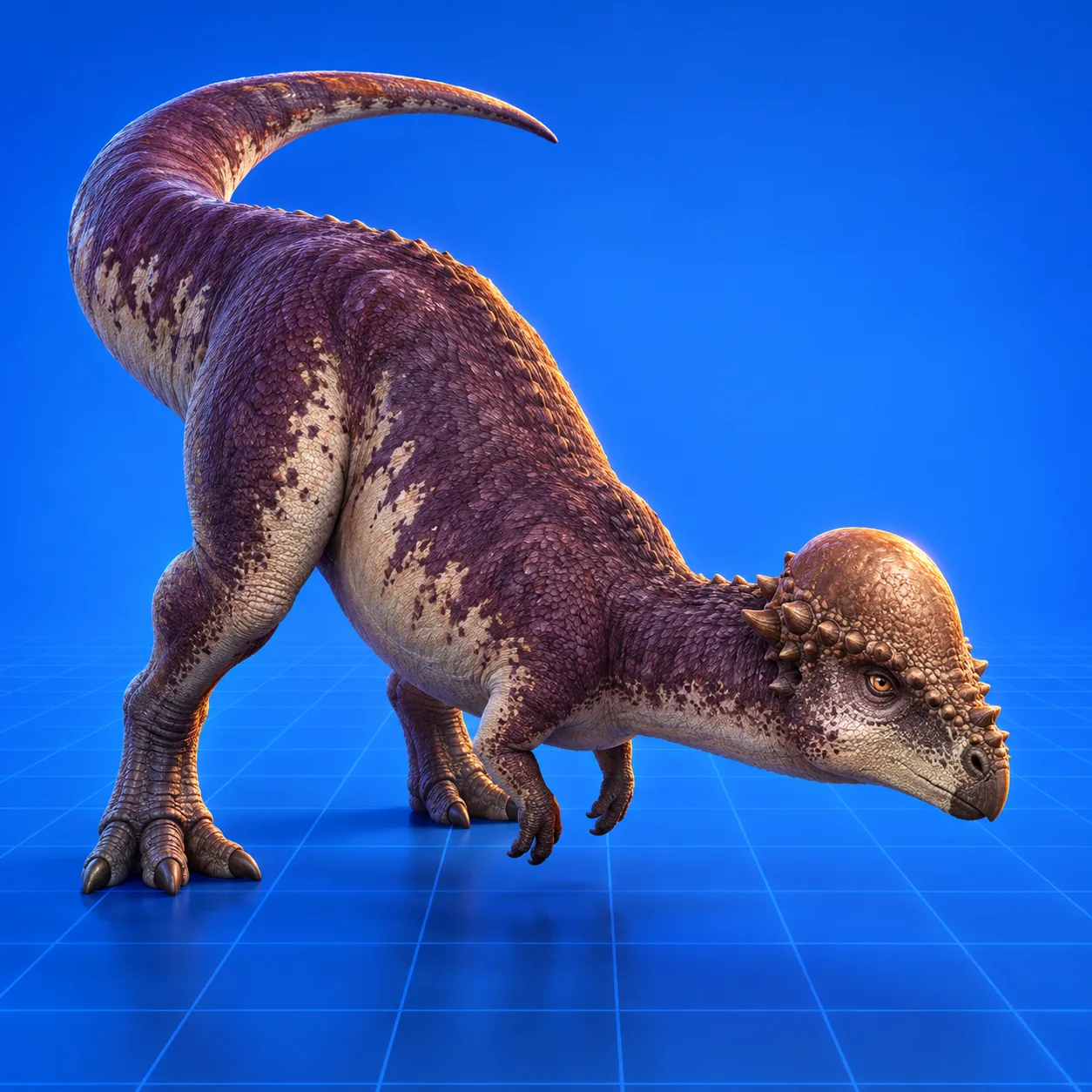
AI-generated, stylized game illustrations. These designs and growth stages are imaginative, not scientific reconstructions.
Pachycephalosaurus at a glance
- Diet
- Likely mainly plants; diet debated
- It is often interpreted as a plant eater, but some teeth have led researchers to consider a broader diet.
- When it lived
- Late Cretaceous
- Geological period represented by its fossil record. Dates and assignments can be refined through further study.
- Group
- Pachycephalosauridae
- Pachycephalosaurids
- Fossil locations
- North America
- Places where fossils have been found
Beyond the game
The real Pachycephalosaurus
Pachycephalosaurus had an exceptionally thick dome of bone on top of its skull, surrounded by bumps and spikes. It walked on two legs with strong hind limbs and relatively small arms. Its Late Cretaceous fossils come from North America.
Much of the reconstruction relies on skull material and comparisons with related pachycephalosaurs. A head can reveal a great deal, but it cannot independently establish every proportion of the rest of the body. Reconstructing missing parts is a separate step in interpreting the animal.
Researchers have proposed uses for the dome, including display and contests between individuals. Its diet is also incompletely understood: it is often interpreted as a plant eater, although some teeth have prompted suggestions that it ate other foods too.
An evolutionary family whose members share ancestors. This grouping does not imply that one named dinosaur directly became another.
Get to know Pachycephalosaurus
Questions, answered.
Did Pachycephalosaurus use its head as a battering ram?
Its thick skull dome has inspired several explanations, including combat between individuals and visual display. Head-butting is a hypothesis rather than a directly observed behaviour; the dome may have served more than one purpose. [1]
What did Pachycephalosaurus eat?
Plants probably formed much of its diet, including leaves, seeds or fruit. However, some front teeth resemble those of meat-eating dinosaurs, so occasional animal food has also been proposed. Its complete diet is not settled. [1]
Where did Pachycephalosaurus live?
It lived in western North America near the end of the Cretaceous. Fossils have been found in places including Montana, South Dakota, Wyoming and Alberta. It walked on two legs beneath its unusually domed head. [1]
Research sources · reviewed
Fossil discoveries
Selected fossil records · present-day map
Map references
Map: Natural Earth, public domain. Fossil records: linked collections and publications.A note on the science
The exact diet and uses of the dome remain debated. A skull shape is evidence, but not a complete account of behavior.
Sources & text credits
Explore the references behind this profile.
- Pachycephalosaurus wyomingensis
Wikipedia contributors · Spanish source
Adapted and translated from Pachycephalosaurus wyomingensis by Wikipedia contributors. See the linked revision for the source text and contributor history.
- Pachycephalosaurus
Wikipedia contributors · English source
Adapted and translated from Pachycephalosaurus by Wikipedia contributors. See the linked revision for the source text and contributor history.
- Pachycephalosauridae
Wikipedia contributors · English source
Group information adapted from Wikipedia contributors.
- Pachycephalosaurus — Dino Directory
Natural History Museum, London
Additional verification of scientific interpretation and geological period.
Educational text adapted in English from the existing Wikipedia-backed Dinosgacha catalogue and the linked Wikipedia articles by Wikipedia contributors.
Translated, shortened and edited for this encyclopedia; uncertain interpretations are identified. Selected museum and research references supplement verification.
The adapted educational text is available under CC BY-SA 4.0. This text license does not apply to the game illustrations.