Dinosaur
Protoceratops
A frilled head without giant horns
This small Asian ceratopsian shows that a member of the horned-dinosaur group did not need Triceratops-sized horns.
Three stages. One companion.
Game artwork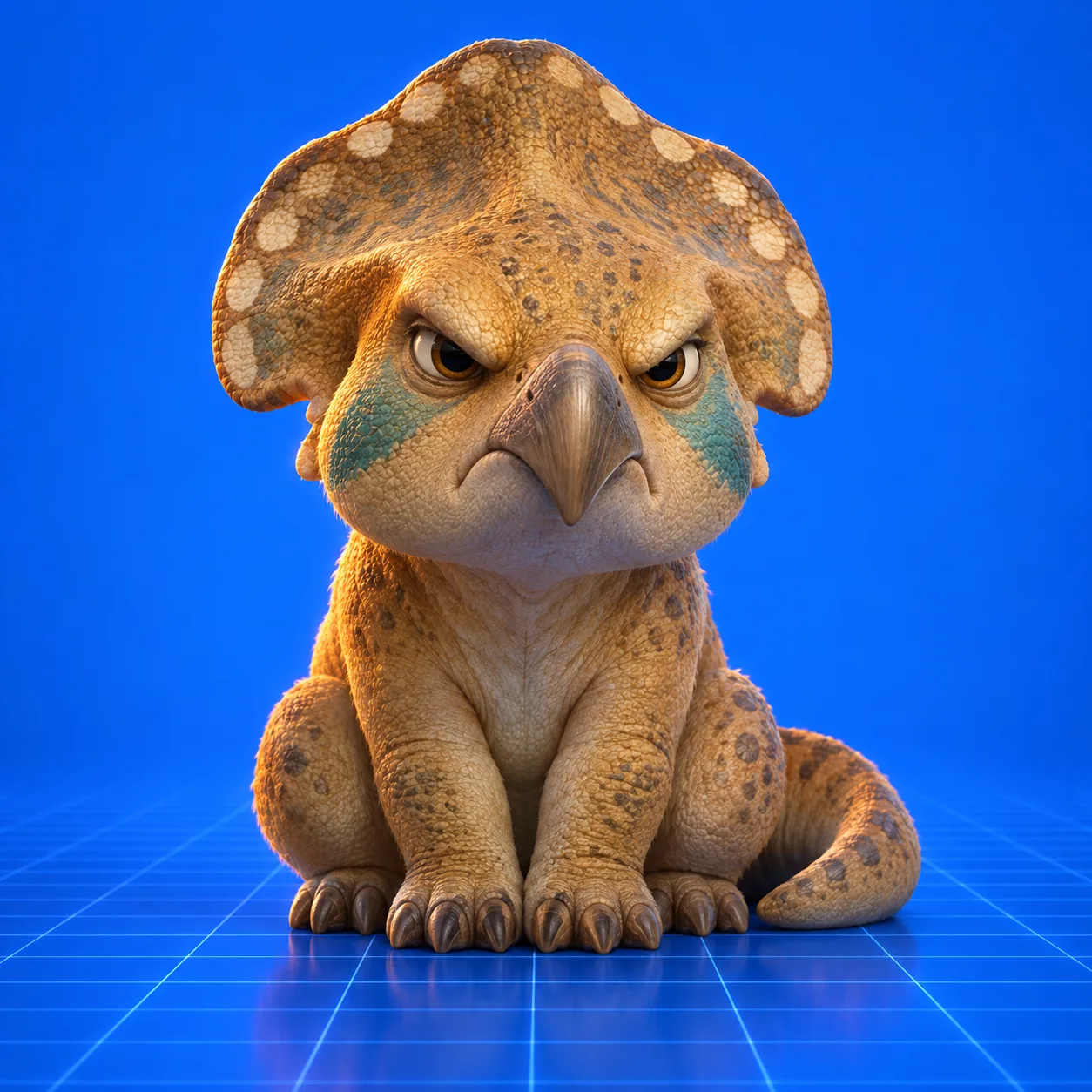
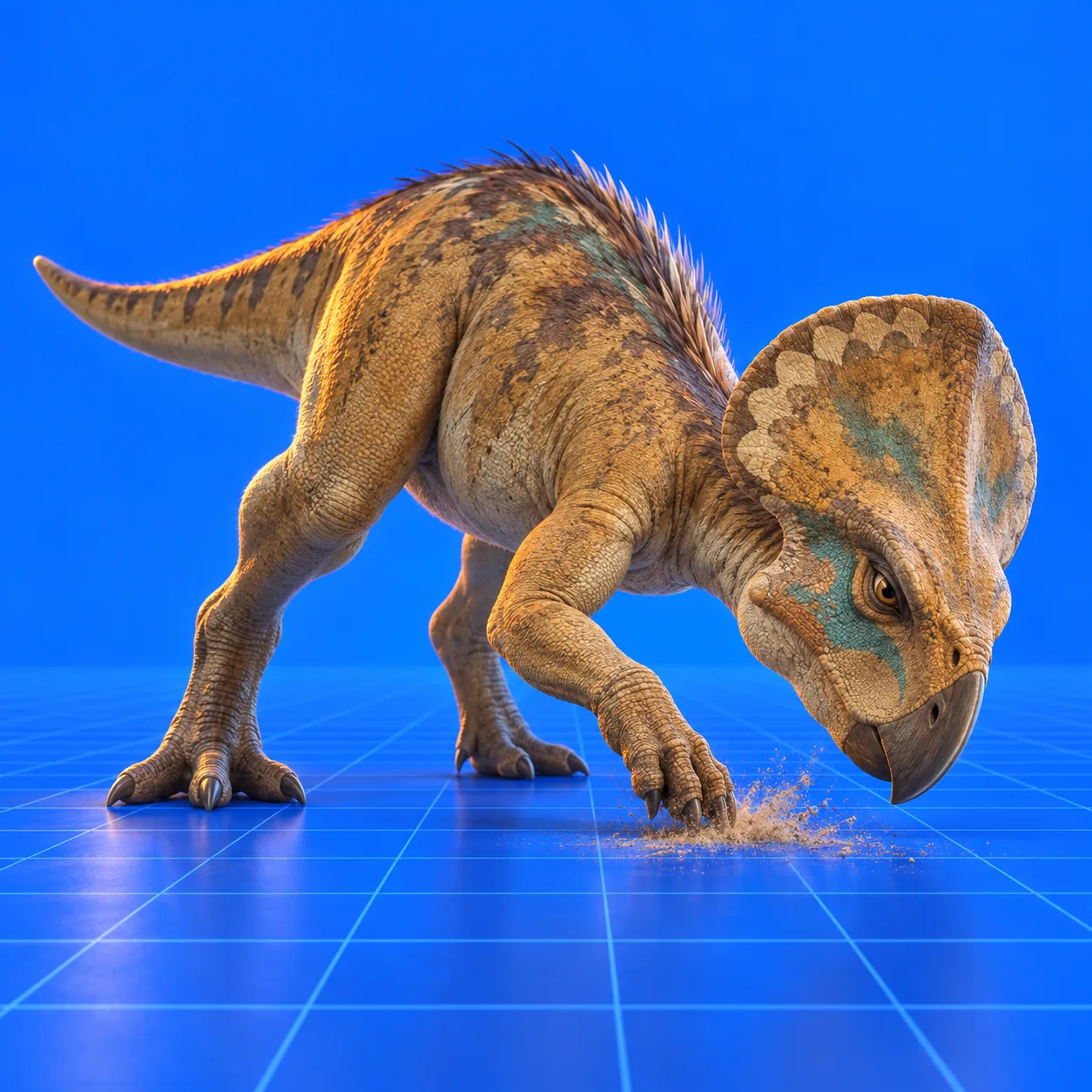
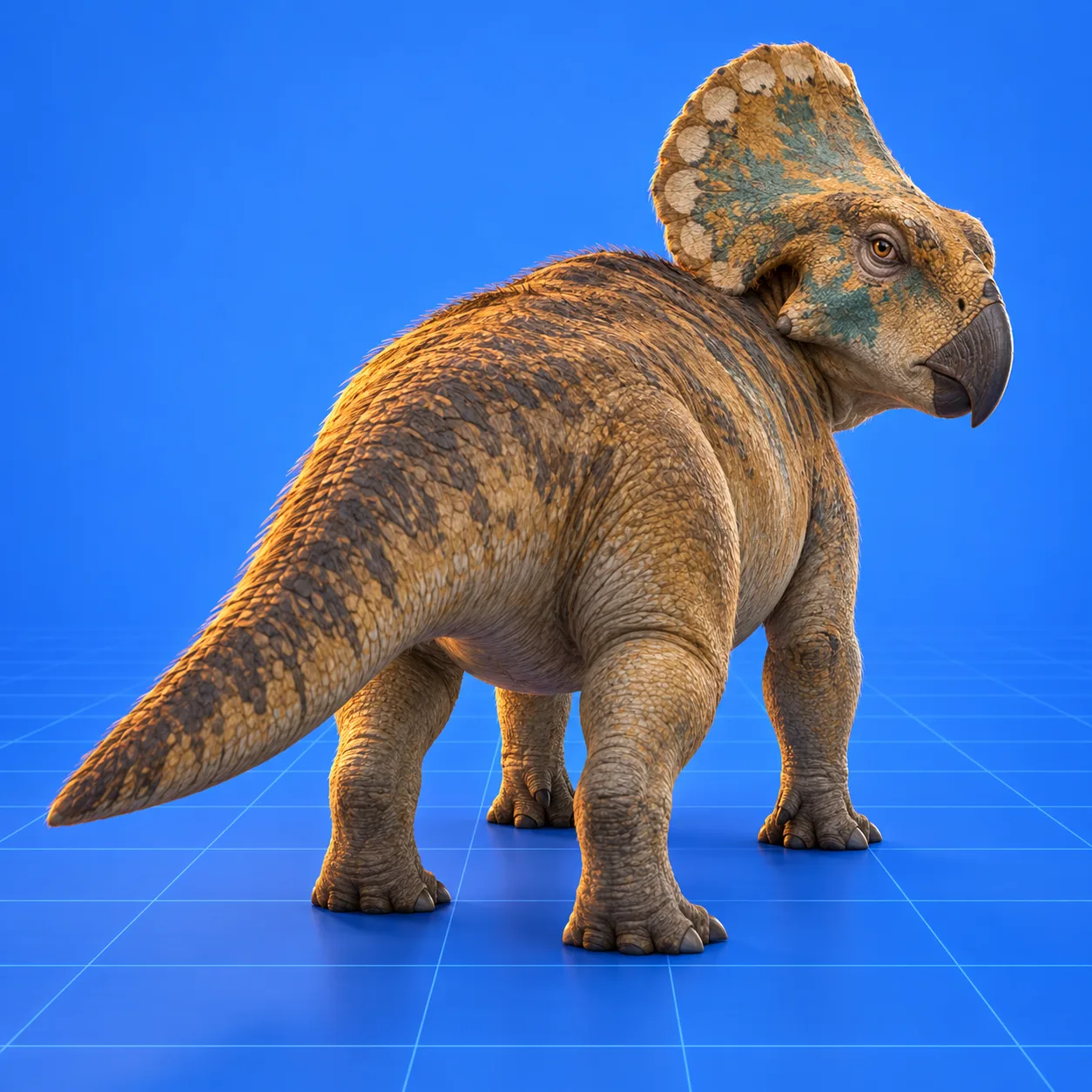
AI-generated, stylized game illustrations. These designs and growth stages are imaginative, not scientific reconstructions.
Protoceratops at a glance
- Diet
- Plant eater
- A plant-based diet is inferred from anatomy and comparisons with related animals. Herbivores did not all eat the same plants.
- When it lived
- Late Cretaceous
- Geological period represented by its fossil record. Dates and assignments can be refined through further study.
- Group
- Protoceratopsidae
- Protoceratopsids
- Fossil locations
- Mongolia, China
- Places where fossils have been found
Beyond the game
The real Protoceratops
Protoceratops was a small ceratopsian from Asia, known from Mongolia and China. Adults mainly walked on four legs. Its skull was large for its body and extended backward into a bony frill over the neck, producing a distinctive outline.
It lacked the great facial horns of relatives such as Triceratops. Comparing the two shows how much variation existed within the wider ceratopsian group. Membership of a group does not mean every animal carried the same ornaments or reached the same size.
The frill has prompted several functional explanations, including protection, display and attachment for muscles. These ideas are investigated against the fossils. No single explanation should be treated as a complete, directly observed account of the living animal.
An evolutionary family whose members share ancestors. This grouping does not imply that one named dinosaur directly became another.
Get to know Protoceratops
Questions, answered.
Was Protoceratops a smaller Triceratops?
They were both ceratopsians, but Protoceratops was a separate genus, not a young Triceratops. It had a neck frill and a strong beak without the familiar three large horns of Triceratops. [1] [2]
What are the Fighting Dinosaurs fossils?
This famous specimen preserves a Protoceratops and a Velociraptor locked together. The beak holds the predator’s arm while a foot claw lies near the Protoceratops neck. Rapid burial in sand is a proposed explanation for their remarkable preservation. [3]
Where and when did Protoceratops live?
Protoceratops lived in Asia during the Late Cretaceous, with fossils known from Mongolia and China. It was a four-legged plant-eater that used a beak and teeth to cut and process vegetation. [1]
Fossil discoveries
Selected fossil records · present-day map
Map references
Map: Natural Earth, public domain. Fossil records: linked collections and publications.A note on the science
The frill is preserved; its full range of functions in life remains an interpretation under study.
Sources & text credits
Explore the references behind this profile.
- Protoceratops
Wikipedia contributors · Spanish source
Adapted and translated from Protoceratops by Wikipedia contributors. See the linked revision for the source text and contributor history.
- Protoceratops
Wikipedia contributors · English source
Adapted and translated from Protoceratops by Wikipedia contributors. See the linked revision for the source text and contributor history.
- Protoceratopsidae
Wikipedia contributors · English source
Group information adapted from Wikipedia contributors.
Educational text adapted in English from the existing Wikipedia-backed Dinosgacha catalogue and the linked Wikipedia articles by Wikipedia contributors.
Translated, shortened and edited for this encyclopedia; uncertain interpretations are identified. Selected museum and research references supplement verification.
The adapted educational text is available under CC BY-SA 4.0. This text license does not apply to the game illustrations.