
Dinosaur
Spinosaurus
A sail-backed dinosaur with an evolving story
Discover a fish-eating theropod whose incomplete fossils continue to change reconstructions of its body and life around water.
Three stages. One companion.
Game artwork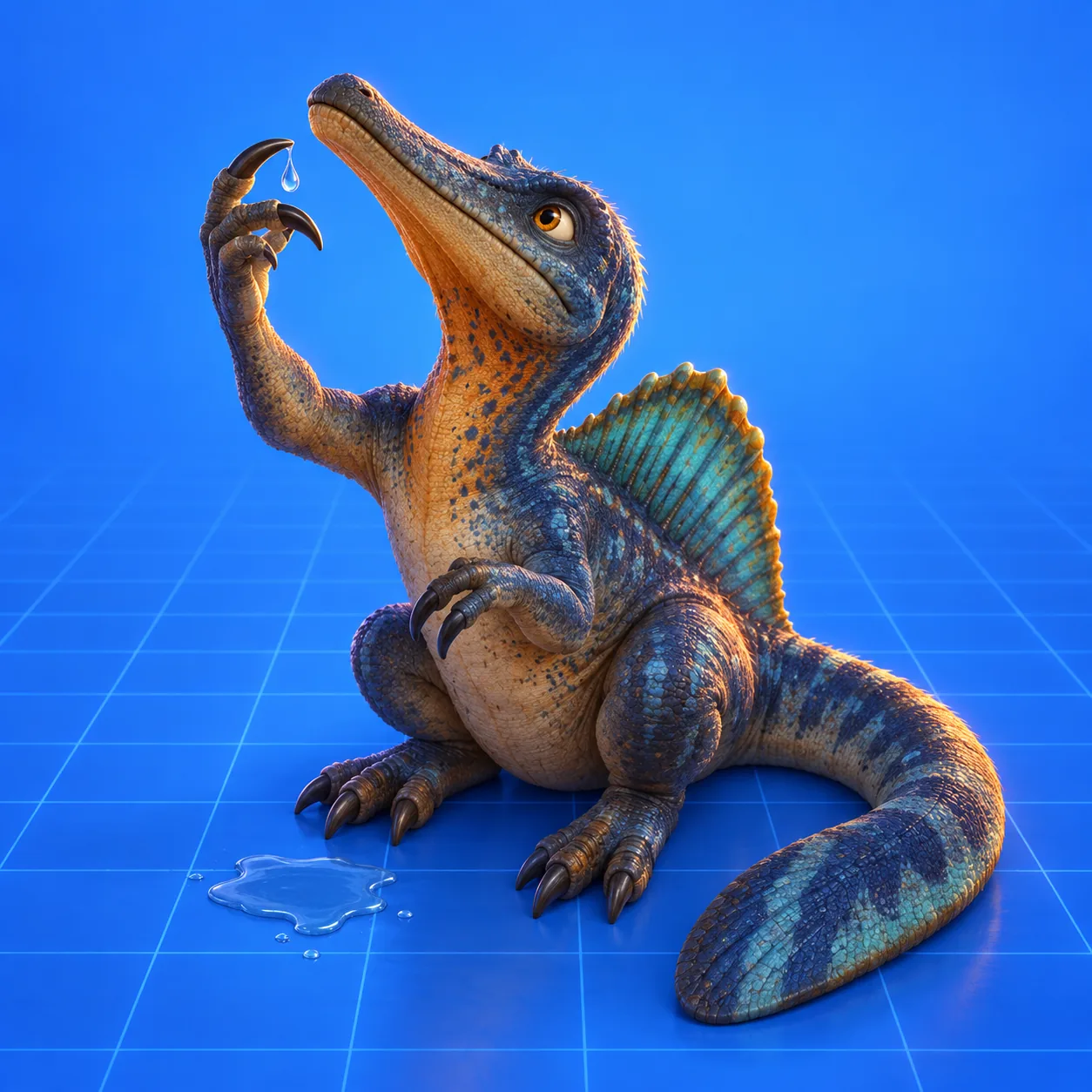
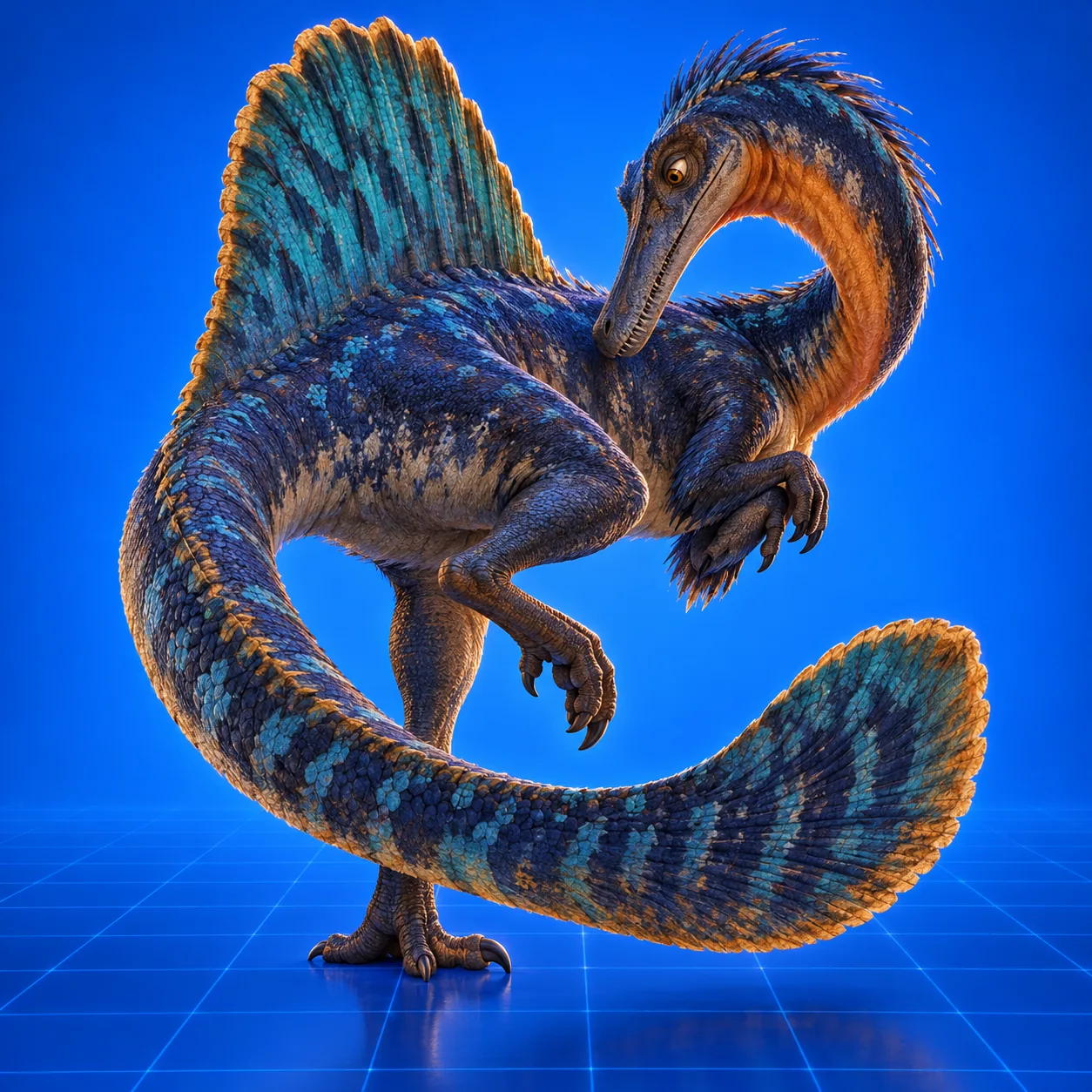
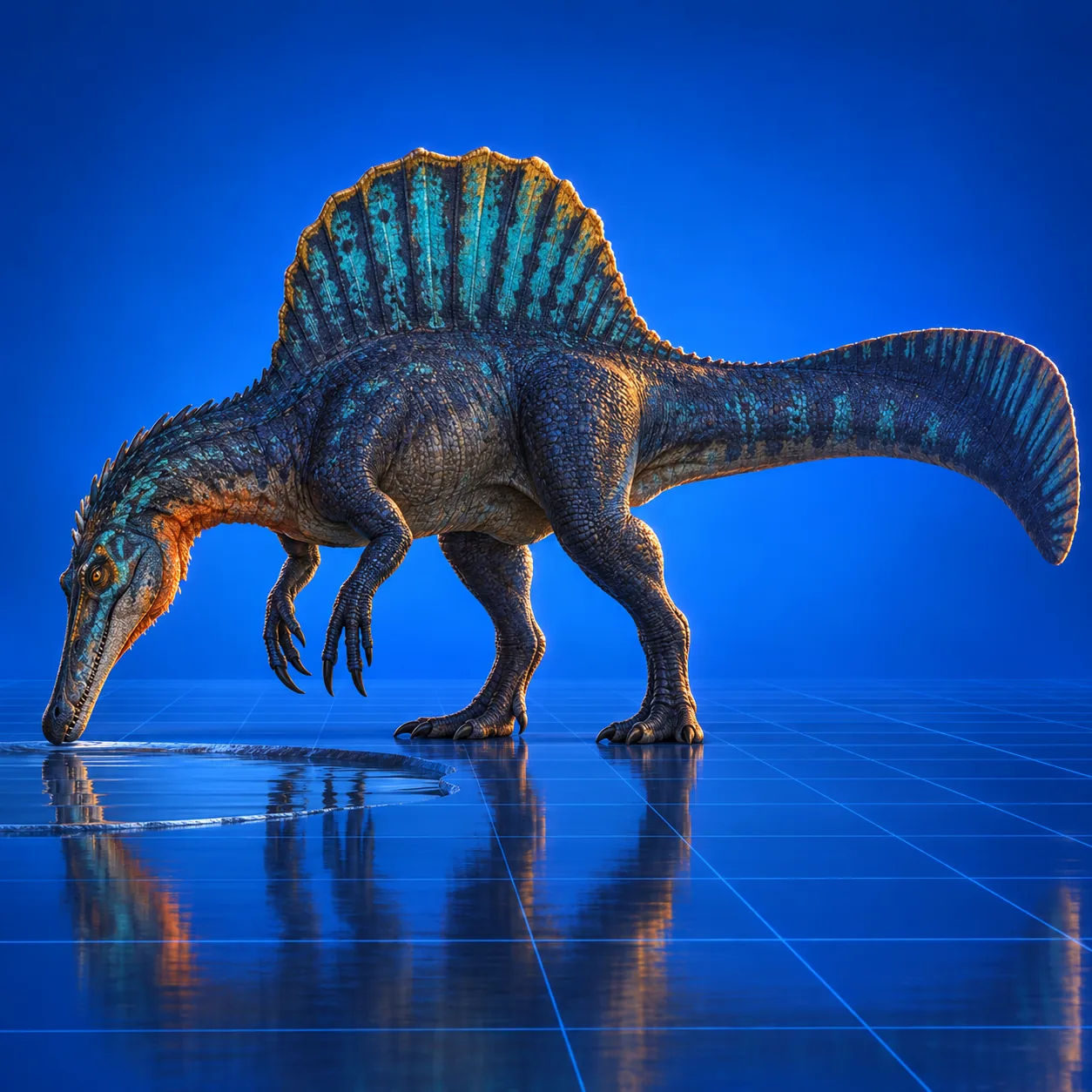
AI-generated, stylized game illustrations. These designs and growth stages are imaginative, not scientific reconstructions.
Spinosaurus at a glance
- Diet
- Meat eater; fish important
- The elongated snout and conical teeth fit aquatic prey. This does not imply a diet consisting only of fish.
- When it lived
- Late Cretaceous
- Geological period represented by its fossil record. Dates and assignments can be refined through further study.
- Group
- Spinosauridae
- Spinosaurids
- Fossil locations
- North Africa
- Places where fossils have been found
Beyond the game
The real Spinosaurus
Spinosaurus is recognizable by the long extensions of its vertebrae, which supported a sail-like structure along its back. Its elongated snout and conical teeth fit a diet in which fish were important, although that does not mean it ate fish exclusively.
The first Egyptian remains were described in 1915 and later destroyed during the Second World War. Subsequent discoveries allowed researchers to revisit its anatomy and its relationships with other spinosaurids. Different reconstructions reflect the evidence available at different times.
Its connection with water remains a research question. Scientists debate how it moved and fed in aquatic settings. A swimming reconstruction should therefore be read as a scientific interpretation rather than a fully settled portrait of its daily life.
A family of theropods with elongated snouts and conical teeth. Their aquatic adaptations and habits differed and remain under study.
Get to know Spinosaurus
Questions, answered.
Was Spinosaurus a swimming dinosaur?
Its short hind limbs and deep tail distinguish it from many land predators, and water was important to its lifestyle. Researchers still disagree about how effectively it pursued prey underwater versus fishing while wading near shore. [1] [2]
What did Spinosaurus eat?
Fish were part of its diet. A long, narrow snout and conical teeth were suited to catching slippery prey. That specialisation does not mean it ate fish exclusively; other animal food remains possible. [1]
Why did it have a sail?
Elongated spines supported the conspicuous structure along its back. Display and temperature regulation are among the proposed explanations. Its precise role remains uncertain, and several functions could have mattered at once. [1]
Research sources · reviewed
Fossil discoveries
Selected fossil records · present-day map
Map references
Map: Natural Earth, public domain. Fossil records: linked collections and publications.A note on the science
The extent of its aquatic lifestyle and details of locomotion remain debated. No complete skeleton is known.
Sources & text credits
Explore the references behind this profile.
- Spinosaurus
Wikipedia contributors · Spanish source
Adapted and translated from Spinosaurus by Wikipedia contributors. See the linked revision for the source text and contributor history.
- Spinosaurus
Wikipedia contributors · English source
Adapted and translated from Spinosaurus by Wikipedia contributors. See the linked revision for the source text and contributor history.
- Spinosauridae
Wikipedia contributors · English source
Group information adapted from Wikipedia contributors.
- Spinosaurus — Dino Directory
Natural History Museum, London
Additional verification of scientific interpretation and geological period.
Educational text adapted in English from the existing Wikipedia-backed Dinosgacha catalogue and the linked Wikipedia articles by Wikipedia contributors.
Translated, shortened and edited for this encyclopedia; uncertain interpretations are identified. Selected museum and research references supplement verification.
The adapted educational text is available under CC BY-SA 4.0. This text license does not apply to the game illustrations.