Dinosaur
Baryonyx
A great hand claw and a long snout
An English discovery introduced a spinosaurid whose anatomy helps illuminate a distinctive branch of meat-eating dinosaurs.
Three stages. One companion.
Game artwork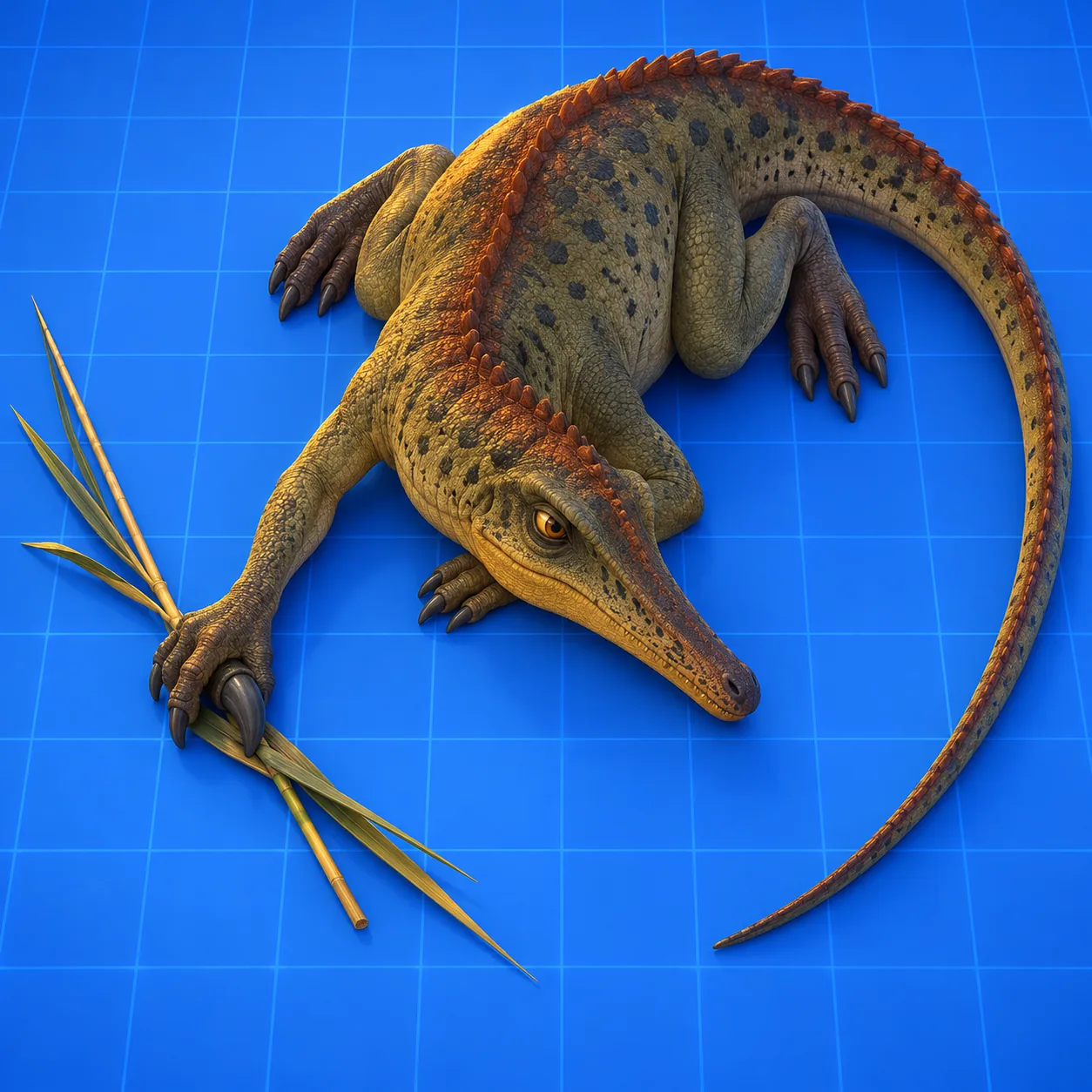
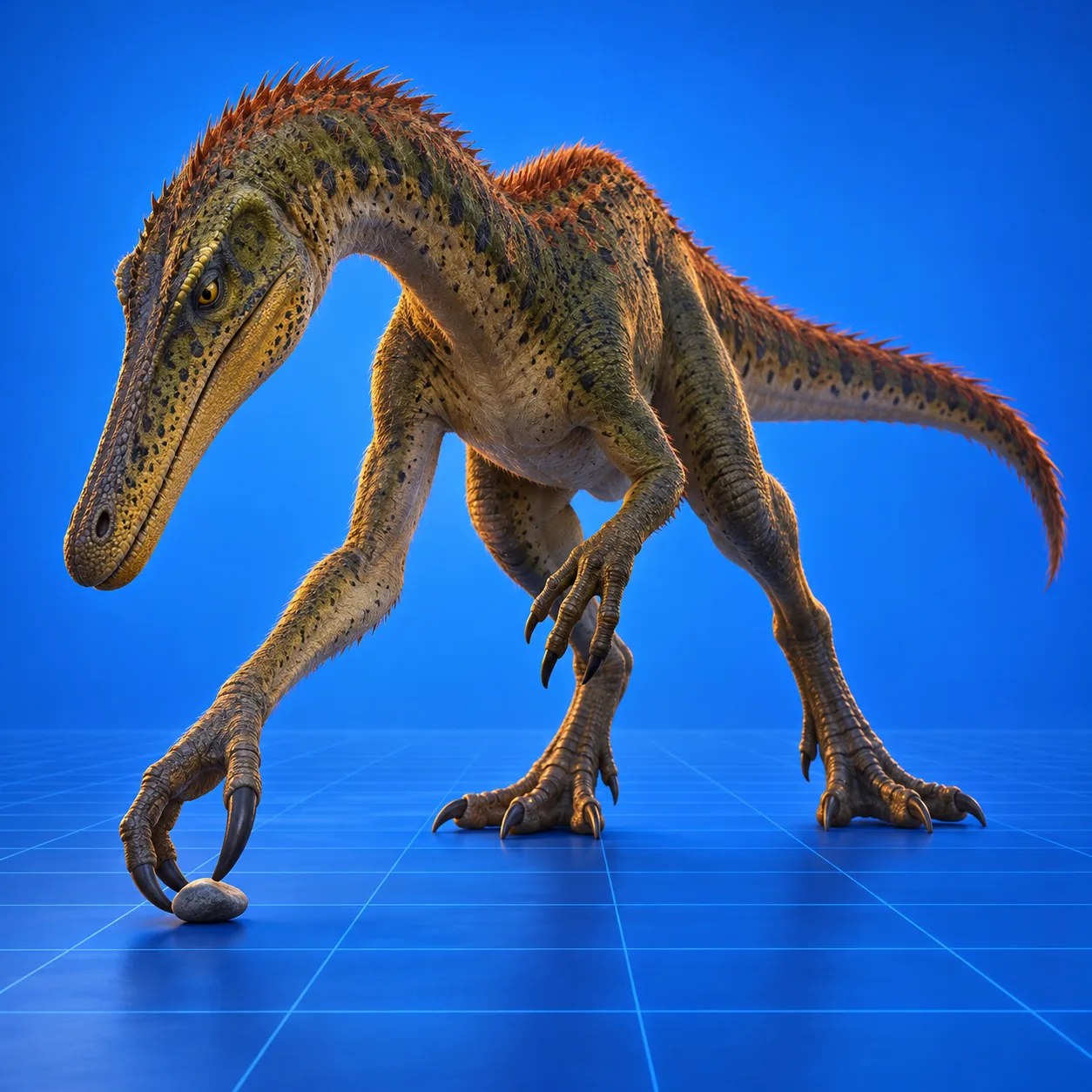
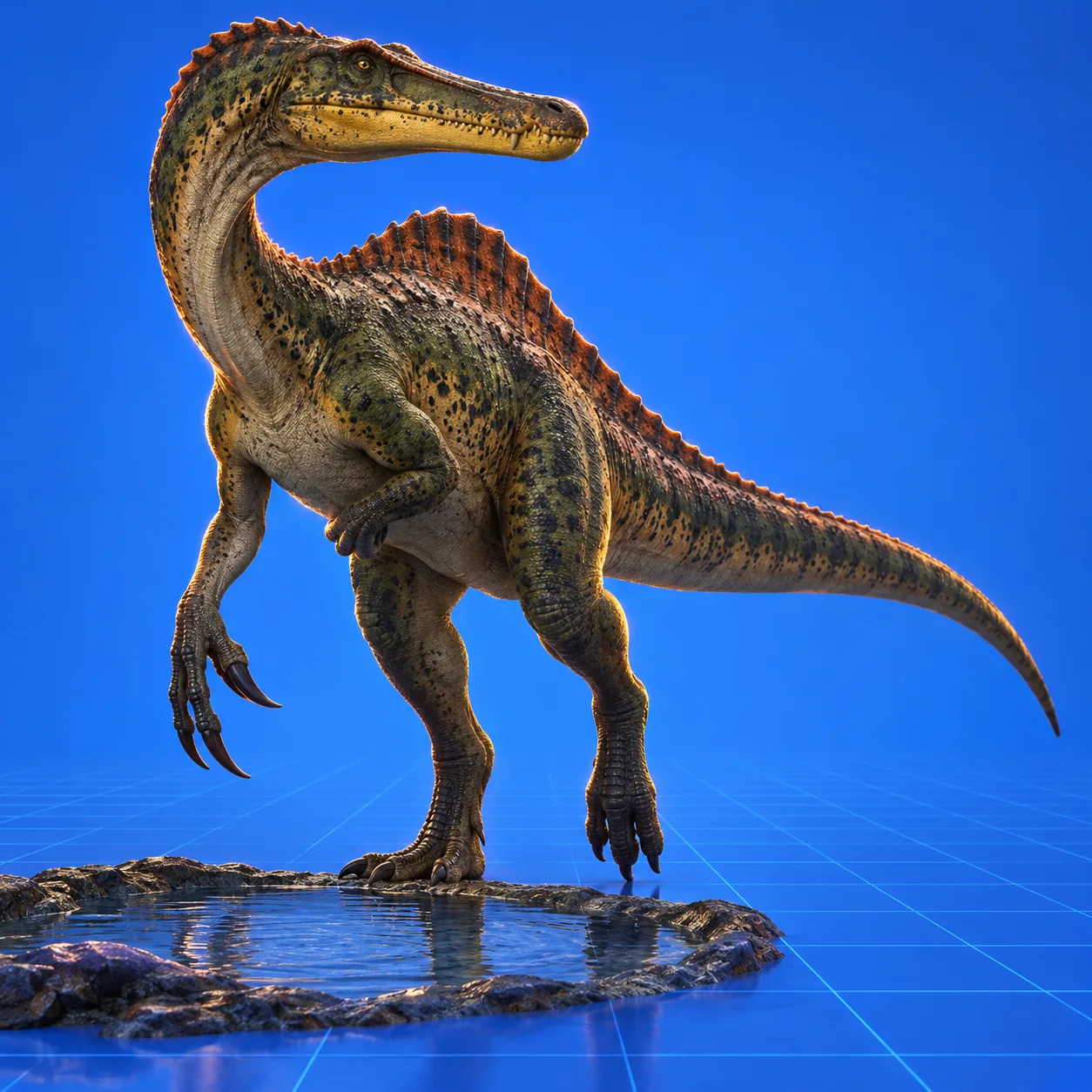
AI-generated, stylized game illustrations. These designs and growth stages are imaginative, not scientific reconstructions.
Baryonyx at a glance
- Diet
- Meat eater; fish important
- The elongated snout and conical teeth fit aquatic prey. This does not imply a diet consisting only of fish.
- When it lived
- Early Cretaceous
- Geological period represented by its fossil record. Dates and assignments can be refined through further study.
- Group
- Spinosauridae
- Spinosaurids
- Fossil locations
- England
- Places where fossils have been found
Beyond the game
The real Baryonyx
Baryonyx takes its name from the enormous claw on the first finger of the hand. It also belonged to the long-snouted spinosaurids, the same family as Spinosaurus and Suchomimus. Their conical teeth contrast with the blade-like teeth of many other large theropods.
William Walker found the reference skeleton in England in 1983. Study and comparison of those remains led to the species being described in 1986. A discovery and its formal scientific description are separate events, with research connecting the two.
The great claw is memorable, but the rest of the skeleton was essential for identifying its relationships. Its anatomy fits feeding on aquatic prey, including fish, without implying that every meal or activity was restricted to the water.
A family of theropods with elongated snouts and conical teeth. Their aquatic adaptations and habits differed and remain under study.
Get to know Baryonyx
Questions, answered.
Did Baryonyx only eat fish?
Fish were part of its diet, but apparently not the whole menu. Material interpreted as stomach contents included fish scales and Iguanodon bones, suggesting Baryonyx also consumed other dinosaurs. [2]
What does the name Baryonyx refer to?
The name means “heavy claw”, referring to a large claw on the hand. Researchers have suggested it could have helped catch fish, but exactly how Baryonyx used it cannot be watched directly in the fossil record. [1]
Was Baryonyx a crocodile?
No. Its long snout looked crocodile-like, but Baryonyx was a two-legged theropod dinosaur in the spinosaur family. A notable skeleton was found in Surrey, England, in rocks from the Early Cretaceous. [1] [2]
Research sources · reviewed
Fossil discoveries
Selected fossil records · present-day map
Map references
Map: Natural Earth, public domain. Fossil records: linked collections and publications.A note on the science
Fish were important in spinosaurid diets, but that does not make Baryonyx an exclusively fish-eating animal.
Sources & text credits
Explore the references behind this profile.
- Baryonyx walkeri
Wikipedia contributors · Spanish source
Adapted and translated from Baryonyx walkeri by Wikipedia contributors. See the linked revision for the source text and contributor history.
- Baryonyx
Wikipedia contributors · English source
Adapted and translated from Baryonyx by Wikipedia contributors. See the linked revision for the source text and contributor history.
- Spinosauridae
Wikipedia contributors · English source
Group information adapted from Wikipedia contributors.
Educational text adapted in English from the existing Wikipedia-backed Dinosgacha catalogue and the linked Wikipedia articles by Wikipedia contributors.
Translated, shortened and edited for this encyclopedia; uncertain interpretations are identified. Selected museum and research references supplement verification.
The adapted educational text is available under CC BY-SA 4.0. This text license does not apply to the game illustrations.