
Dinosaur
Dilophosaurus
Two crests in the Early Jurassic
A large early theropod from Arizona carried paired skull crests and a body more substantial than its movie image.
Three stages. One companion.
Game artwork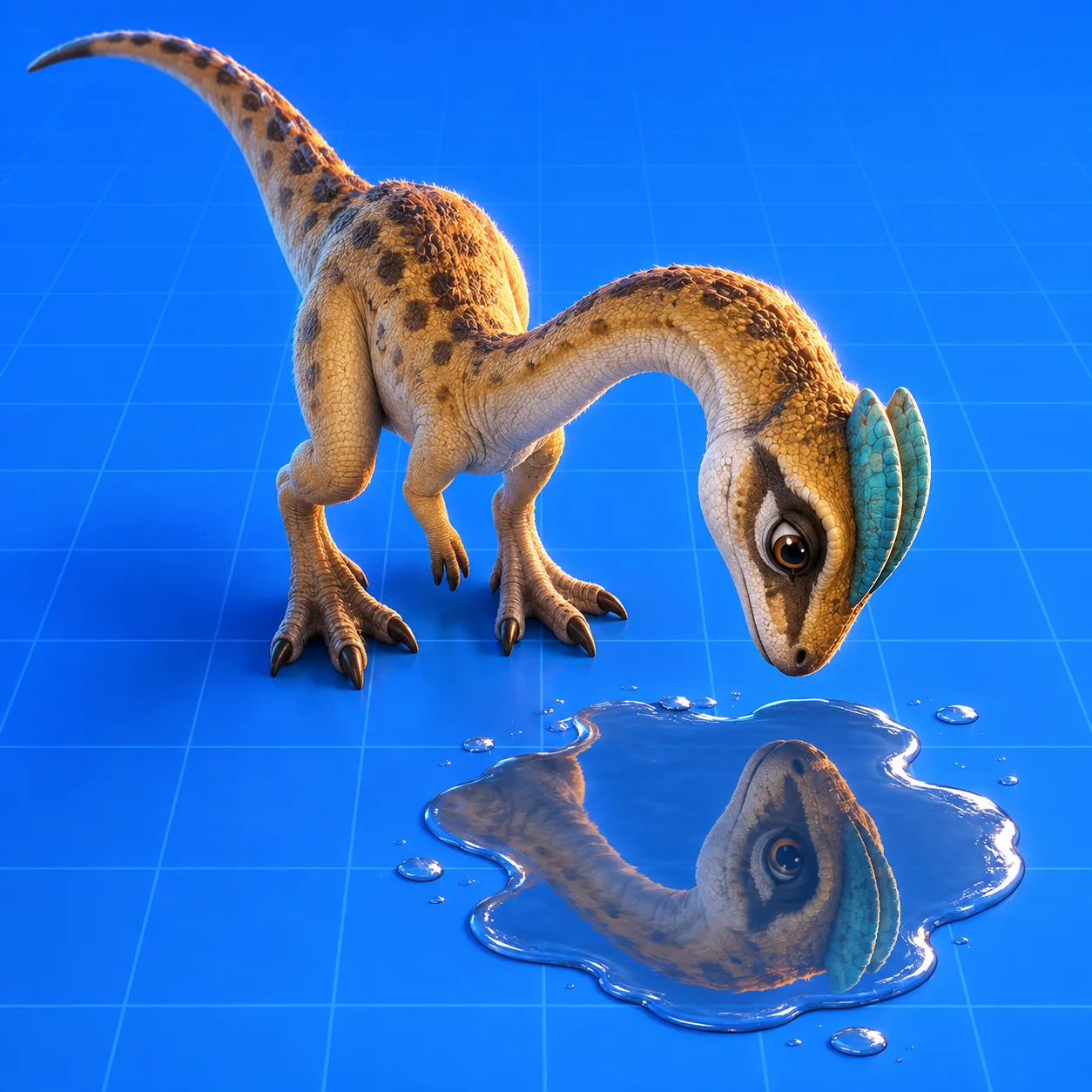
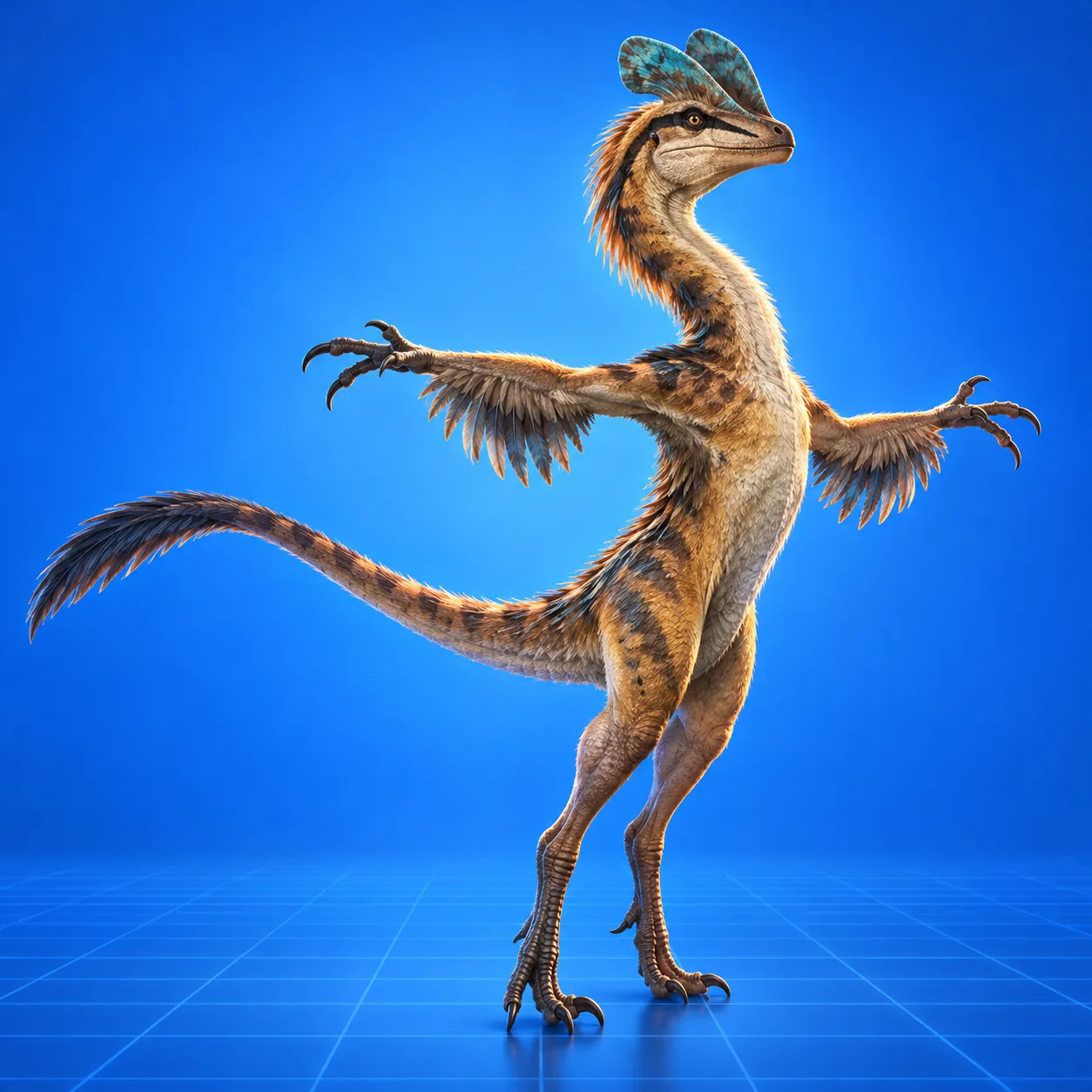
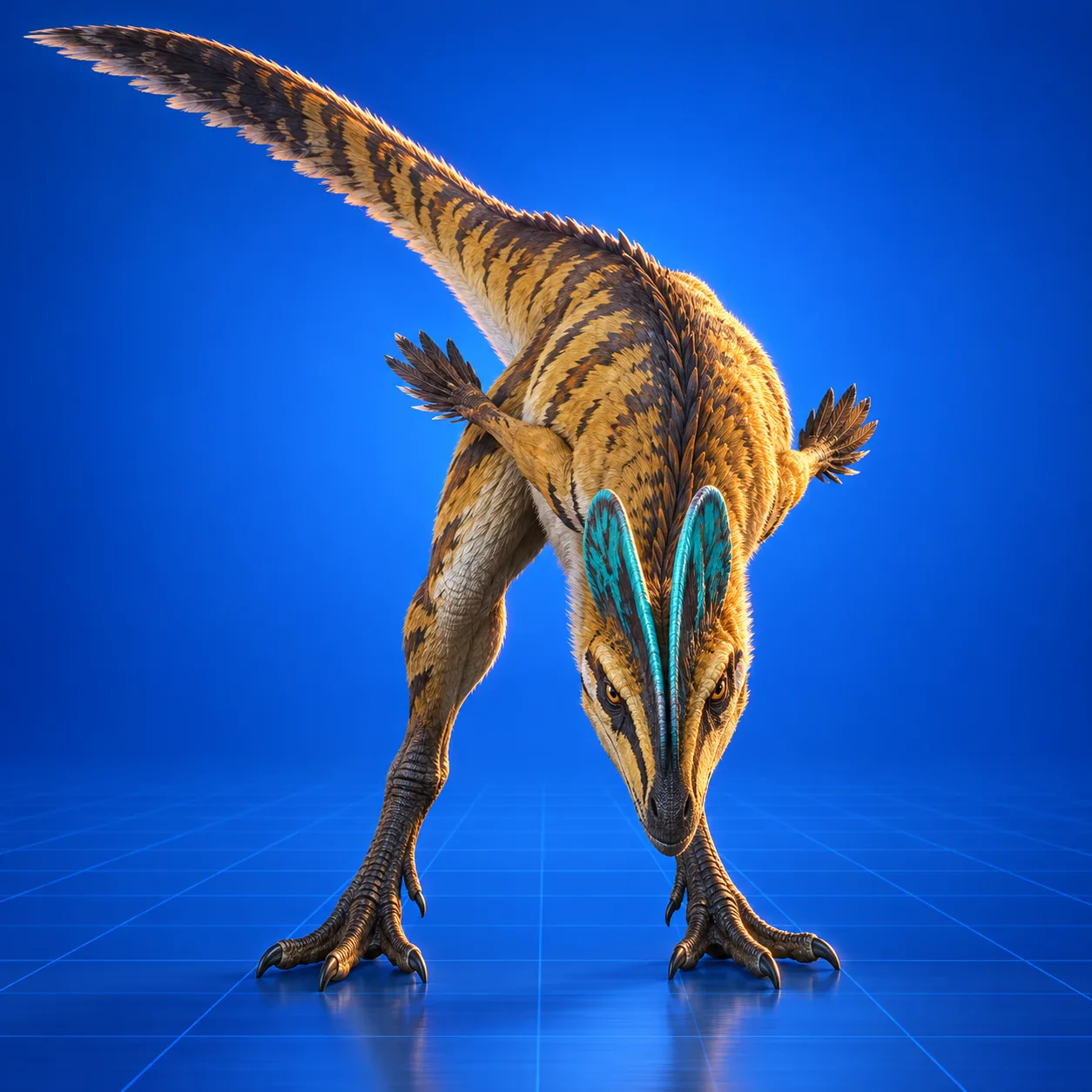
AI-generated, stylized game illustrations. These designs and growth stages are imaginative, not scientific reconstructions.
Dilophosaurus at a glance
- Diet
- Meat eater
- Interpreted as a consumer of other animals. Hunting and scavenging are compatible ways to obtain food.
- When it lived
- Early Jurassic
- Geological period represented by its fossil record. Dates and assignments can be refined through further study.
- Group
- Neotheropoda
- Neotheropods
- Fossil locations
- Arizona, United States
- Places where fossils have been found
Beyond the game
The real Dilophosaurus
Dilophosaurus carried two crests on its skull, the feature behind its name. It was a large meat-eating dinosaur of the Early Jurassic. Fossils from the Kayenta Formation in northern Arizona provide evidence for its anatomy, including specimens of different sizes.
Comparing those skeletons allows researchers to study growth as well as the adult body. Detailed reexamination has revised older ideas about weak jaws and a fragile skeleton. Its skull and vertebrae included air-filled spaces, an important feature in interpreting its construction.
Anatomy and the surrounding fossil environment guide ideas about its diet. They do not supply a complete menu for every individual. Its famous movie portrayal should be kept separate from the features demonstrated by the fossil material.
An evolutionary clade whose members share ancestors. This grouping does not imply that one named dinosaur directly became another.
Get to know Dilophosaurus
Questions, answered.
Did Dilophosaurus spit venom or have a neck frill?
Neither feature is supported by its known fossils. The venom and expanding neck frill familiar from Jurassic Park are fictional additions. Fossils do preserve the pair of head crests that gave Dilophosaurus its name. [1]
What were the two head crests for?
Recognising other individuals or attracting mates are plausible explanations. Their exact function is unknown, and the crests were probably too delicate to be fighting weapons. A covering of keratin may have changed their shape in life. [1]
Where and when did Dilophosaurus live?
Dilophosaurus lived in Early Jurassic North America. Its first known skeletons were discovered in Arizona by Jesse Williams, a Navajo fossil finder. It was a two-legged meat-eater, much earlier than late Cretaceous predators such as T. rex. [1]
Research sources · reviewed
Fossil discoveries
Selected fossil records · present-day map
Map references
Map: Natural Earth, public domain. Fossil records: linked collections and publications.A note on the science
A rattling neck frill and venom-spitting ability are not supported by its fossils.
Sources & text credits
Explore the references behind this profile.
- Dilophosaurus wetherilli
Wikipedia contributors · Spanish source
Adapted and translated from Dilophosaurus wetherilli by Wikipedia contributors. See the linked revision for the source text and contributor history.
- Dilophosaurus
Wikipedia contributors · English source
Adapted and translated from Dilophosaurus by Wikipedia contributors. See the linked revision for the source text and contributor history.
- Neotheropoda
Wikipedia contributors · English source
Group information adapted from Wikipedia contributors.
- Dilophosaurus wetherilli: anatomical and phylogenetic research
The University of Texas at Austin
Additional anatomical and period verification; research by Adam Marsh and Timothy Rowe (2020).
Educational text adapted in English from the existing Wikipedia-backed Dinosgacha catalogue and the linked Wikipedia articles by Wikipedia contributors.
Translated, shortened and edited for this encyclopedia; uncertain interpretations are identified. Selected museum and research references supplement verification.
The adapted educational text is available under CC BY-SA 4.0. This text license does not apply to the game illustrations.