
Plant
Aglaophyton
Aglaophyton majus formed branching, leafless shoots with spore-bearing tips.
Aglaophyton majus formed branching, leafless shoots with spore-bearing tips. It is one of the distinctive plants preserved in the Rhynie chert.
Three stages. One companion.
Game artwork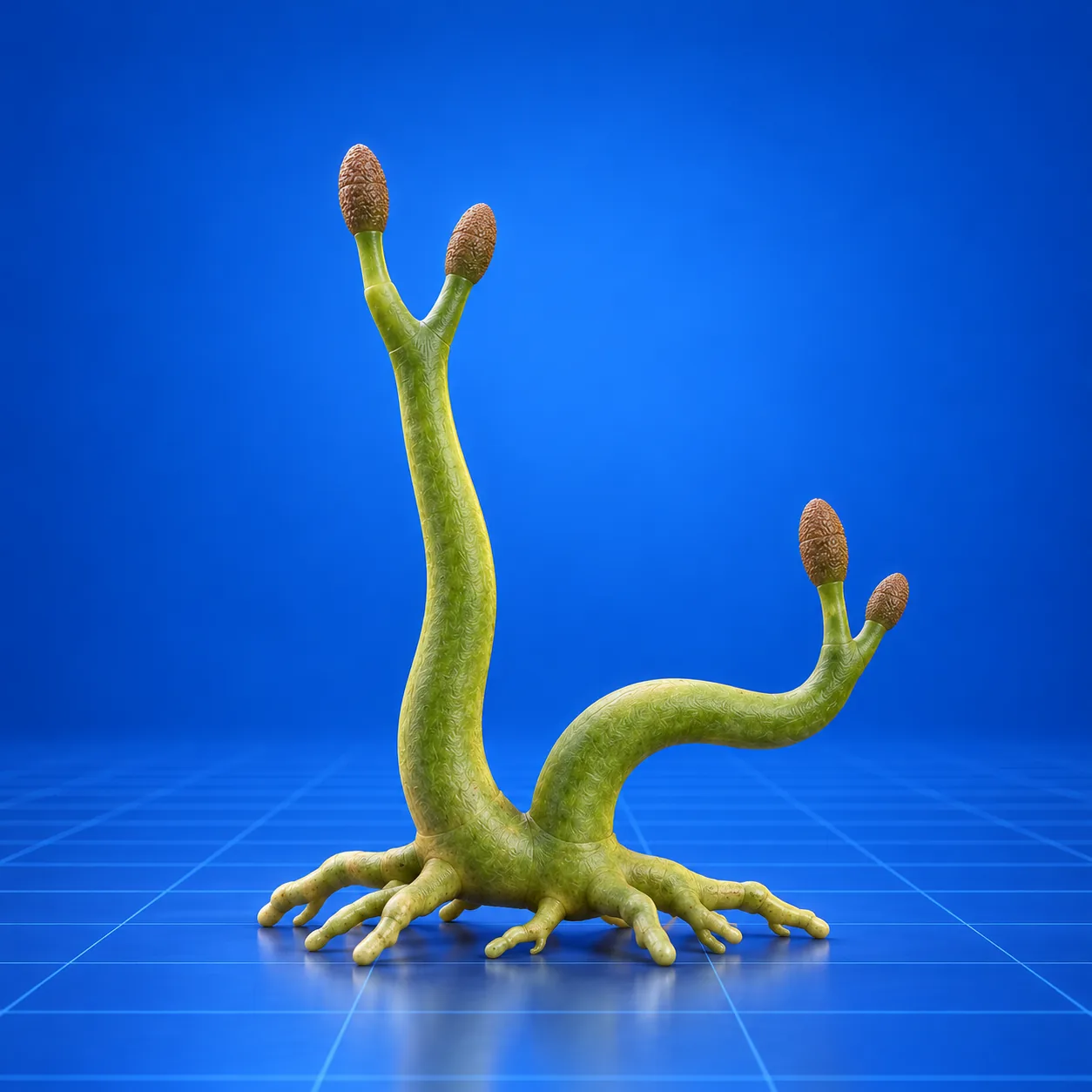
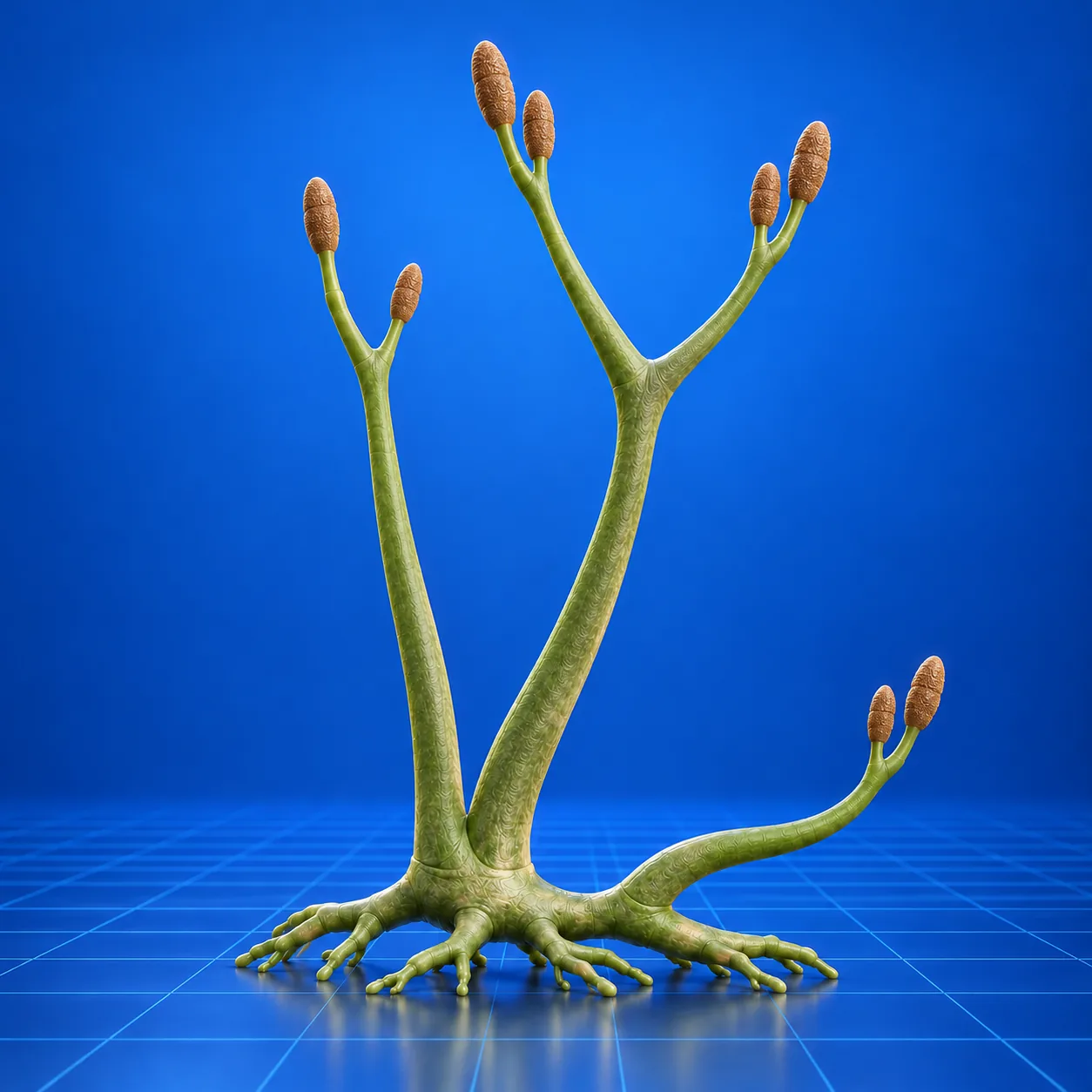
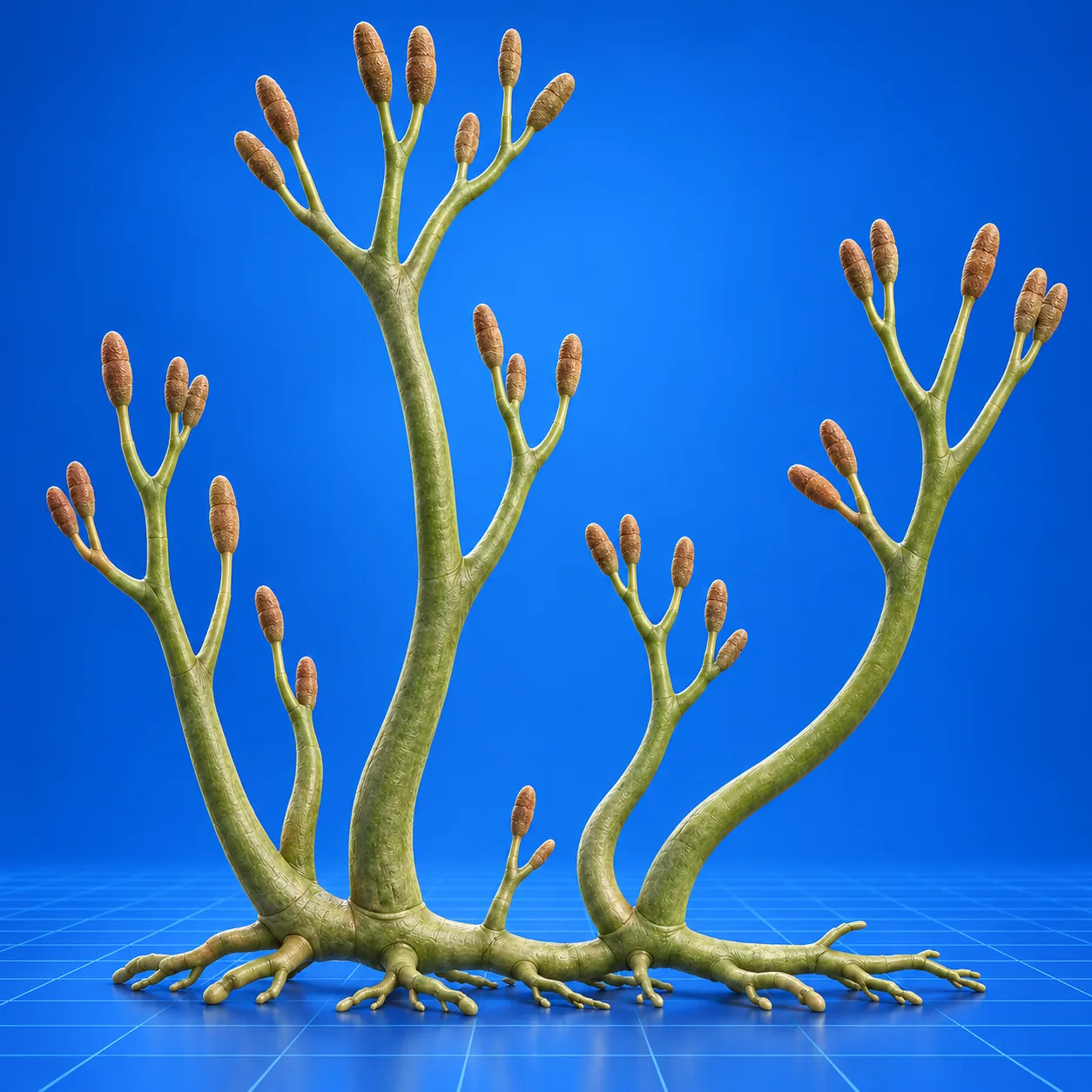
AI-generated, stylized game illustrations. These designs and growth stages are imaginative, not scientific reconstructions.
Aglaophyton at a glance
- Diet
- Photosynthetic
- It used sunlight to make organic matter through photosynthesis.
- When it lived
- Early Devonian
- Group
- Polysporangiophyta
- Early branching land plants
Beyond the game
The real Aglaophyton
Aglaophyton majus formed branching, leafless shoots with spore-bearing tips. It is one of the distinctive plants preserved in the Rhynie chert.
Its anatomy differs from Rhynia even though both have simple branching stems. The preserved tissues reveal two distinct kinds of plant living in the same ancient ecosystem.
Fossil discoveries
Selected fossil records · present-day map
Map references
Kerp 2018 — Organs and tissues of Rhynie chert plants ↗
Map location · Rhynie chert, Aberdeenshire, Scotland ↗
Map: Natural Earth, public domain. Fossil records: Paleobiology Database and linked collections and publications.Sources & text credits
Explore the references behind this profile.
- Edwards 1986 — Aglaophyton major, a non-vascular land-plant from the Devonian Rhynie Chert
- Kerp — Organs and tissues of Rhynie chert plants
Original English Dinosgacha educational summaries informed by the linked scientific and museum references; source publications retain their own rights.