Dinosaur
Therizinosaurus
Enormous claws on a plant-eating theropod
A small collection of bones revealed a dinosaur whose striking hands challenge the idea that every theropod was a hunter.
Three stages. One companion.
Game artwork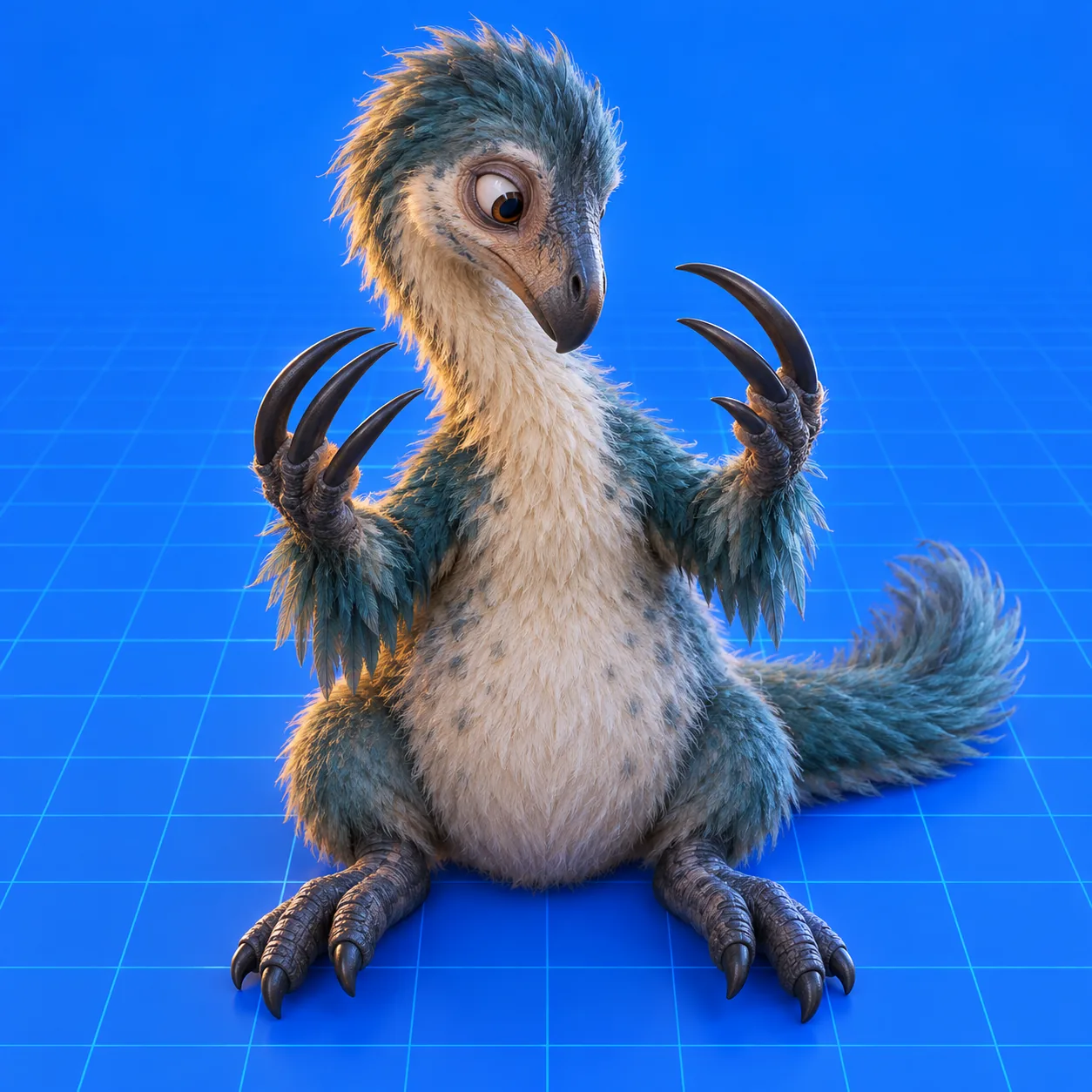
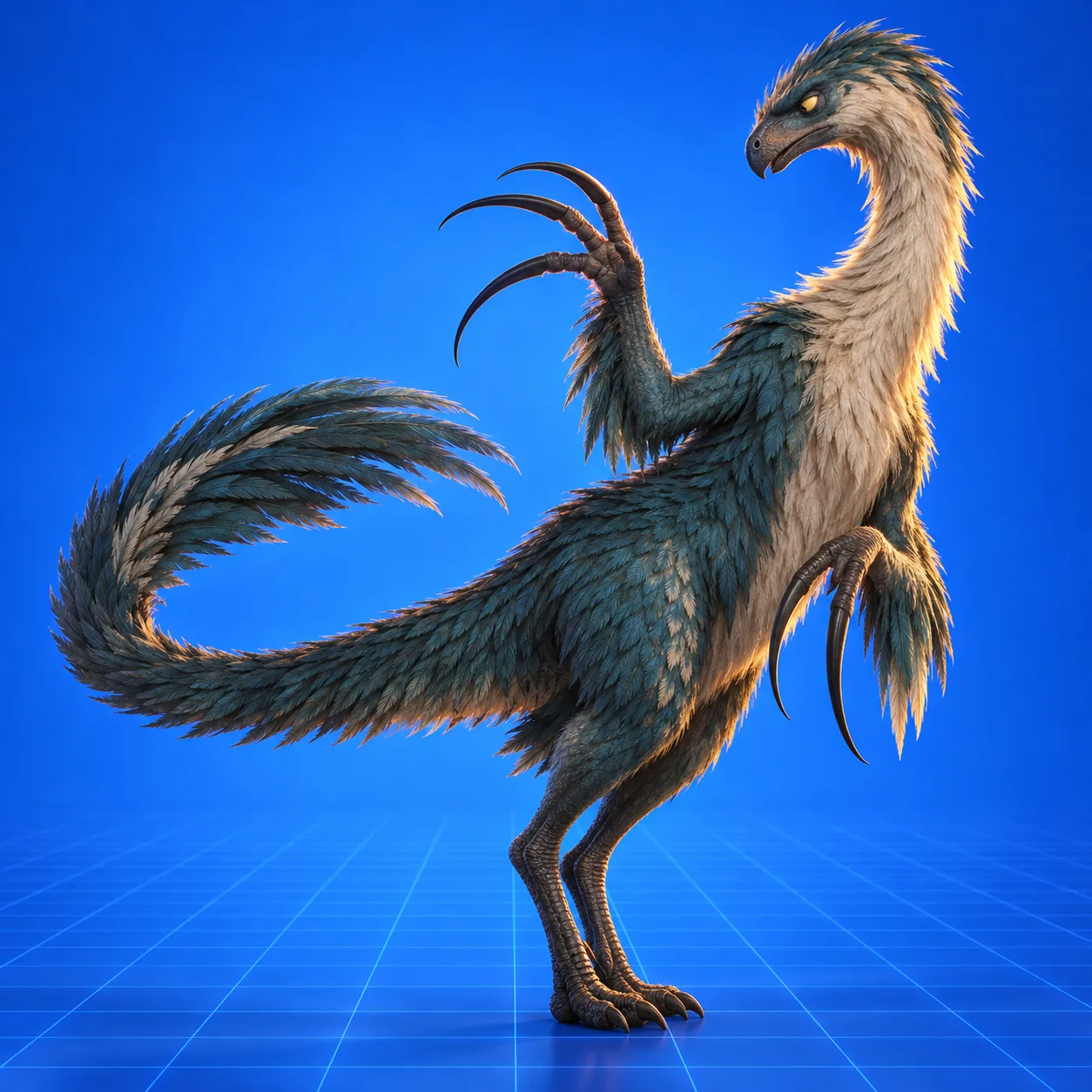
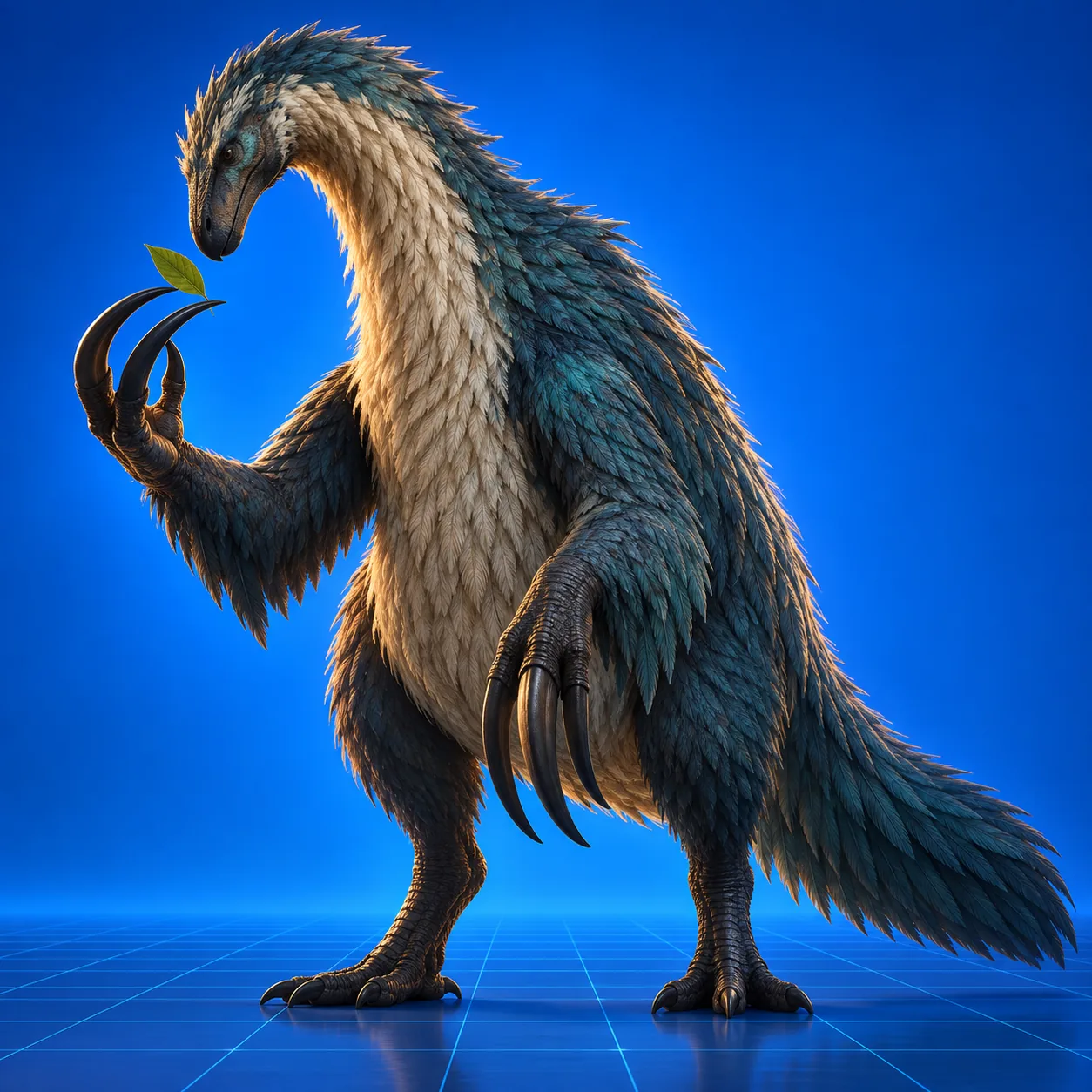
AI-generated, stylized game illustrations. These designs and growth stages are imaginative, not scientific reconstructions.
Therizinosaurus at a glance
- Diet
- Mainly plants
- Interpreted as mainly herbivorous through comparison with related theropods adapted to plant eating.
- When it lived
- Late Cretaceous
- Geological period represented by its fossil record. Dates and assignments can be refined through further study.
- Group
- Therizinosauridae
- Therizinosaurids
- Fossil locations
- Mongolia
- Places where fossils have been found
Beyond the game
The real Therizinosaurus
Therizinosaurus is famous for enormous claws on its hands. Those claws do not automatically identify it as a predator. It belonged to a theropod branch with adaptations associated with a plant-based diet, showing how varied that wider group of dinosaurs became.
Only a limited selection of bones is known. Comparisons with better-preserved relatives help researchers reconstruct a long-necked animal with a broad body. This makes the overall portrait an interpretation based on both its own fossils and evidence from related dinosaurs.
It is usually interpreted as a large browser, feeding on vegetation such as leaves and shoots. The precise uses of its extraordinary arms and claws remain questions to investigate rather than a complete behavior that can be read directly from their size.
An evolutionary family whose members share ancestors. This grouping does not imply that one named dinosaur directly became another.
Get to know Therizinosaurus
Questions, answered.
Was Therizinosaurus a meat-eater?
Despite its enormous claws, Therizinosaurus is interpreted as a plant-eating theropod. Related fossils helped researchers place this unusual animal within a group that also includes many familiar carnivorous dinosaurs. [1]
What did Therizinosaurus use its claws for?
Pulling vegetation within reach and threatening other animals have both been proposed. The claws alone cannot tell us exactly how it behaved, and their suitability as striking weapons remains uncertain. [1]
How complete are Therizinosaurus fossils?
Only parts of the skeleton, including limb and rib bones, are known. Reconstructions therefore borrow anatomical clues from related dinosaurs. Its overall appearance is less directly documented than that of species known from complete skeletons. [1]
Research sources · reviewed
Fossil discoveries
Selected fossil records · present-day map
Map references
Map: Natural Earth, public domain. Fossil records: linked collections and publications.A note on the science
Much of the body is reconstructed through comparisons with relatives. The exact function of the claws remains uncertain.
Sources & text credits
Explore the references behind this profile.
- Therizinosaurus cheloniformis
Wikipedia contributors · Spanish source
Adapted and translated from Therizinosaurus cheloniformis by Wikipedia contributors. See the linked revision for the source text and contributor history.
- Therizinosaurus
Wikipedia contributors · English source
Adapted and translated from Therizinosaurus by Wikipedia contributors. See the linked revision for the source text and contributor history.
- Therizinosauridae
Wikipedia contributors · English source
Group information adapted from Wikipedia contributors.
- Therizinosaurus — Dino Directory
Natural History Museum, London
Additional verification of scientific interpretation and geological period.
Educational text adapted in English from the existing Wikipedia-backed Dinosgacha catalogue and the linked Wikipedia articles by Wikipedia contributors.
Translated, shortened and edited for this encyclopedia; uncertain interpretations are identified. Selected museum and research references supplement verification.
The adapted educational text is available under CC BY-SA 4.0. This text license does not apply to the game illustrations.