Dinosaur
Gallimimus
An ostrich-like outline on a dinosaur scale
Long legs, a long neck and a toothless beak made this large Mongolian theropod look familiar, while its menu remains debated.
Three stages. One companion.
Game artwork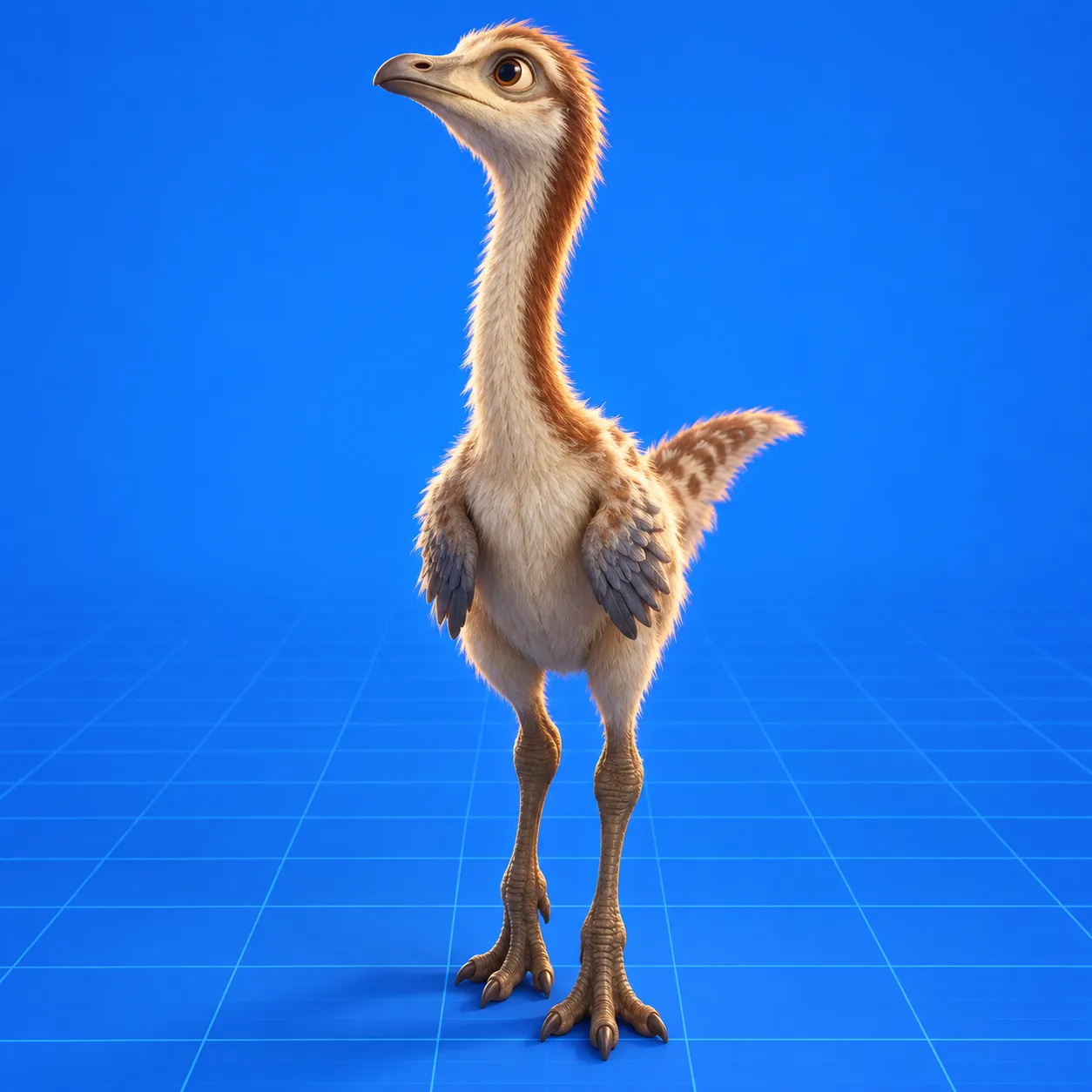
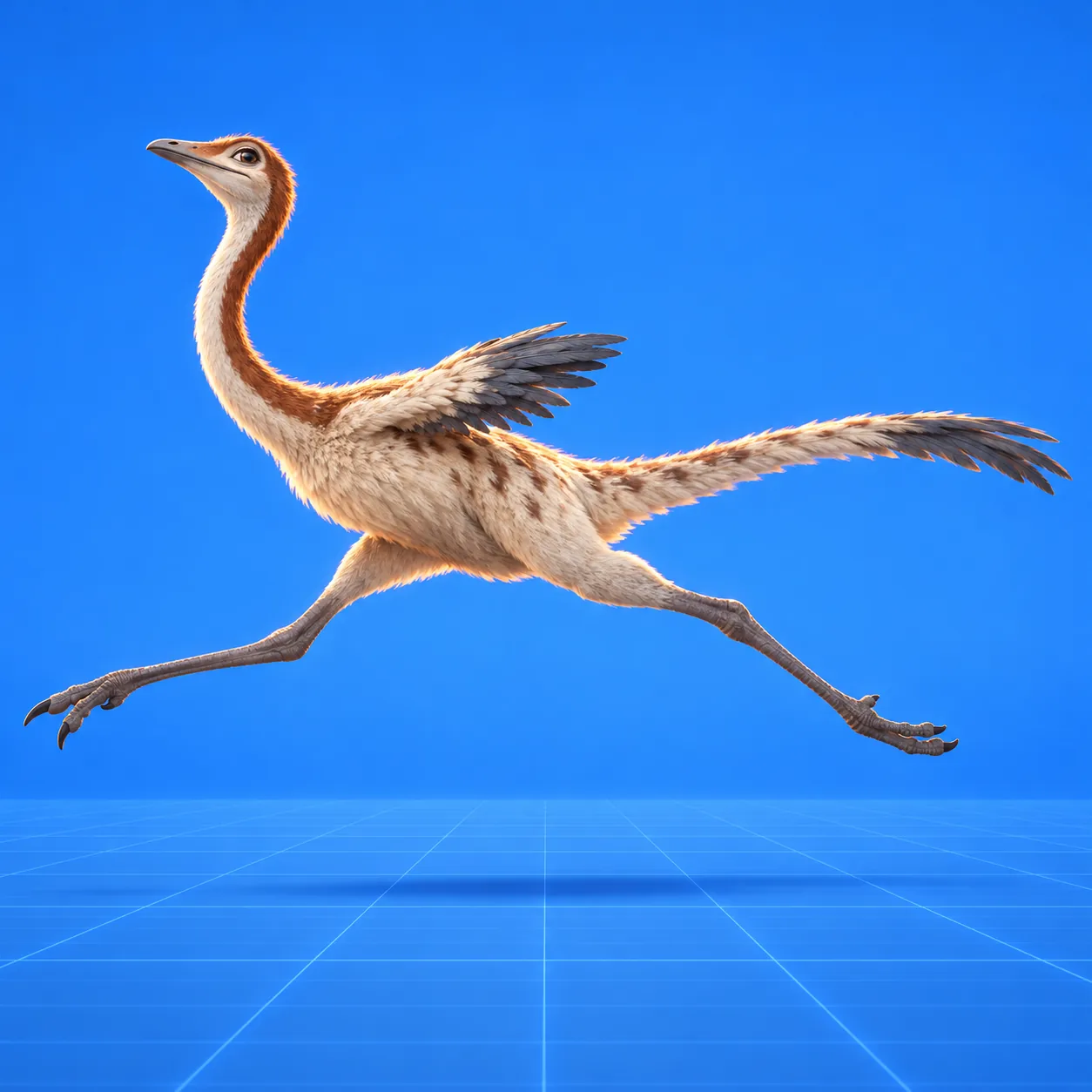
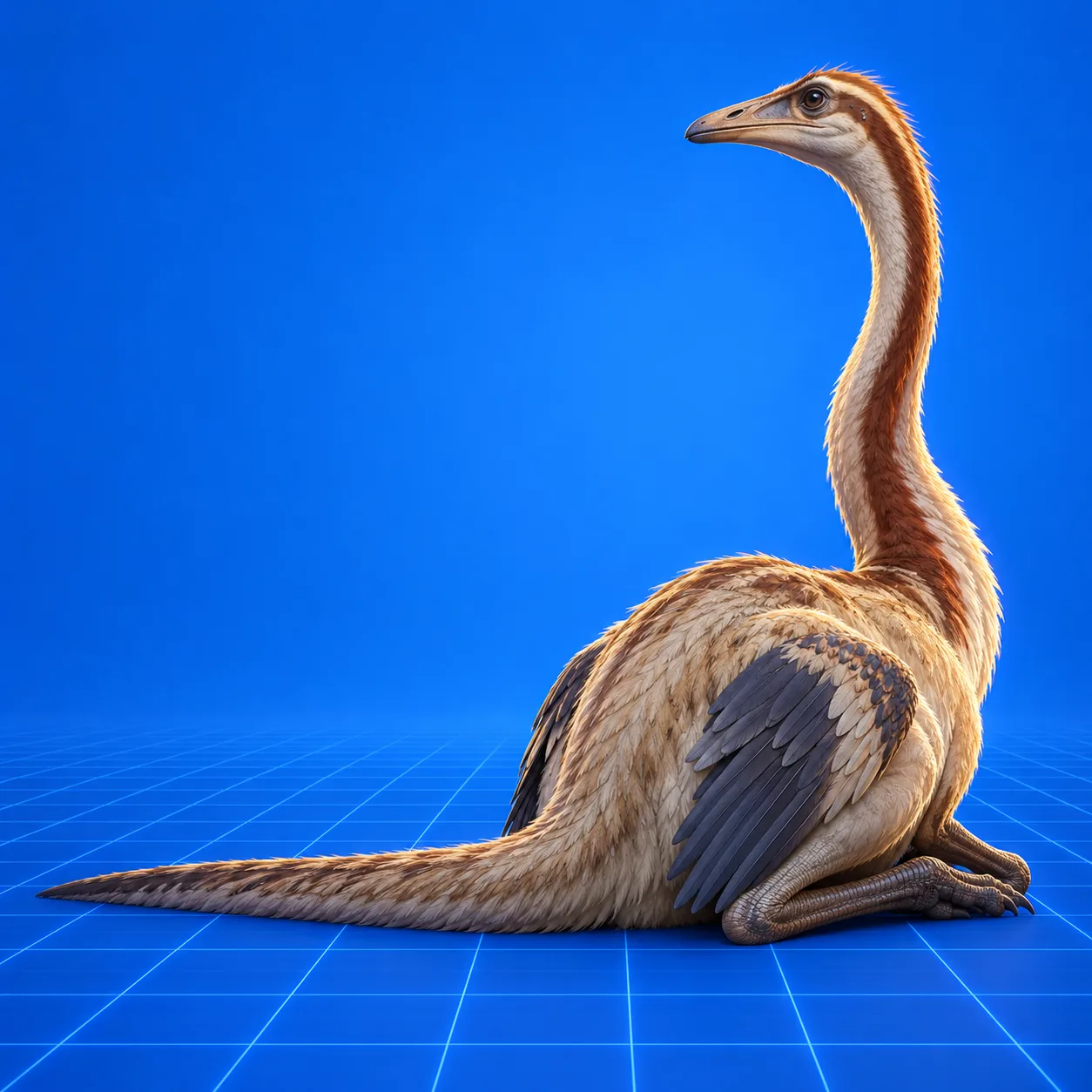
AI-generated, stylized game illustrations. These designs and growth stages are imaginative, not scientific reconstructions.
Gallimimus at a glance
- Diet
- Plants and animals; debated
- A toothless beak does not establish the exact menu. Plants, small animals or both have been proposed.
- When it lived
- Late Cretaceous
- Geological period represented by its fossil record. Dates and assignments can be refined through further study.
- Group
- Ornithomimidae
- Ornithomimids
- Fossil locations
- Mongolia
- Places where fossils have been found
Beyond the game
The real Gallimimus
Gallimimus had long legs, an elongated neck and a toothless beak, giving it an outline reminiscent of an ostrich. Its scale was very different: an adult could reach about six meters in length and weigh several hundred kilograms. Its limbs were adapted for running.
It belonged to the ornithomimids, often called ostrich dinosaurs. That resemblance does not mean Gallimimus was a modern bird. Comparing related dinosaurs helps researchers understand its anatomy without making the modern comparison an exact match in every detail.
A toothless beak does not reveal an exact menu. Researchers have proposed plants, small animals or a combination of foods. Its diet is therefore presented with uncertainty, rather than assuming it ate the same things as an ostrich today.
A family of long-legged, long-necked theropods with toothless beaks, often called ostrich dinosaurs.
Get to know Gallimimus
Questions, answered.
Was Gallimimus an ostrich?
No. Gallimimus was an ornithomimid dinosaur with an ostrich-like body, long legs and a toothless beak. Modern ostriches belong to a different branch of the dinosaur family tree; their similar outlines do not make them the same animal. [1]
What did Gallimimus eat?
Its diet is uncertain. Features of its beak have been interpreted as useful for feeding on small animals, filtering food or cutting plants. An omnivorous diet is a common interpretation, rather than a confirmed menu. [1]
Did Gallimimus have feathers?
Feathers are expected because closely related dinosaurs preserve them, although direct feather evidence for Gallimimus itself is lacking. It lived in Late Cretaceous Mongolia and was adapted for moving quickly on two legs. [1]
Research sources · reviewed
Fossil discoveries
Selected fossil records · present-day map
Map references
Map: Natural Earth, public domain. Fossil records: linked collections and publications.A note on the science
Diet is debated, with omnivory a likely interpretation. Running adaptations do not provide a directly measured maximum speed.
Sources & text credits
Explore the references behind this profile.
- Gallimimus bullatus
Wikipedia contributors · Spanish source
Adapted and translated from Gallimimus bullatus by Wikipedia contributors. See the linked revision for the source text and contributor history.
- Gallimimus
Wikipedia contributors · English source
Adapted and translated from Gallimimus by Wikipedia contributors. See the linked revision for the source text and contributor history.
- Ornithomimidae
Wikipedia contributors · English source
Group information adapted from Wikipedia contributors.
- Gallimimus — Dino Directory
Natural History Museum, London
Additional verification of scientific interpretation and geological period.
Educational text adapted in English from the existing Wikipedia-backed Dinosgacha catalogue and the linked Wikipedia articles by Wikipedia contributors.
Translated, shortened and edited for this encyclopedia; uncertain interpretations are identified. Selected museum and research references supplement verification.
The adapted educational text is available under CC BY-SA 4.0. This text license does not apply to the game illustrations.