
Dinosaur
Stegosaurus
Plates above, spikes behind
A distinctive Jurassic plant eater combined bony back plates with a spiked tail and short front legs.
Three stages. One companion.
Game artwork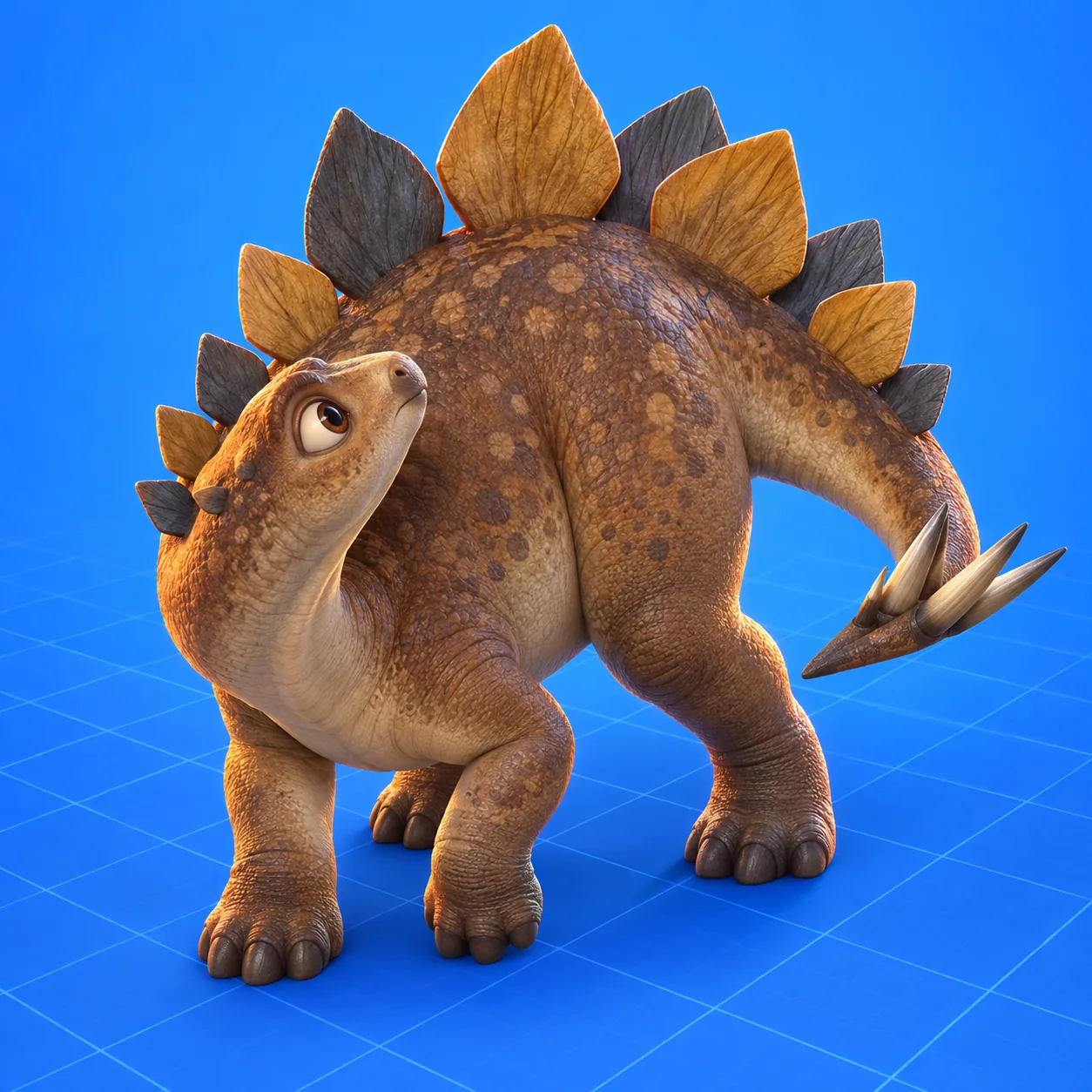
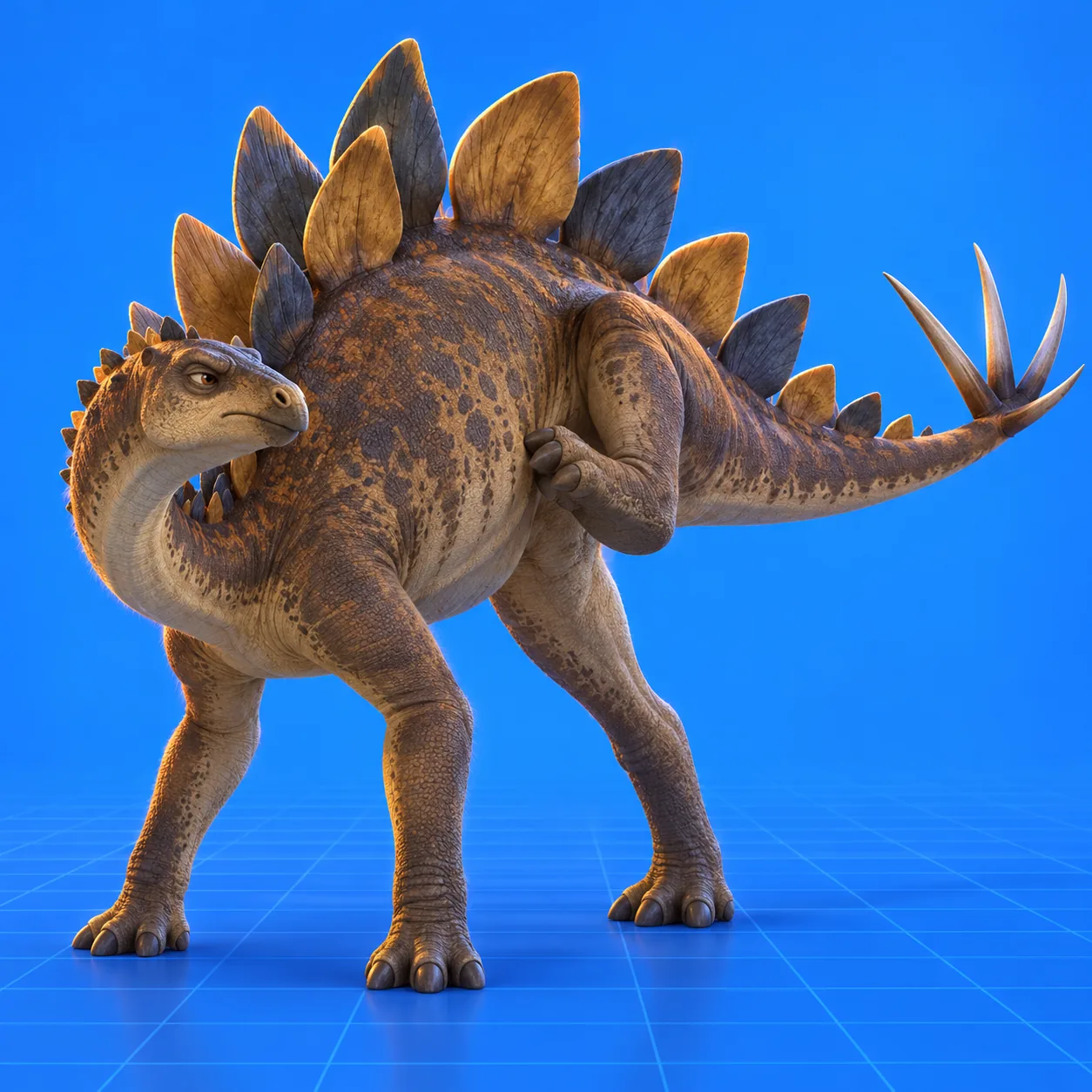
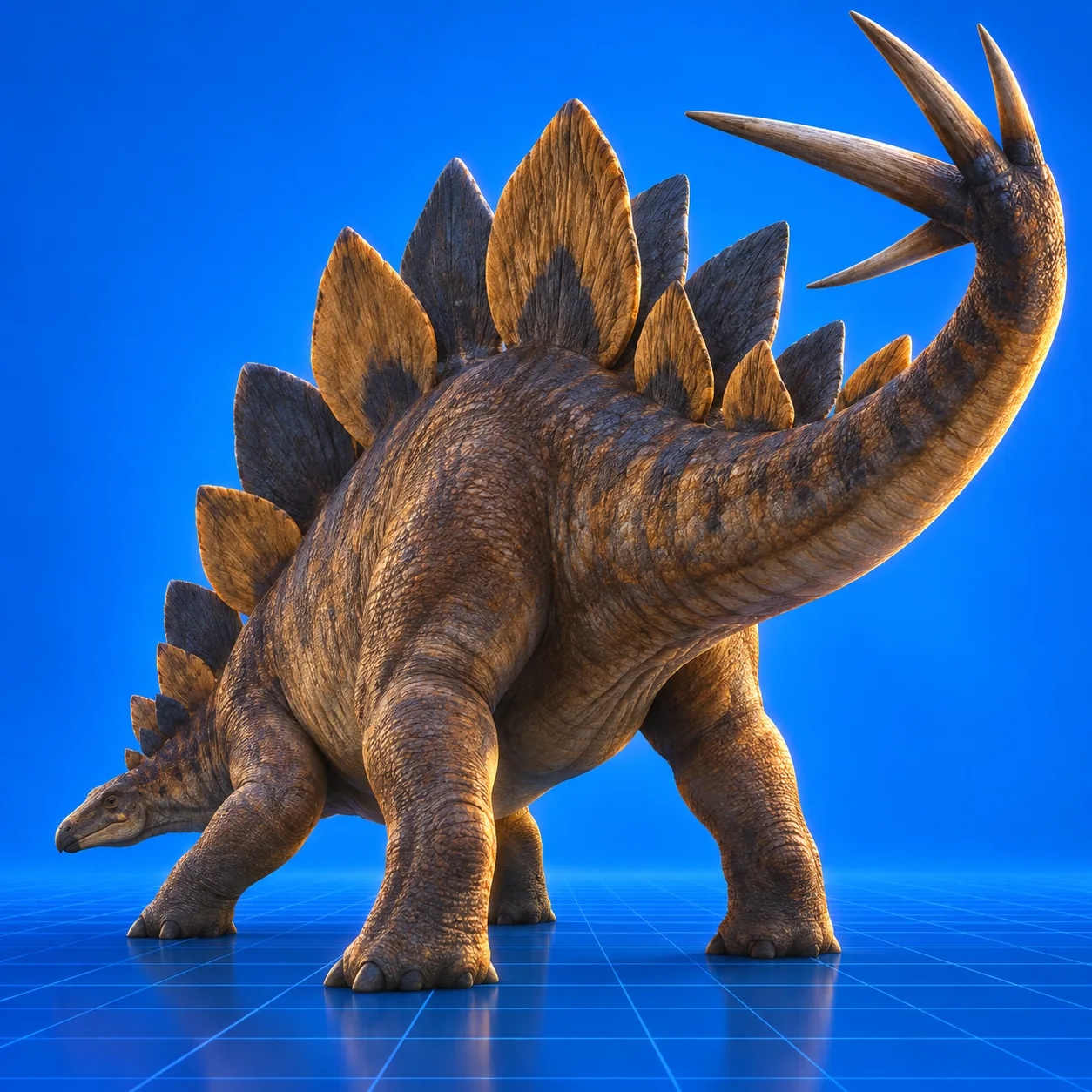
AI-generated, stylized game illustrations. These designs and growth stages are imaginative, not scientific reconstructions.
Stegosaurus at a glance
- Diet
- Plant eater
- A plant-based diet is inferred from anatomy and comparisons with related animals. Herbivores did not all eat the same plants.
- When it lived
- Late Jurassic
- Geological period represented by its fossil record. Dates and assignments can be refined through further study.
- Group
- Stegosauridae
- Stegosaurids
- Fossil locations
- United States, Portugal
- Places where fossils have been found
Beyond the game
The real Stegosaurus
Stegosaurus combined large upright plates along its back with spikes on its tail. It was a plant eater that walked on four legs. Its front legs were shorter than its hind legs, giving the body a recognizable profile even without its famous plates.
Those plates were bones formed in the skin, called osteoderms, rather than extensions of the vertebrae. This distinction helps explain how different parts of a skeleton contributed to the animal's outward shape. The tail spikes were another conspicuous feature.
Remains from the United States and Portugal allow researchers to compare more than one individual. A useful reconstruction considers the legs, posture and body as carefully as the ornaments that usually attract attention first.
A family of armored dinosaurs with bony plates and spikes formed in the skin.
Get to know Stegosaurus
Questions, answered.
Were the plates armour?
The large back plates were relatively thin, which makes heavy-duty protection an unlikely main function. Display and heat exchange are proposed roles. Researchers have not resolved exactly how much each explanation contributed. [2]
How did Stegosaurus defend itself?
The pointed spikes at the end of its tail offered a much more direct defensive tool than its back plates. Damage in Allosaurus fossils has been interpreted as evidence of injuries from stegosaur tail spikes. [1] [3]
Did Stegosaurus live with T. rex?
No. Stegosaurus lived in the Late Jurassic, whereas T. rex appeared much later, near the end of the Cretaceous. Allosaurus is a better-known predator from the world Stegosaurus actually inhabited. [1] [4]
Fossil discoveries
Selected fossil records · present-day map
Map references
Map: Natural Earth, public domain. Fossil records: linked collections and publications.A note on the science
The plates are well documented, but their exact functions remain debated; a distinctive shape alone cannot settle its use.
Sources & text credits
Explore the references behind this profile.
- Stegosaurus
Wikipedia contributors · Spanish source
Adapted and translated from Stegosaurus by Wikipedia contributors. See the linked revision for the source text and contributor history.
- Stegosaurus
Wikipedia contributors · English source
Adapted and translated from Stegosaurus by Wikipedia contributors. See the linked revision for the source text and contributor history.
- Stegosauridae
Wikipedia contributors · English source
Group information adapted from Wikipedia contributors.
Educational text adapted in English from the existing Wikipedia-backed Dinosgacha catalogue and the linked Wikipedia articles by Wikipedia contributors.
Translated, shortened and edited for this encyclopedia; uncertain interpretations are identified. Selected museum and research references supplement verification.
The adapted educational text is available under CC BY-SA 4.0. This text license does not apply to the game illustrations.