
Dinosaur
Ankylosaurus
Armor and a club at the end of the tail
This broad, low-slung herbivore carried bony armor and a tail club during the final part of the Cretaceous.
Three stages. One companion.
Game artwork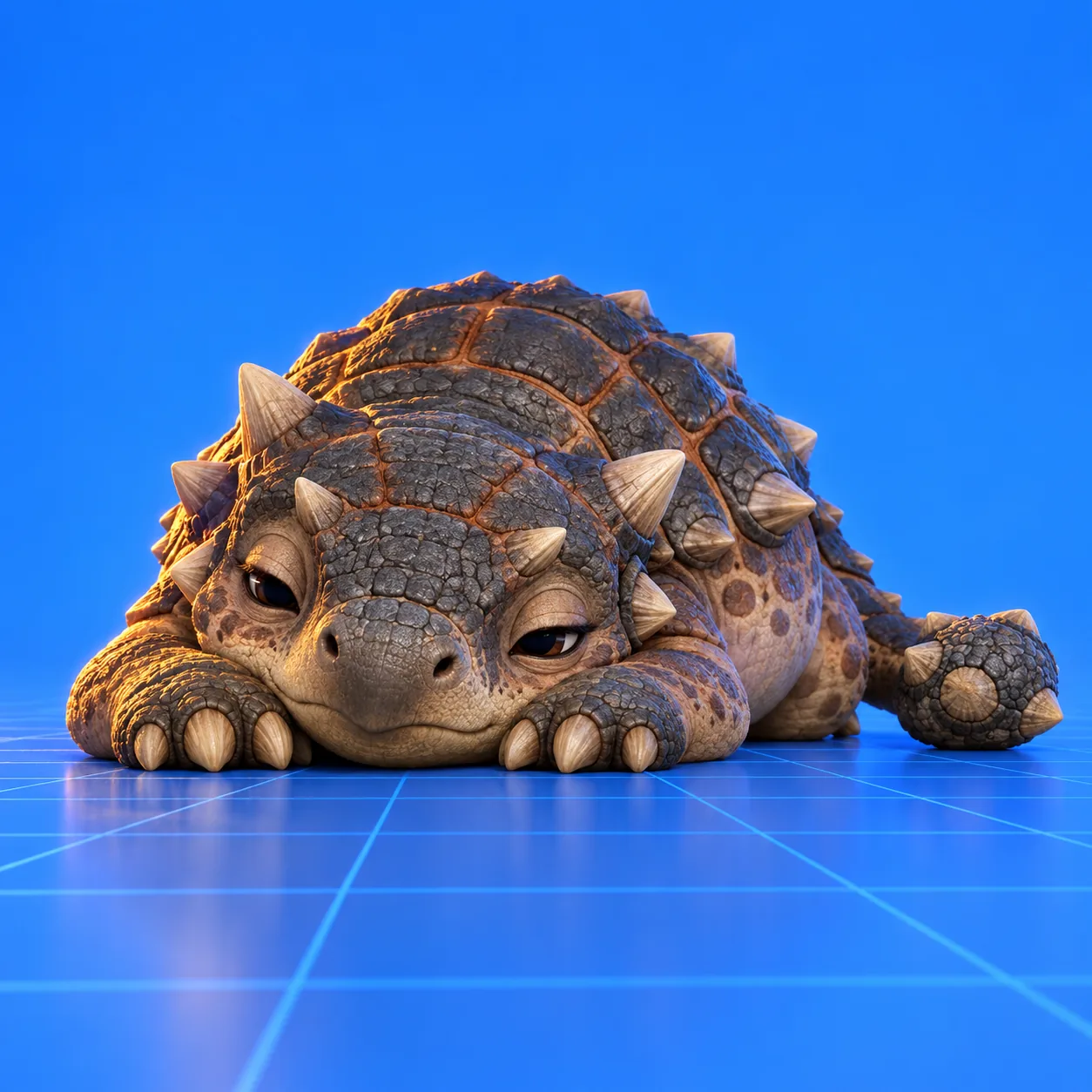
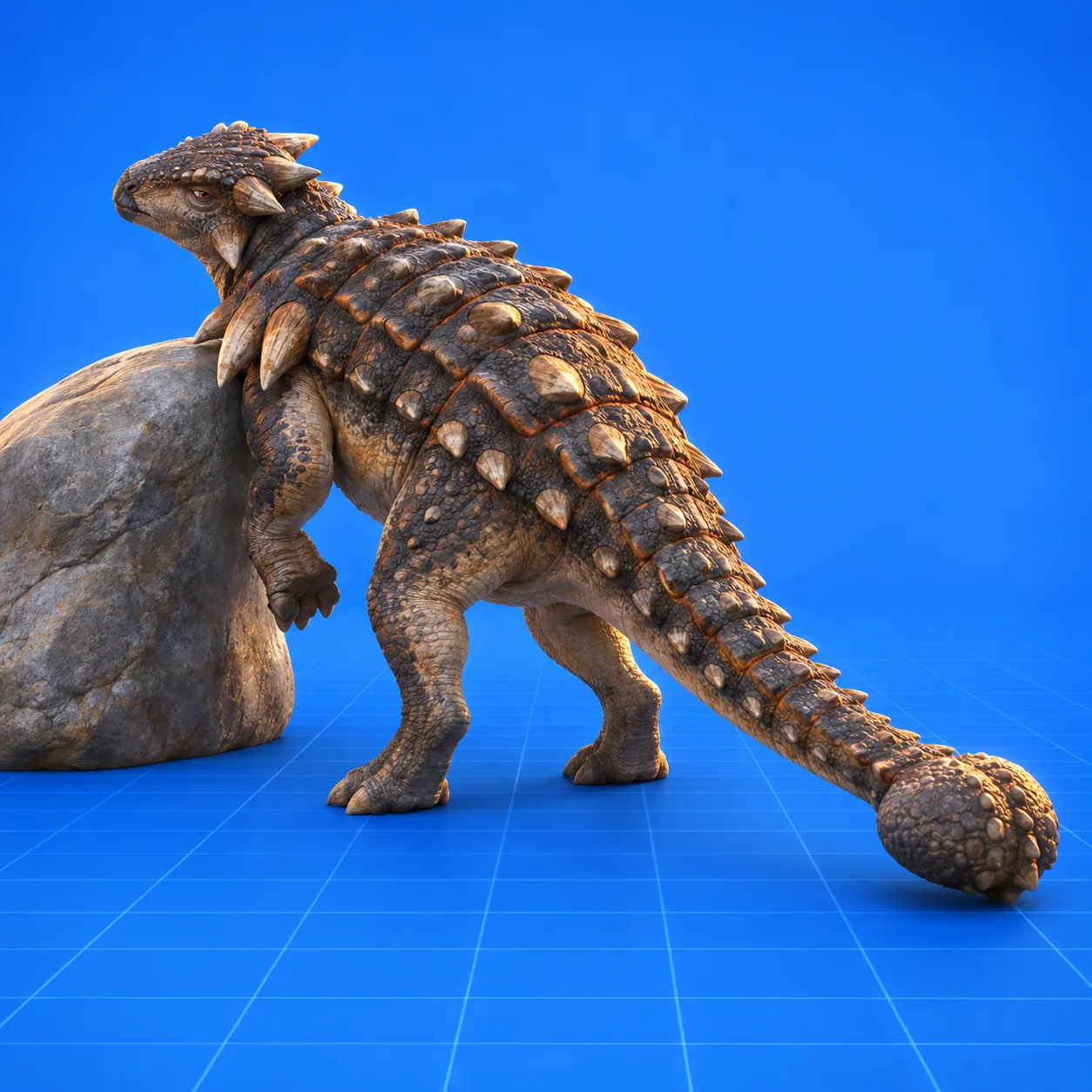
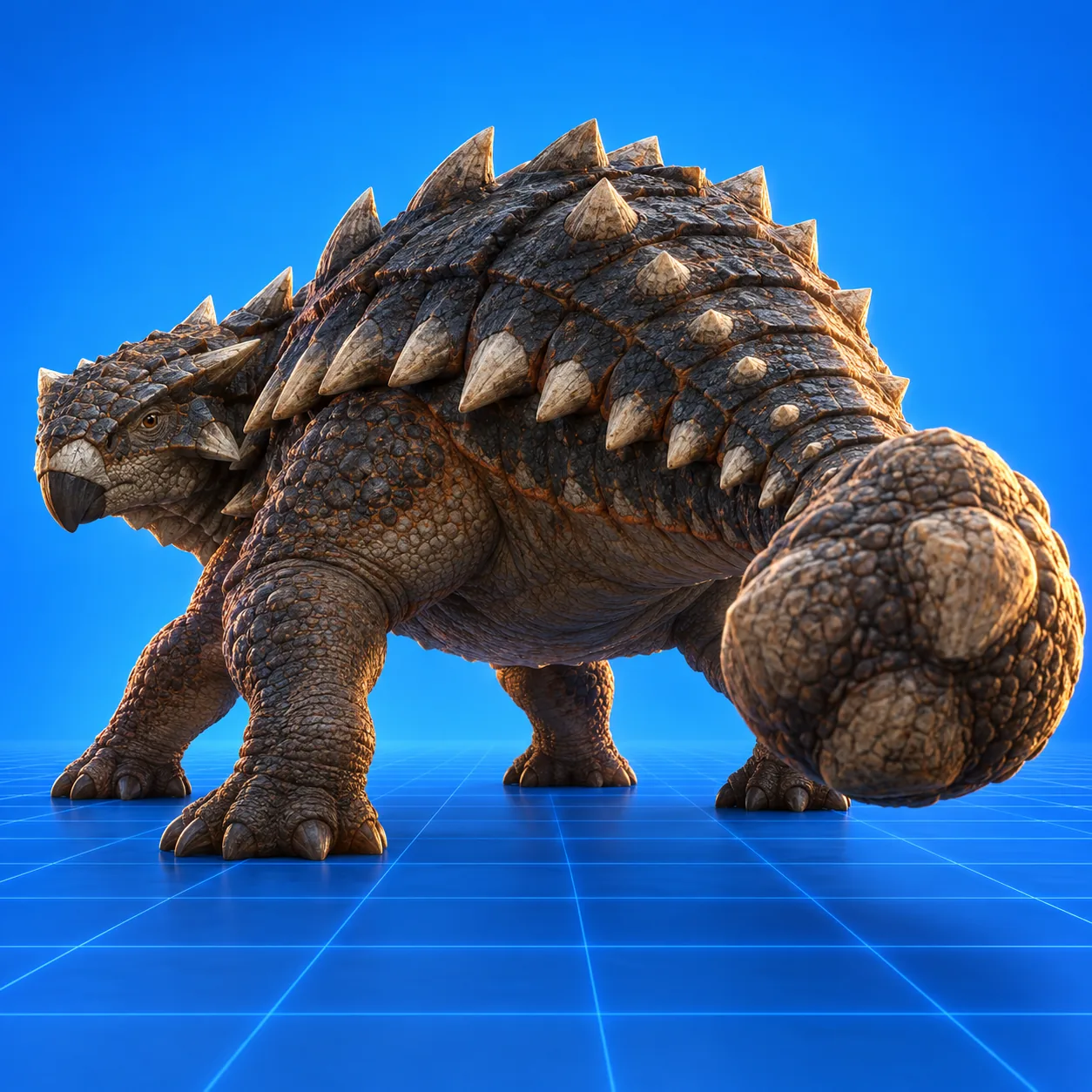
AI-generated, stylized game illustrations. These designs and growth stages are imaginative, not scientific reconstructions.
Ankylosaurus at a glance
- Diet
- Plant eater
- A plant-based diet is inferred from anatomy and comparisons with related animals. Herbivores did not all eat the same plants.
- When it lived
- Late Cretaceous
- Geological period represented by its fossil record. Dates and assignments can be refined through further study.
- Group
- Ankylosauridae
- Ankylosaurids
- Fossil locations
- North America
- Places where fossils have been found
Beyond the game
The real Ankylosaurus
Ankylosaurus had a wide, low body supported by four legs. Bony plates protected its body, and its broad skull carried horns pointing backward. Its most familiar feature was the club at the end of the tail, making its silhouette especially distinctive.
It is often estimated at six to eight meters long, but no complete skeleton is known. Researchers combine preserved bones with comparisons to related ankylosaurs to reconstruct missing parts. The result is an informed estimate rather than a direct measurement of a complete animal.
Ankylosaurids varied in the arrangement of their armor and the shape of their tail clubs. Recognizing that variety helps avoid treating every armored dinosaur as a copy of Ankylosaurus.
A family of armored dinosaurs. Many had a tail club, while armor patterns and club shapes varied.
Get to know Ankylosaurus
Questions, answered.
Was Ankylosaurus a meat eater?
It was a plant eater. Its low body and feeding anatomy suited vegetation close to the ground. The armour and tail club were not evidence of a predatory diet. [1]
What could the tail club do?
The heavy club could swing from side to side and probably helped discourage attackers. Fossils support a formidable mechanical weapon, but they cannot tell us that every encounter involved a strike or exactly how aggressive the animal was. [1]
Do we know the exact armour pattern?
Not completely. No whole Ankylosaurus skeleton has been found, and discovered armour pieces are not all preserved in their original positions. Reconstructions therefore include interpretation, even for such a familiar dinosaur. [1]
Research sources · reviewed
Fossil discoveries
Selected fossil records · present-day map
Map references
Map: Natural Earth, public domain. Fossil records: linked collections and publications.A note on the science
The complete body and its length are reconstructed from incomplete remains and comparisons with relatives.
Sources & text credits
Explore the references behind this profile.
- Ankylosaurus magniventris
Wikipedia contributors · Spanish source
Adapted and translated from Ankylosaurus magniventris by Wikipedia contributors. See the linked revision for the source text and contributor history.
- Ankylosaurus
Wikipedia contributors · English source
Adapted and translated from Ankylosaurus by Wikipedia contributors. See the linked revision for the source text and contributor history.
- Ankylosauridae
Wikipedia contributors · English source
Group information adapted from Wikipedia contributors.
Educational text adapted in English from the existing Wikipedia-backed Dinosgacha catalogue and the linked Wikipedia articles by Wikipedia contributors.
Translated, shortened and edited for this encyclopedia; uncertain interpretations are identified. Selected museum and research references supplement verification.
The adapted educational text is available under CC BY-SA 4.0. This text license does not apply to the game illustrations.