
Dinosaur
Parasaurolophus
A crest that curved behind the head
A large plant eater with a remarkable skull crest, whose form varied among species of the genus.
Three stages. One companion.
Game artwork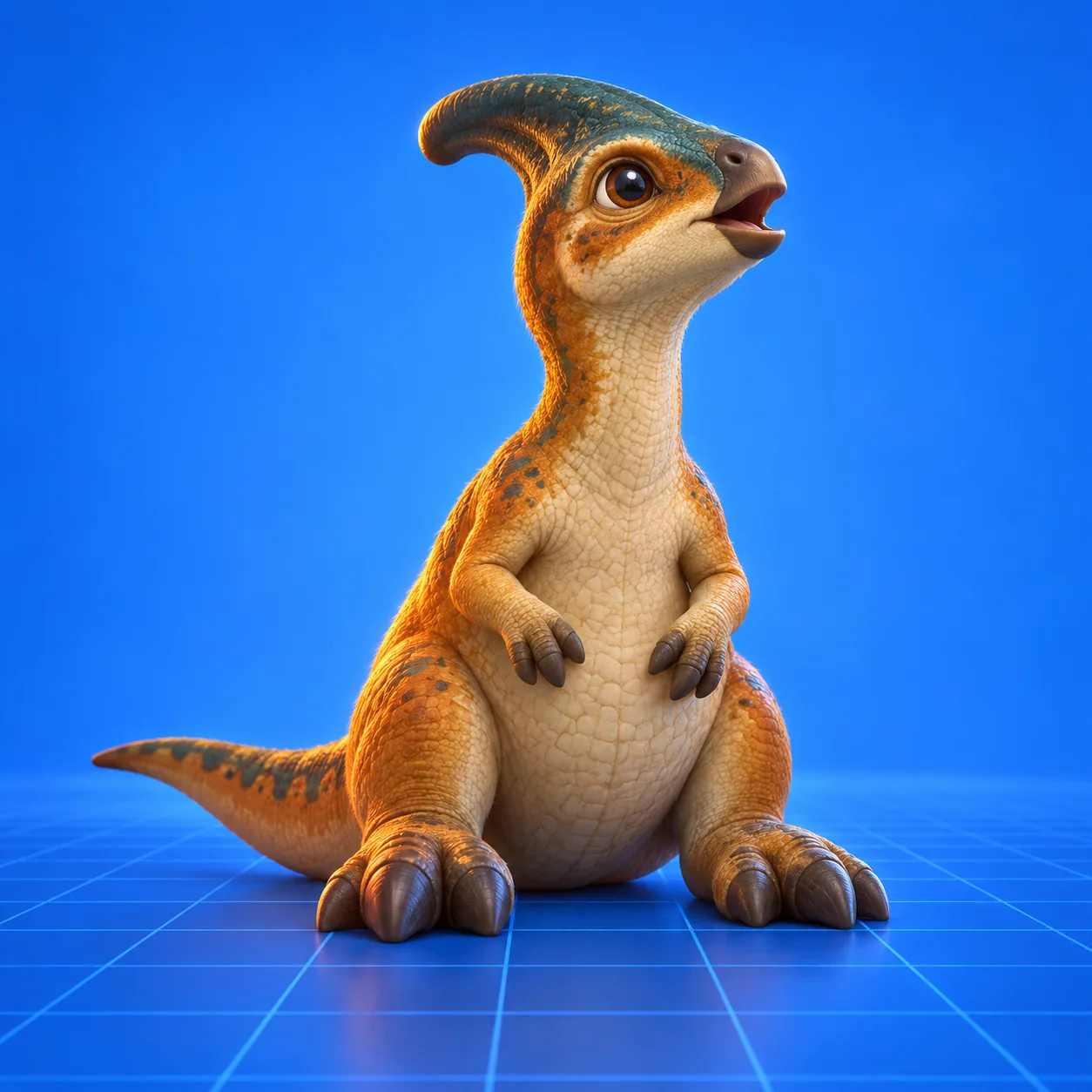
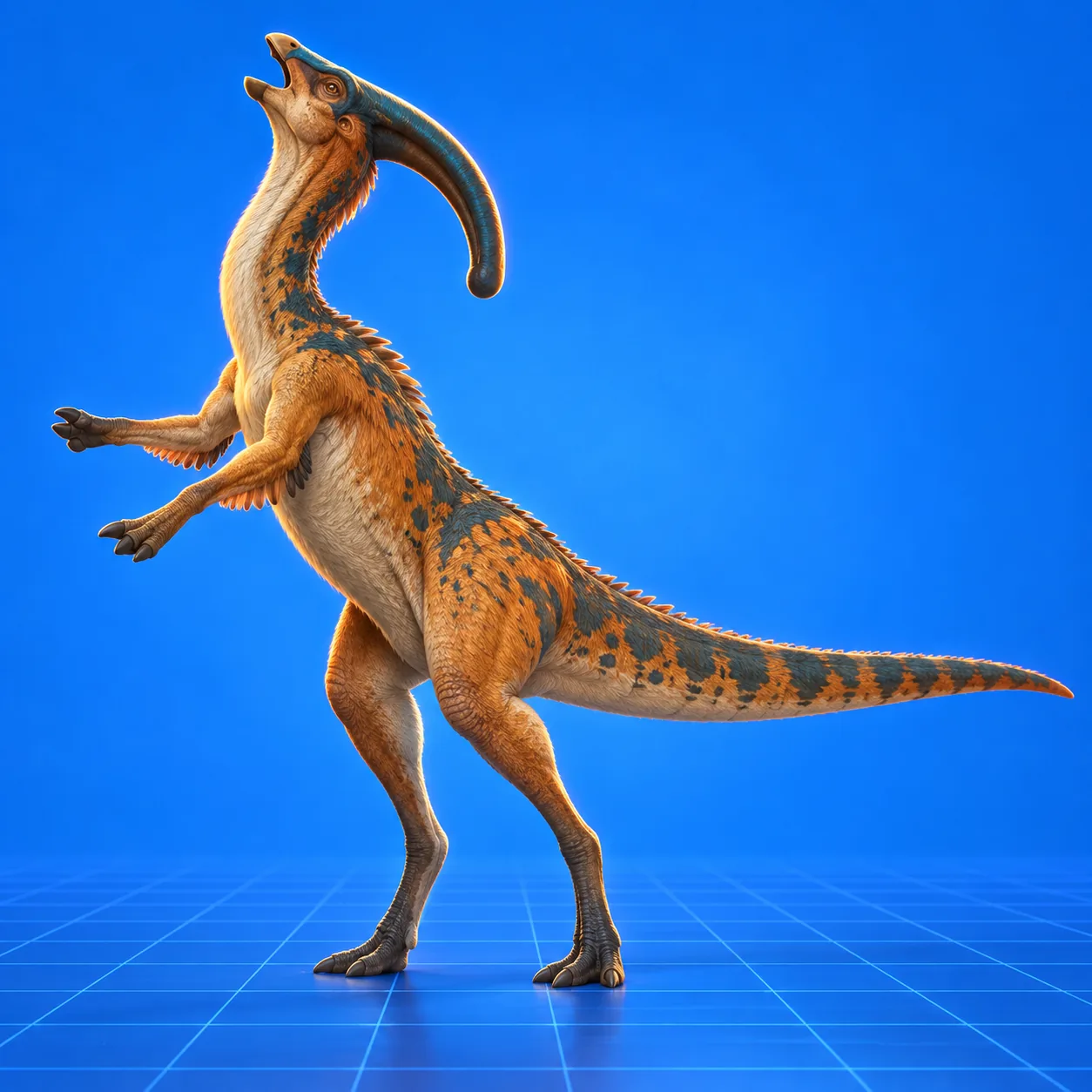
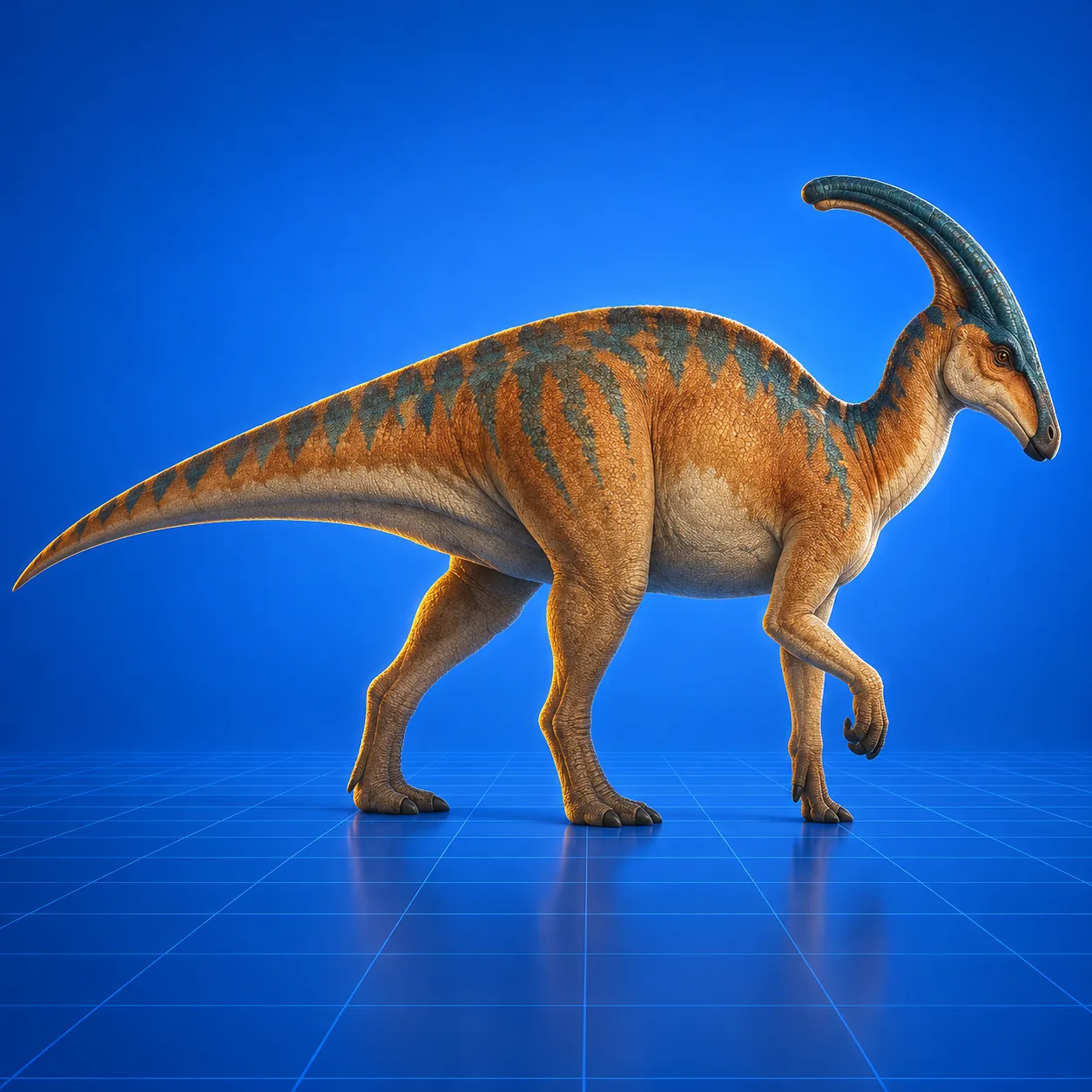
AI-generated, stylized game illustrations. These designs and growth stages are imaginative, not scientific reconstructions.
Parasaurolophus at a glance
- Diet
- Plant eater
- A plant-based diet is inferred from anatomy and comparisons with related animals. Herbivores did not all eat the same plants.
- When it lived
- Late Cretaceous
- Geological period represented by its fossil record. Dates and assignments can be refined through further study.
- Group
- Hadrosauridae
- Hadrosaurids
- Fossil locations
- Utah, United States, New Mexico, United States, Alberta, Canada
- Places where fossils have been found
Beyond the game
The real Parasaurolophus
Parasaurolophus was a large herbivore that could move on two or four legs. Its most recognizable feature was the elongated crest projecting behind the head. Fossils are known from regions including Utah, New Mexico and Alberta, in what is now North America.
Parasaurolophus belonged to the hadrosaurids. These plant-eating dinosaurs had batteries of teeth for processing vegetation. Some members of the family had hollow crests, while others lacked them, so the familiar duck-billed nickname does not describe every detail of their anatomy.
The species of Parasaurolophus differed in the shape and length of the crest. Looking closely at this variation is more useful than assuming every crested skull was an identical version of the same animal.
A family of plant-eating ornithopods with batteries of teeth. Some members had hollow crests and others did not.
Get to know Parasaurolophus
Questions, answered.
What was the long crest of Parasaurolophus for?
The crest contained a looping airway, making sound production a plausible role. It may also have helped animals recognise one another. Its exact uses are still debated, and a reconstructed call is a scientific model, not a recording of the living dinosaur. [1]
Did Parasaurolophus eat meat?
Parasaurolophus was a plant-eating hadrosaur. It cropped vegetation with a beak and processed food with closely packed teeth, replacing worn teeth as it grew. [1]
Did Parasaurolophus walk on two legs or four?
It could use both. Researchers interpret it as an animal that usually walked on four legs but could rise onto its hind legs. Its fossils are known from Late Cretaceous North America. [1]
Research sources · reviewed
Fossil discoveries
Selected fossil records · present-day map
Map references
Map: Natural Earth, public domain. Fossil records: linked collections and publications.A note on the science
A genus can contain more than one species. The details of an illustration need not represent every known member of the genus.
Sources & text credits
Explore the references behind this profile.
- Parasaurolophus
Wikipedia contributors · Spanish source
Adapted and translated from Parasaurolophus by Wikipedia contributors. See the linked revision for the source text and contributor history.
- Parasaurolophus
Wikipedia contributors · English source
Adapted and translated from Parasaurolophus by Wikipedia contributors. See the linked revision for the source text and contributor history.
- Hadrosauridae
Wikipedia contributors · English source
Group information adapted from Wikipedia contributors.
Educational text adapted in English from the existing Wikipedia-backed Dinosgacha catalogue and the linked Wikipedia articles by Wikipedia contributors.
Translated, shortened and edited for this encyclopedia; uncertain interpretations are identified. Selected museum and research references supplement verification.
The adapted educational text is available under CC BY-SA 4.0. This text license does not apply to the game illustrations.