Dinosaur
Iguanodon
A thumb spike and a flexible outer finger
Iguanodon combined different tools in the same hand and helped reveal how varied plant-eating dinosaurs could be.
Three stages. One companion.
Game artwork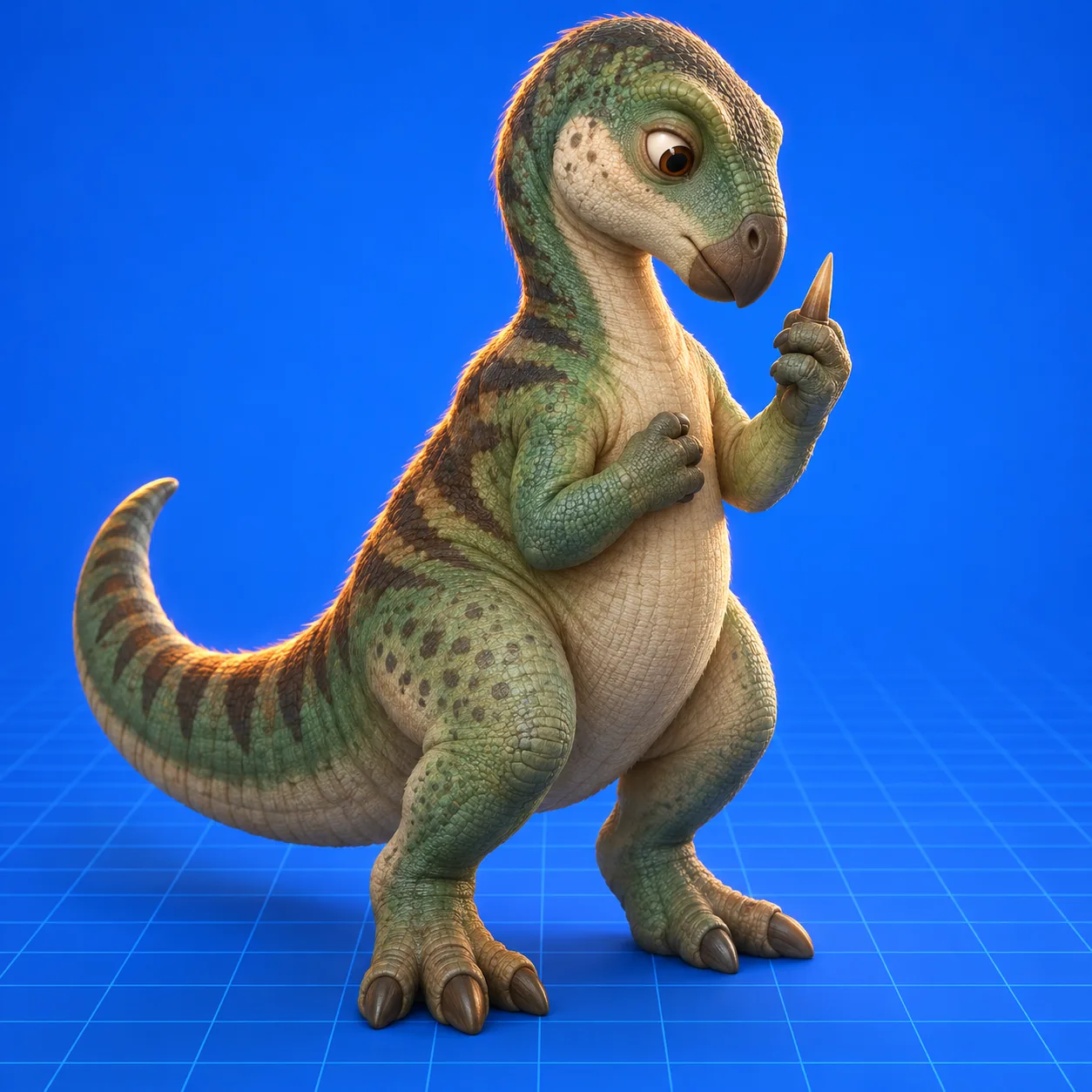
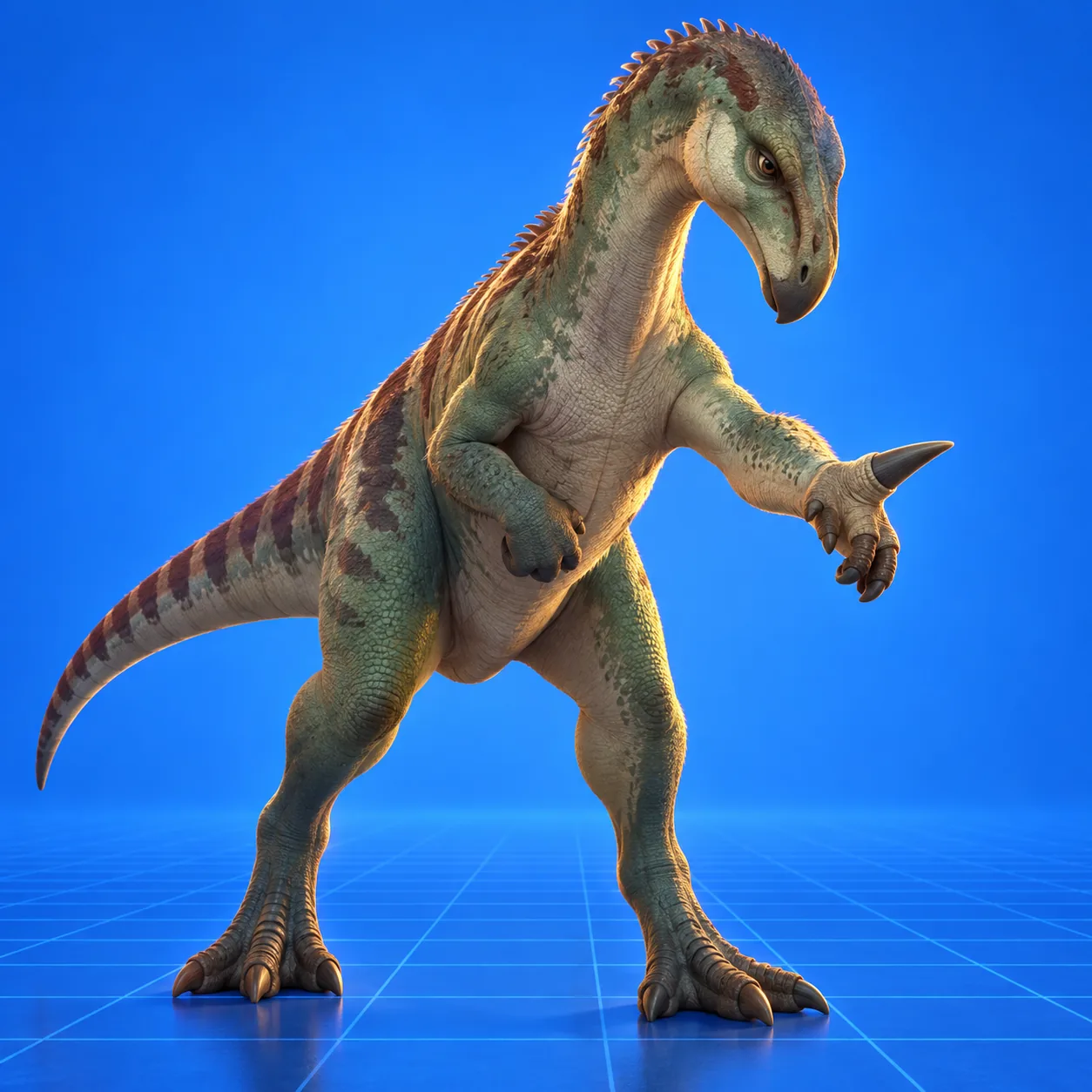
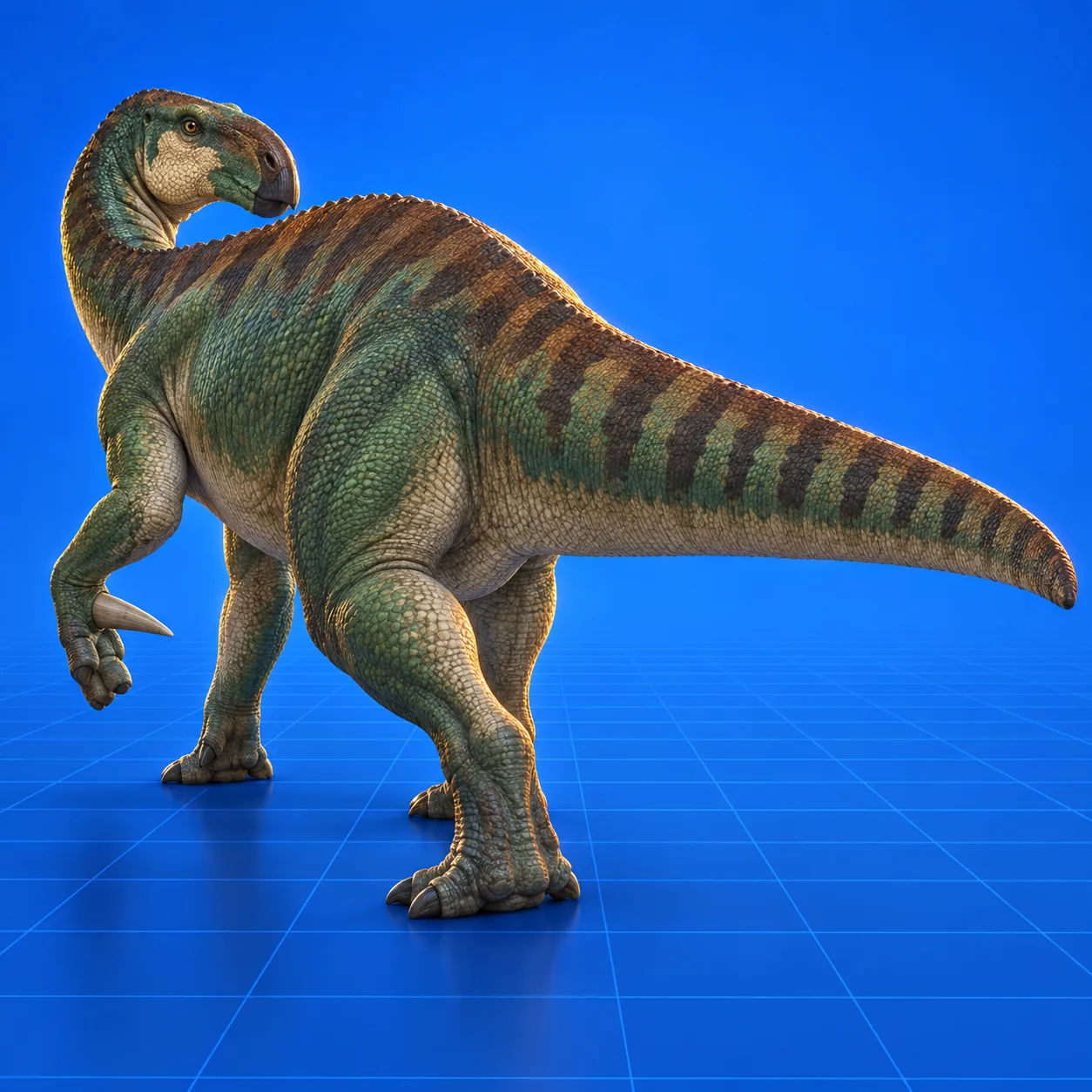
AI-generated, stylized game illustrations. These designs and growth stages are imaginative, not scientific reconstructions.
Iguanodon at a glance
- Diet
- Plant eater
- A plant-based diet is inferred from anatomy and comparisons with related animals. Herbivores did not all eat the same plants.
- When it lived
- Early Cretaceous
- Geological period represented by its fossil record. Dates and assignments can be refined through further study.
- Group
- Iguanodontia
- Iguanodontians
- Fossil locations
- Belgium, England
- Places where fossils have been found
Beyond the game
The real Iguanodon
Iguanodon was a large herbivore that could reach around ten meters in length. It could move on two or four legs. Its hand combined a large spike on the thumb with a flexible fifth finger, showing that different digits could have very different shapes.
Many known skeletons allow researchers to compare the limbs, teeth and posture. Those parts need to be considered together when interpreting how the animal moved and fed. An isolated tooth or spike tells only part of the story of the whole body.
Iguanodon is an ornithopod from the Early Cretaceous. Its classification expresses evolutionary relationships, rather than a chain in which one named dinosaur simply turns into the next. Comparisons with other ornithopods reveal both shared features and differences.
An evolutionary clade whose members share ancestors. This grouping does not imply that one named dinosaur directly became another.
Get to know Iguanodon
Questions, answered.
Was the Iguanodon spike on its nose?
No. Early reconstructions put the spike on the nose, but more complete skeletons revealed that it belonged to the thumb. This is a memorable example of how new fossil evidence can change a dinosaur reconstruction. [1]
What did Iguanodon use its thumb spikes for?
Defence is one possibility, while gathering or processing food is another. The precise role is uncertain. Its hands also had weight-bearing middle fingers and a more flexible outer finger, so they were not simply weapons. [1]
Why is Iguanodon important in dinosaur history?
Named after teeth that reminded researchers of an iguana’s, Iguanodon was one of the first dinosaurs described scientifically. It was also one of the three animals used when the group Dinosauria was first defined. [1]
Research sources · reviewed
Fossil discoveries
Selected fossil records · present-day map
Map references
Map: Natural Earth, public domain. Fossil records: linked collections and publications.A note on the science
Older uses of the name included fossils now assigned to other dinosaurs. This profile uses the Early Cretaceous interpretation.
Sources & text credits
Explore the references behind this profile.
- Iguanodon
Wikipedia contributors · Spanish source
Adapted and translated from Iguanodon by Wikipedia contributors. See the linked revision for the source text and contributor history.
- Iguanodon
Wikipedia contributors · English source
Adapted and translated from Iguanodon by Wikipedia contributors. See the linked revision for the source text and contributor history.
- Iguanodontia
Wikipedia contributors · English source
Group information adapted from Wikipedia contributors.
- Iguanodon — Dino Directory
Natural History Museum, London
Additional verification of scientific interpretation and geological period.
Educational text adapted in English from the existing Wikipedia-backed Dinosgacha catalogue and the linked Wikipedia articles by Wikipedia contributors.
Translated, shortened and edited for this encyclopedia; uncertain interpretations are identified. Selected museum and research references supplement verification.
The adapted educational text is available under CC BY-SA 4.0. This text license does not apply to the game illustrations.