Invertebrate
Anomalocaris canadensis
It used large front appendages with spines to manipulate food.
Anomalocaris swam with lateral fins and observed its surroundings using large compound eyes.
Three stages. One companion.
Game artwork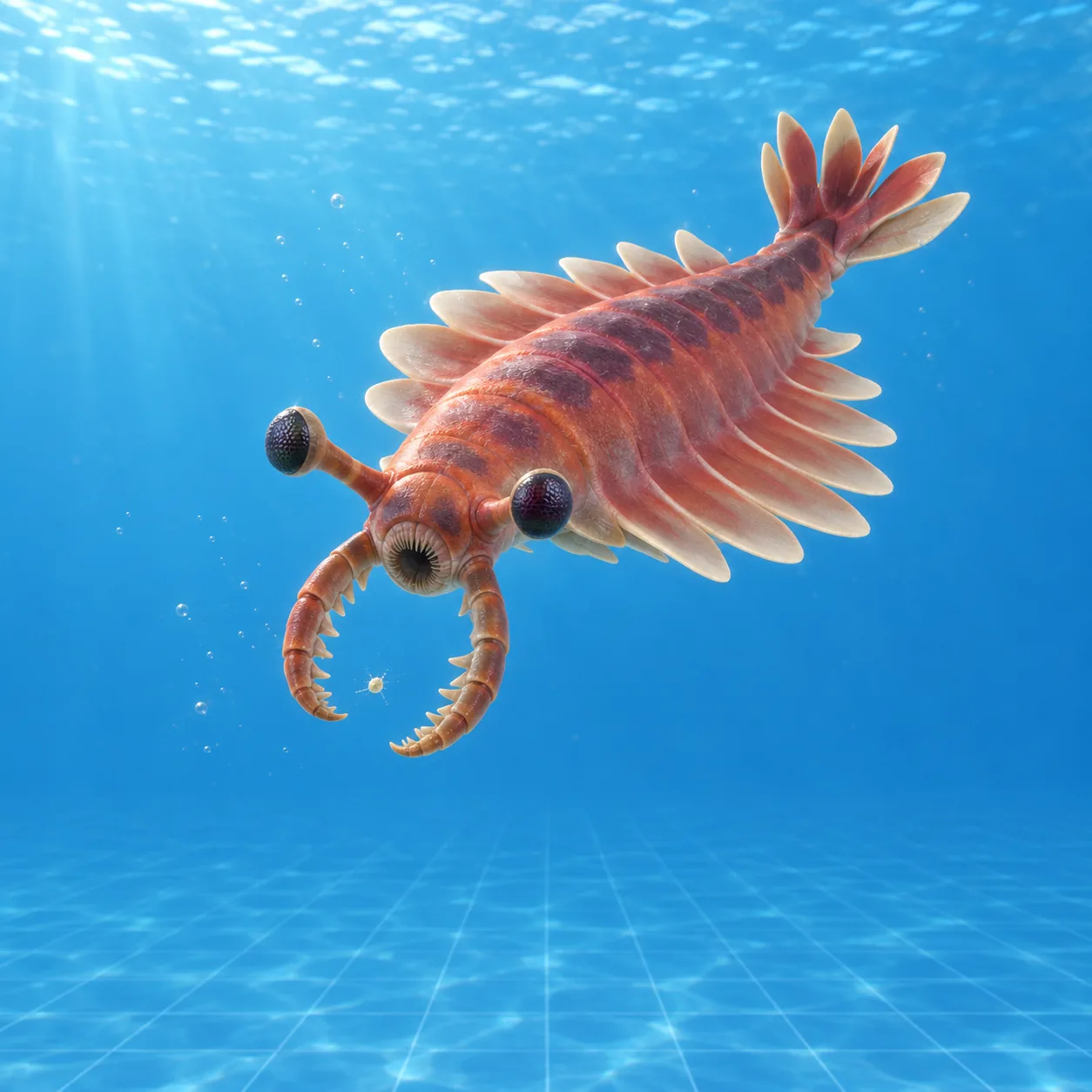
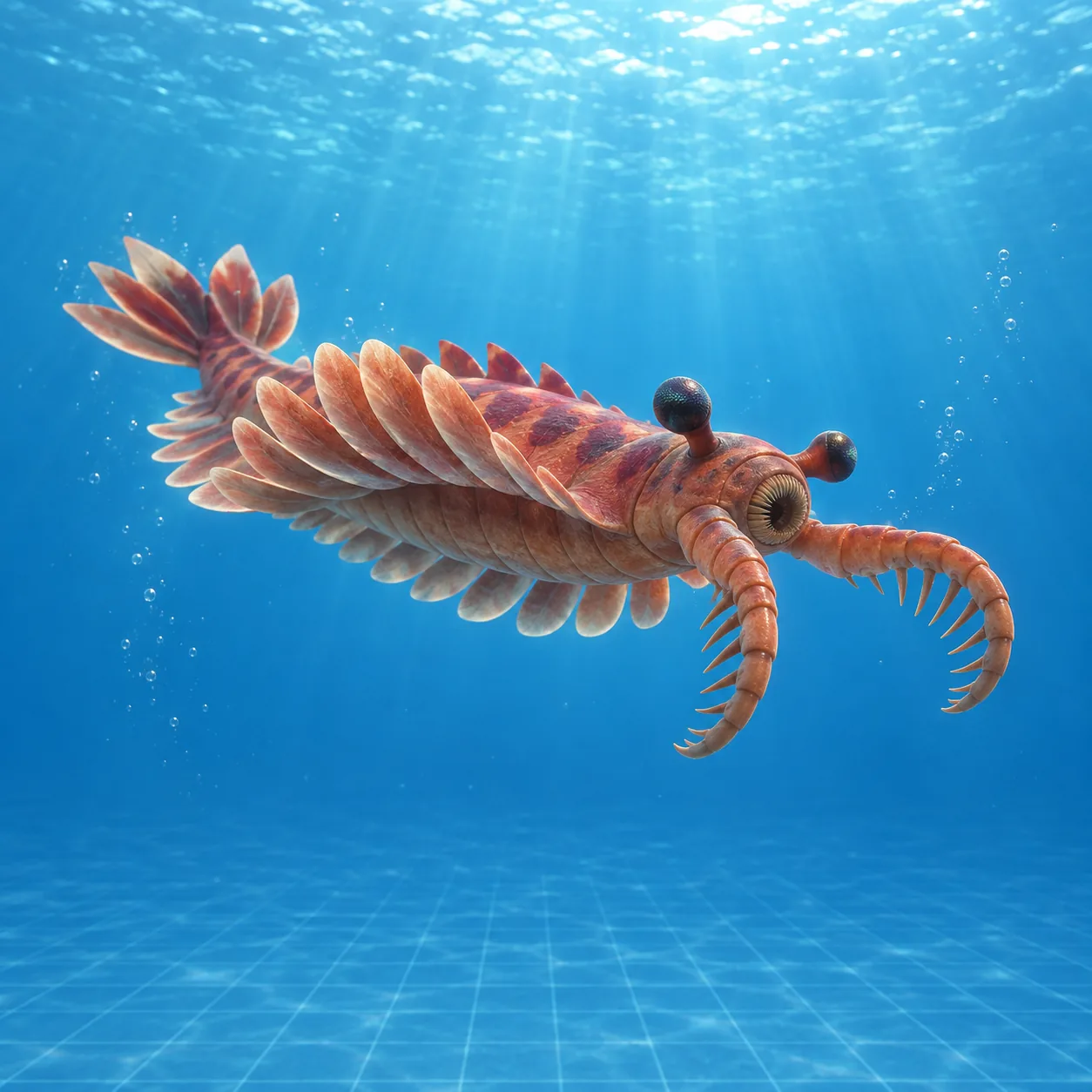
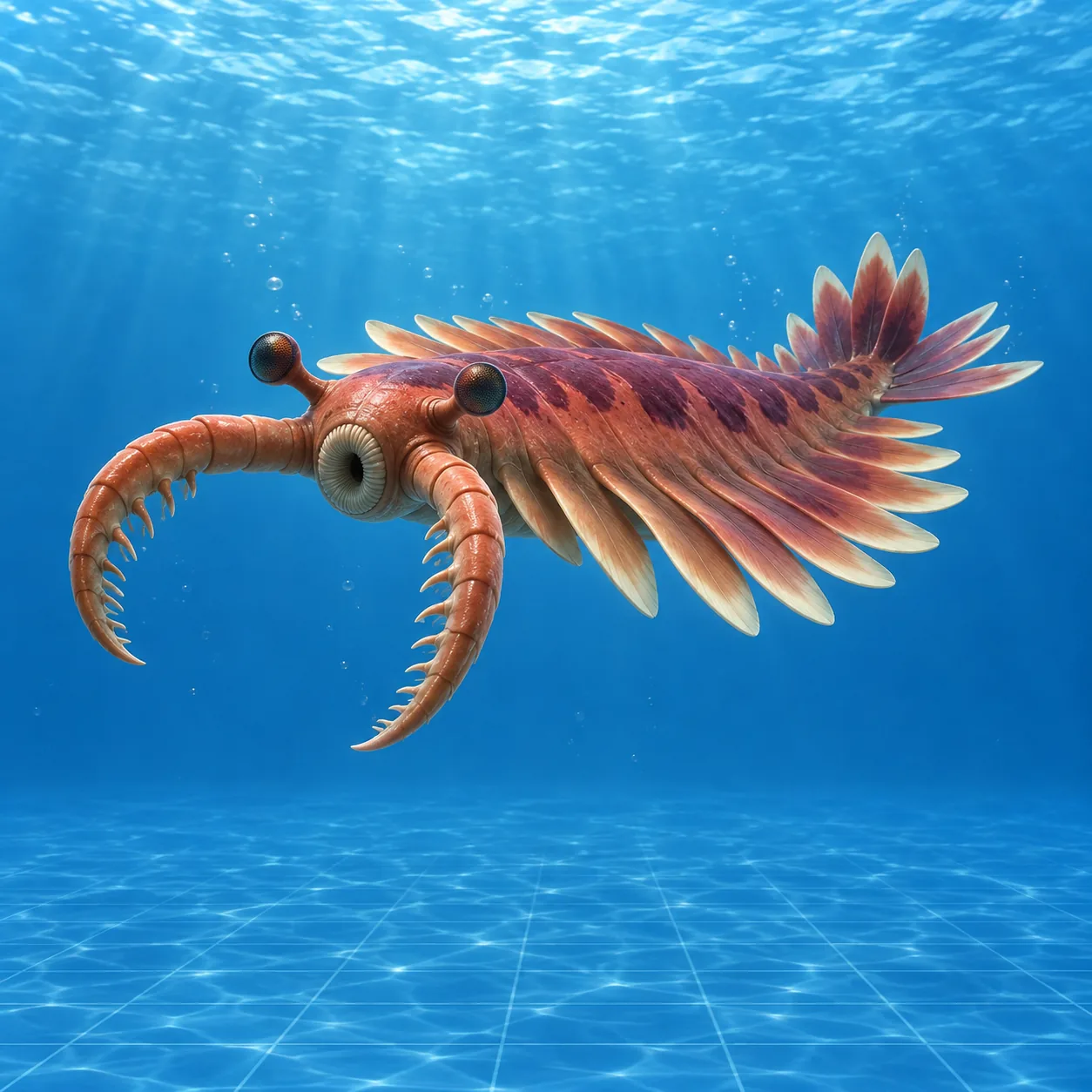
AI-generated, stylized game illustrations. These designs and growth stages are imaginative, not scientific reconstructions.
Anomalocaris canadensis at a glance
- Diet
- Marine predator
- Its frontal appendages grasped prey. Not all historically proposed prey fit its mouthparts equally well.
- When it lived
- Cambrian
- Group
- Radiodonta
- Radiodonts
- Fossil locations
- British Columbia, Australia, United States, China
- Places where fossils have been found
Beyond the game
The real Anomalocaris canadensis
It was a radiodont, an early relative of marine arthropods. It moved using lateral fins and had large compound eyes with many lenses.
It used large front appendages with spines to manipulate food. Compound eyes combine many lenses instead of just one. Its spiny front appendages completed a marine anatomy very different from that of later fish.
This grouping describes evolutionary relationships. Its members share ancestors; they do not form a chain in which one must turn into another.
Fossil discoveries
Selected fossil records · present-day map
Map references
Map location · British Columbia ↗
Map: Natural Earth, public domain. Fossil records: linked collections and publications.A note on the science
Its frontal appendages grasped prey. Not all historically proposed prey fit its mouthparts equally well.
Sources & text credits
Explore the references behind this profile.
- Anomalocaris
Wikipedia contributors · Spanish source
Educational text adapted and translated from this article by Wikipedia contributors. The revision link, when captured in the source catalogue, identifies the source version.
- Anomalocaris
Wikipedia contributors · English source
Educational text adapted and translated from this article by Wikipedia contributors. The revision link, when captured in the source catalogue, identifies the source version.
- Radiodonta
Wikipedia contributors · English source
Educational text adapted and translated from this article by Wikipedia contributors. The revision link, when captured in the source catalogue, identifies the source version.
- The arthropod lineage
Wikipedia contributors · English source
Educational text adapted and translated from this article by Wikipedia contributors. The revision link, when captured in the source catalogue, identifies the source version.
Educational text adapted in English from the existing Wikipedia-backed Dinosgacha catalogue and linked articles by Wikipedia contributors.
Existing English translations have been selected and arranged for this encyclopedia. Repeated period and diet text is omitted where those fields already carry it. Unknown facts remain unfilled; unreviewed geological age phrases are omitted and period labels replace numerical ages.
The adapted educational text is available under CC BY-SA 4.0. This text license does not apply to the game illustrations.