
Invertebrate
Hurdia
Hurdia victoria was a radiodont with a large multipart head carapace, swimming flaps and a pair of specialized frontal appendages.
Hurdia victoria was a radiodont with a large multipart head carapace, swimming flaps and a pair of specialized frontal appendages. It was not a conventional shrimp with an oversized head.
Three stages. One companion.
Game artwork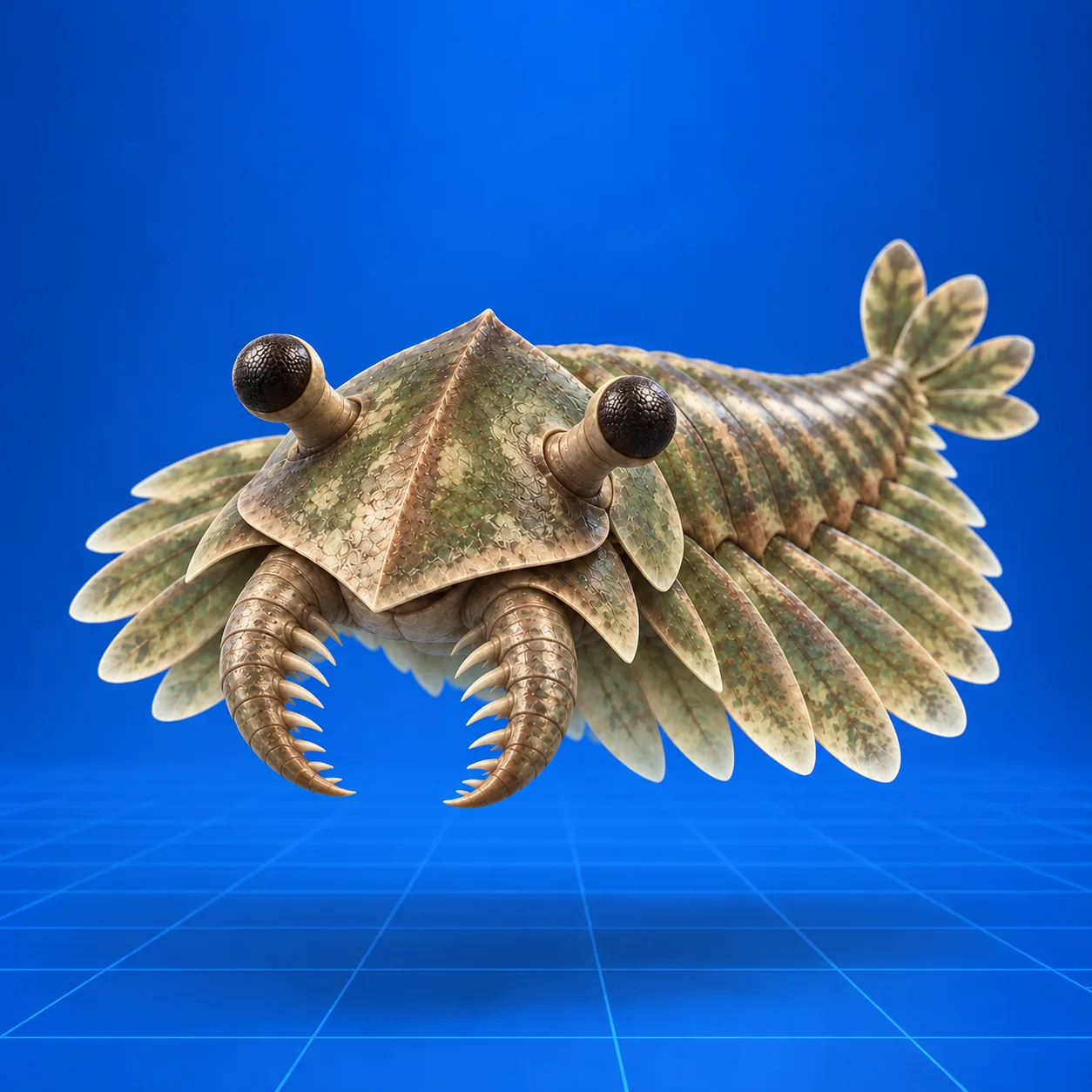
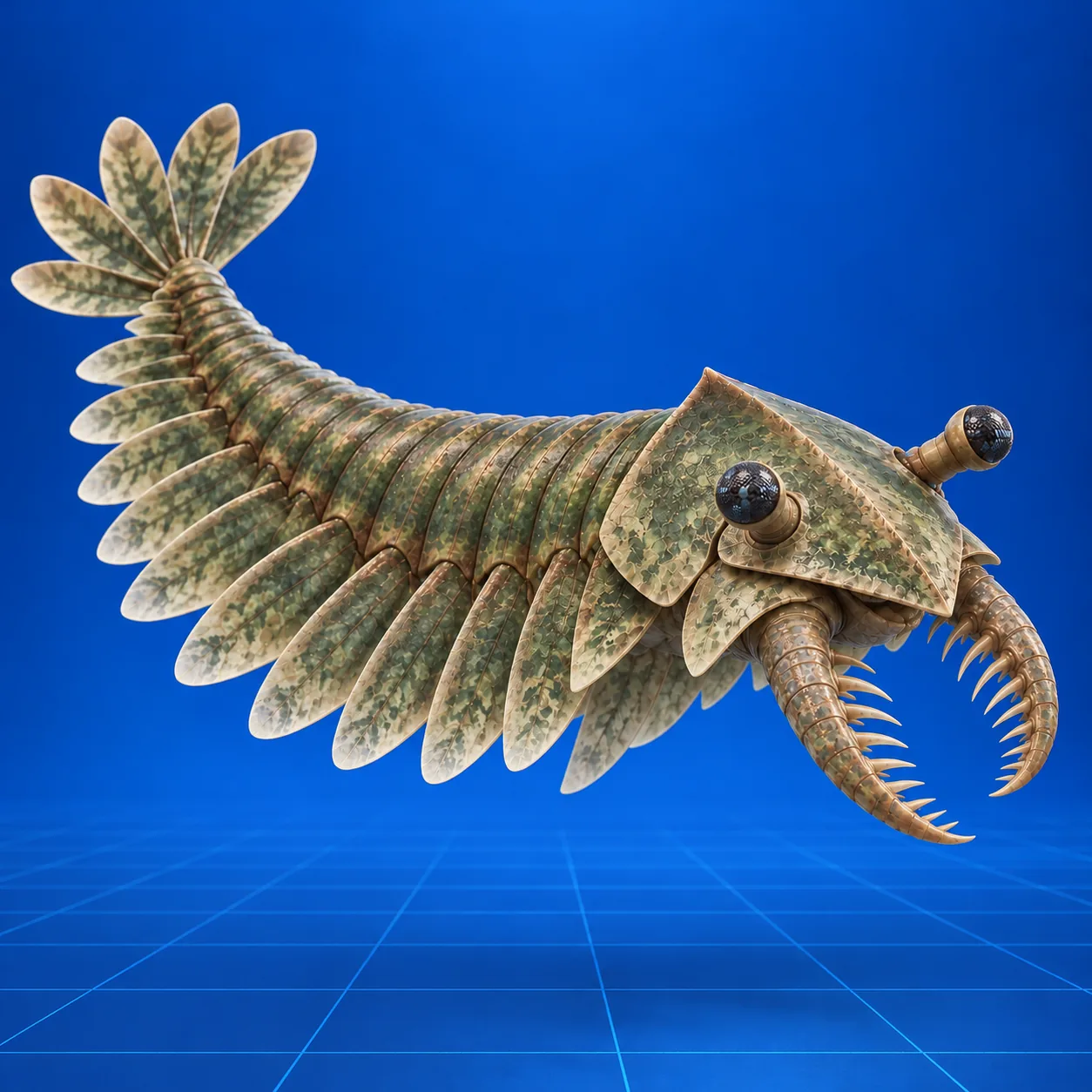
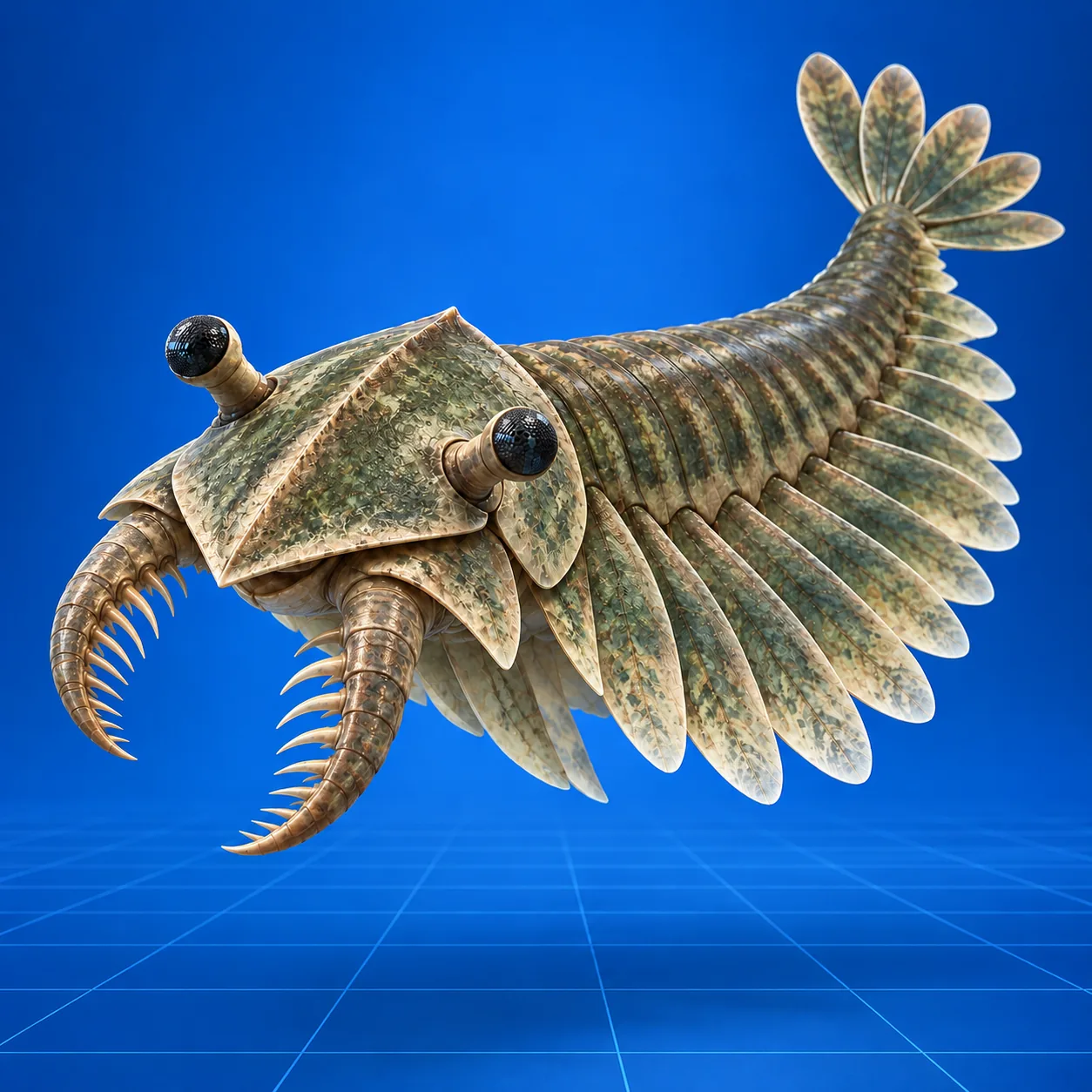
AI-generated, stylized game illustrations. These designs and growth stages are imaginative, not scientific reconstructions.
Hurdia at a glance
- Diet
- Diet uncertain
- When it lived
- Cambrian
- Group
- Radiodonta
- Radiodonts
Beyond the game
The real Hurdia
Hurdia victoria was a radiodont with a large multipart head carapace, swimming flaps and a pair of specialized frontal appendages. It was not a conventional shrimp with an oversized head.
Different fossil parts were once studied separately before their connection became clear. Bringing the carapace, mouth and appendages together revealed the structure of one radiodont.
Fossil discoveries
Selected fossil records · present-day map
Map references
Map: Natural Earth, public domain. Fossil records: Paleobiology Database and linked collections and publications.Sources & text credits
Explore the references behind this profile.
Original English Dinosgacha educational summaries informed by the linked scientific and museum references; source publications retain their own rights.