
Pterosaur
Tupandactylus
Its huge crest combined bony supports with a large area of soft tissue.
The large crest of Tupandactylus combined bone with a broad surface of soft tissue.
Three stages. One companion.
Game artwork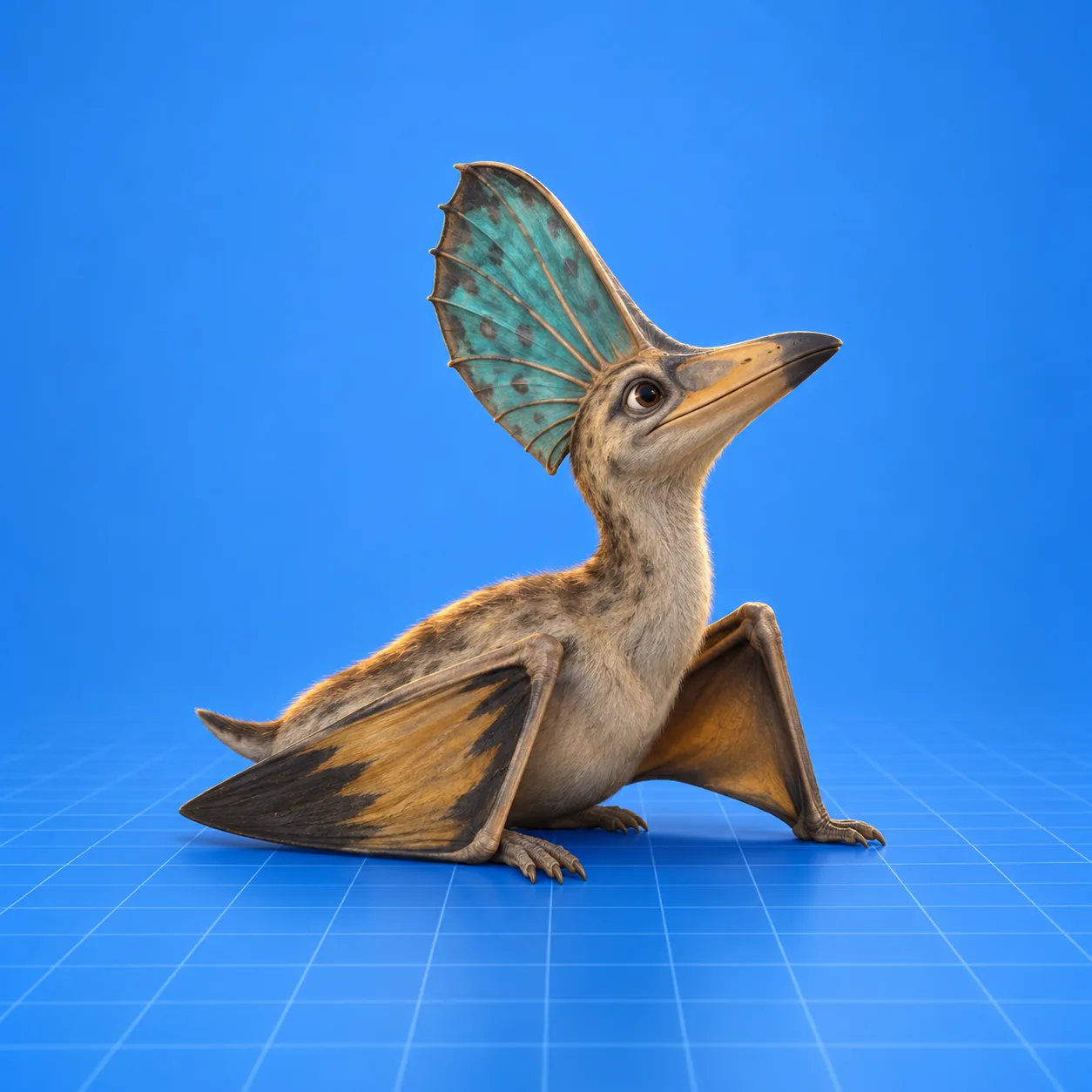
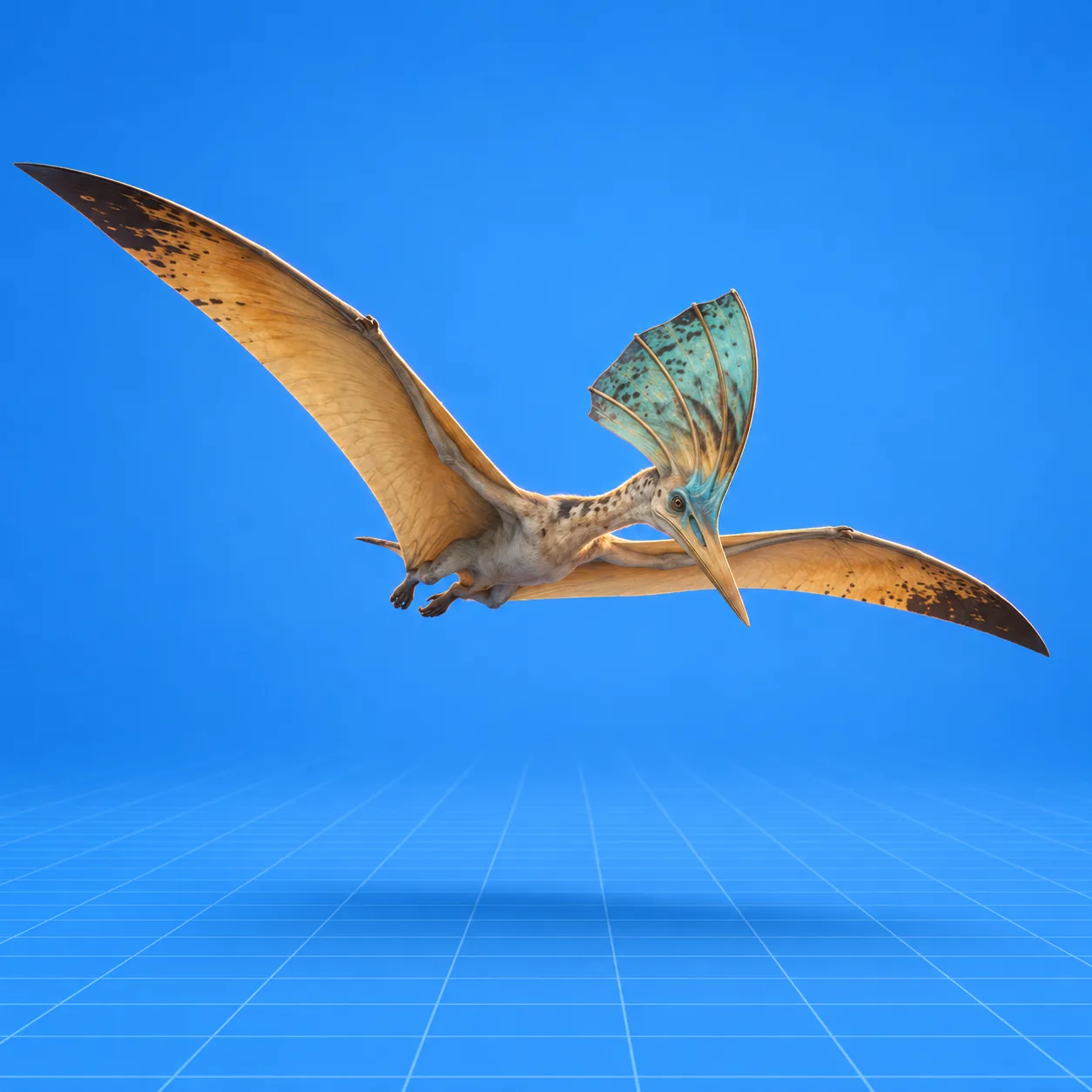
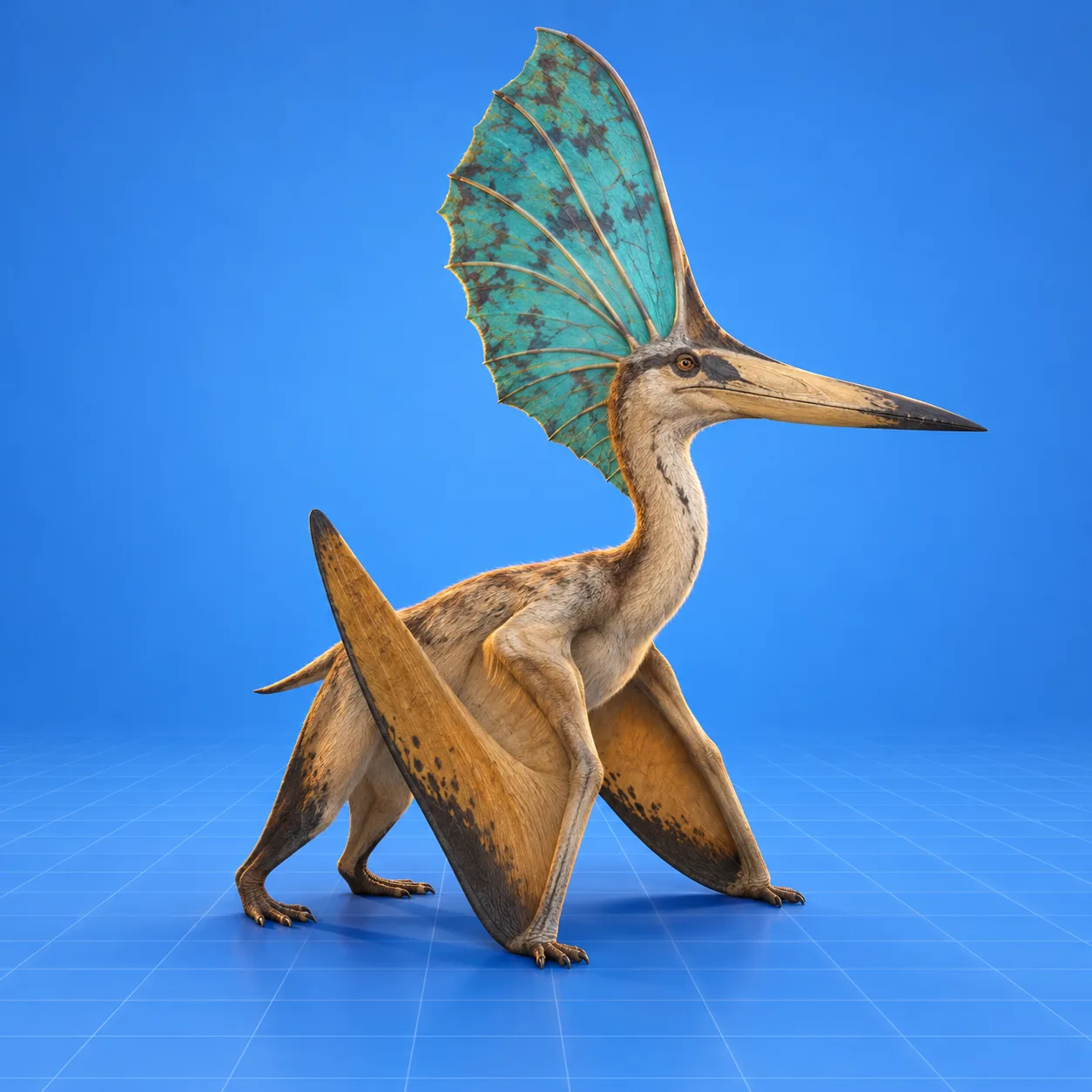
AI-generated, stylized game illustrations. These designs and growth stages are imaginative, not scientific reconstructions.
Tupandactylus at a glance
- Diet
- Fruit-eating / herbivory proposed
- The diet of tapejarids remains debated. Their toothless beaks do not establish an exact menu.
- When it lived
- Cretaceous
- Group
- Tapejaridae
- Tapejarids
- Fossil locations
- Brazil
- Places where fossils have been found
Beyond the game
The real Tupandactylus
Its species were initially classified within Tapejara. The subsequent revision recognized a different genus, although how much of its variation corresponds to species or sexual differences is still being investigated.
Its enormous crest combined bony extensions with an extensive surface of soft tissue. Part of the differences between specimens could be due to sex and part to different species. That question explains why classifying a spectacular crest requires studying more than its size.
This grouping describes evolutionary relationships. Its members share ancestors; they do not form a chain in which one must turn into another.
Fossil discoveries
Selected fossil records · present-day map
Map references
Map: Natural Earth, public domain. Fossil records: linked collections and publications.Sources & text credits
Explore the references behind this profile.
- Tupandactylus
Wikipedia contributors · Spanish source
Educational text adapted and translated from this article by Wikipedia contributors. The revision link, when captured in the source catalogue, identifies the source version.
- Tupandactylus
Wikipedia contributors · English source
Educational text adapted and translated from this article by Wikipedia contributors. The revision link, when captured in the source catalogue, identifies the source version.
- Tapejaridae
Wikipedia contributors · English source
Educational text adapted and translated from this article by Wikipedia contributors. The revision link, when captured in the source catalogue, identifies the source version.
- Birds and crocodilians
Wikipedia contributors · English source
Educational text adapted and translated from this article by Wikipedia contributors. The revision link, when captured in the source catalogue, identifies the source version.
Educational text adapted in English from the existing Wikipedia-backed Dinosgacha catalogue and linked articles by Wikipedia contributors.
Existing English translations have been selected and arranged for this encyclopedia. Repeated period and diet text is omitted where those fields already carry it. Unknown facts remain unfilled; unreviewed geological age phrases are omitted and period labels replace numerical ages.
The adapted educational text is available under CC BY-SA 4.0. This text license does not apply to the game illustrations.