
Mammal
Dire wolf
The largest collection of its fossils comes from the tar pits of Rancho La Brea in Los Angeles.
The asphalt pits of Rancho La Brea preserved numerous remains of the dire wolf.
Three stages. One companion.
Game artwork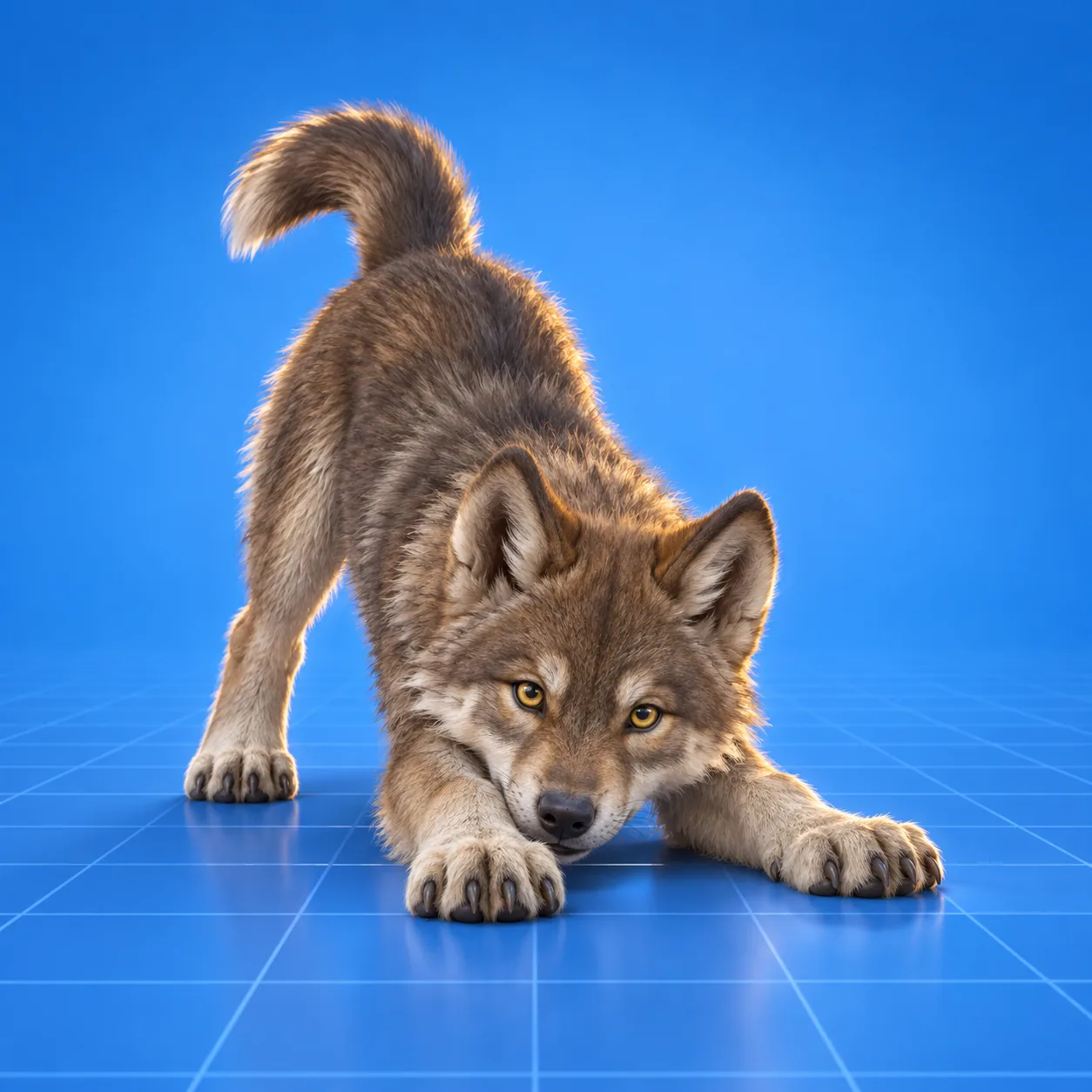
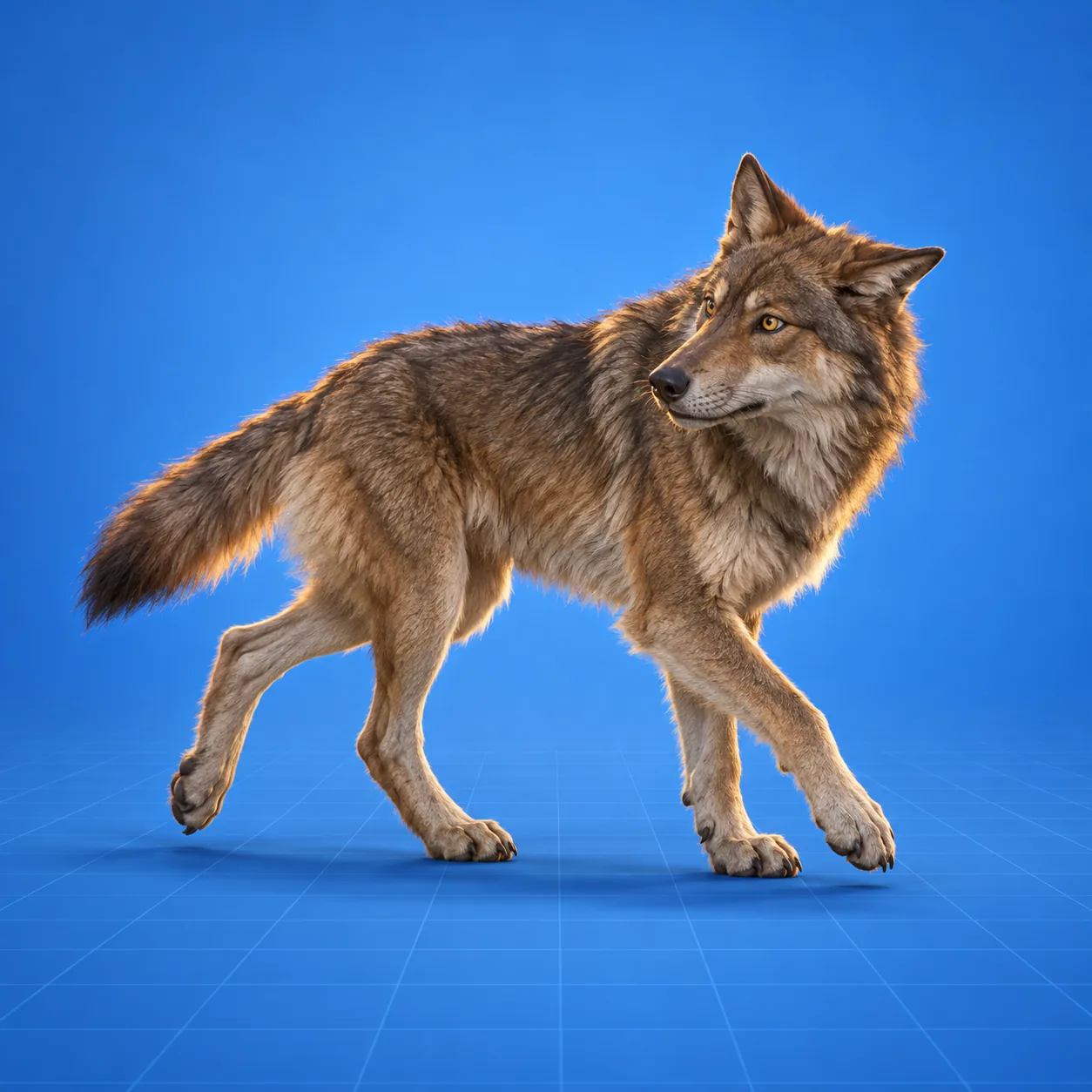
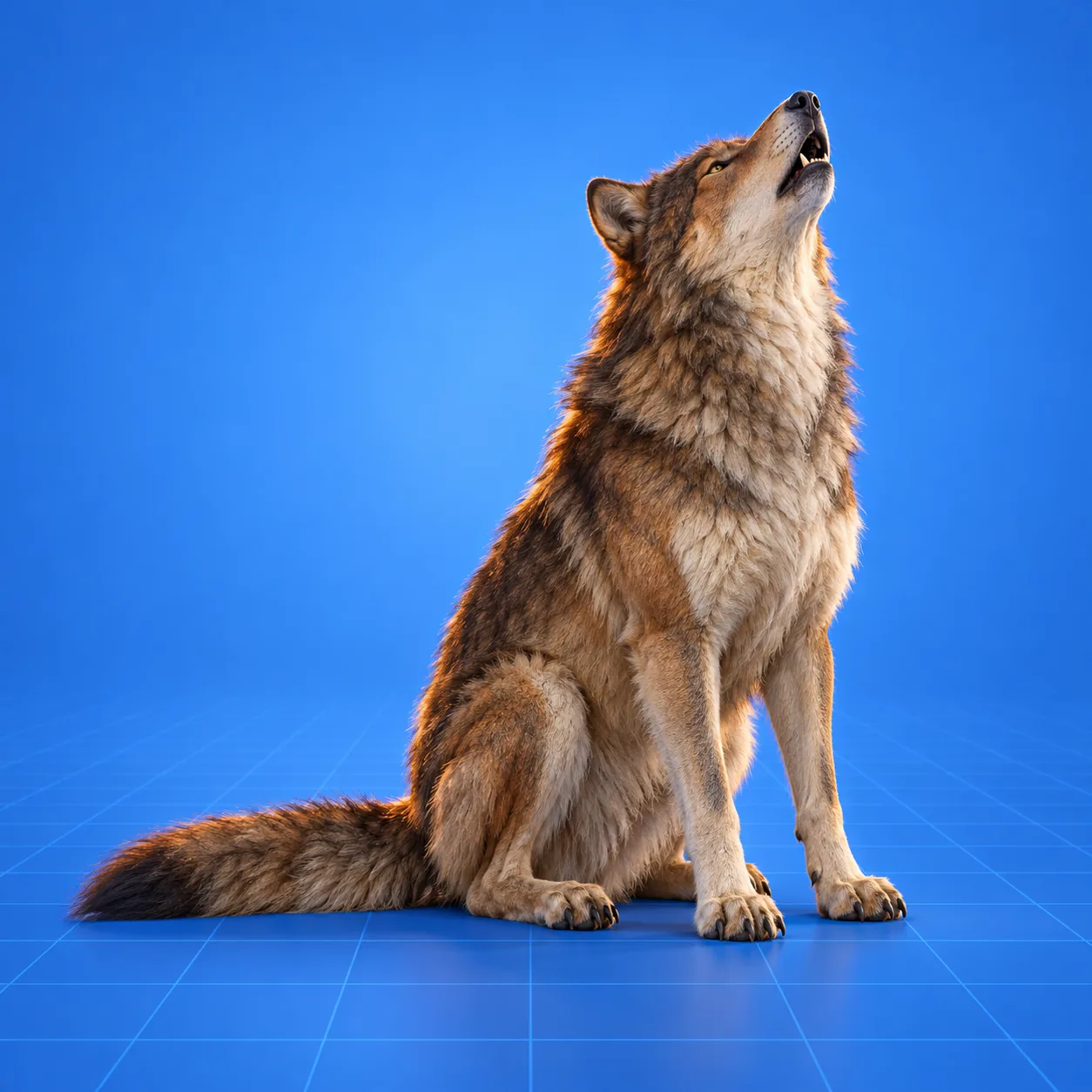
AI-generated, stylized game illustrations. These designs and growth stages are imaginative, not scientific reconstructions.
Dire wolf at a glance
- Diet
- Carnivore
- It is interpreted as a consumer of other animals. Hunting and scavenging are not mutually exclusive behaviors.
- When it lived
- Quaternary
- Group
- Canidae
- Canids
- Fossil locations
- Los Angeles
- Places where fossils have been found
Beyond the game
The real Dire wolf
It was a canid from the Americas near the end of the ice ages. Its remains occur in varied habitats, and the large collection at Rancho La Brea lets scientists compare many individuals.
The largest collection of its fossils comes from the asphalt pits of Rancho La Brea, in Los Angeles. Having many individuals allows us to compare variations within a fossil population. This collection is part of a broader history, because the animal occupied different environments.
This grouping describes evolutionary relationships. Its members share ancestors; they do not form a chain in which one must turn into another.
Fossil discoveries
Selected fossil records · present-day map
Map references
Map: Natural Earth, public domain. Fossil records: linked collections and publications.Sources & text credits
Explore the references behind this profile.
- Aenocyon dirus
Wikipedia contributors · Spanish source
Educational text adapted and translated from this article by Wikipedia contributors. The revision link, when captured in the source catalogue, identifies the source version.
- Dire wolf
Wikipedia contributors · English source
Educational text adapted and translated from this article by Wikipedia contributors. The revision link, when captured in the source catalogue, identifies the source version.
- Canidae
Wikipedia contributors · English source
Educational text adapted and translated from this article by Wikipedia contributors. The revision link, when captured in the source catalogue, identifies the source version.
Educational text adapted in English from the existing Wikipedia-backed Dinosgacha catalogue and linked articles by Wikipedia contributors.
Existing English translations have been selected and arranged for this encyclopedia. Repeated period and diet text is omitted where those fields already carry it. Unknown facts remain unfilled; unreviewed geological age phrases are omitted and period labels replace numerical ages.
The adapted educational text is available under CC BY-SA 4.0. This text license does not apply to the game illustrations.