
Mammal
Andrewsarchus
The specimen that gave rise to its name is a large skull discovered in 1923.
Andrewsarchus is best known for its large skull; the rest of the body is much more uncertain.
Three stages. One companion.
Game artwork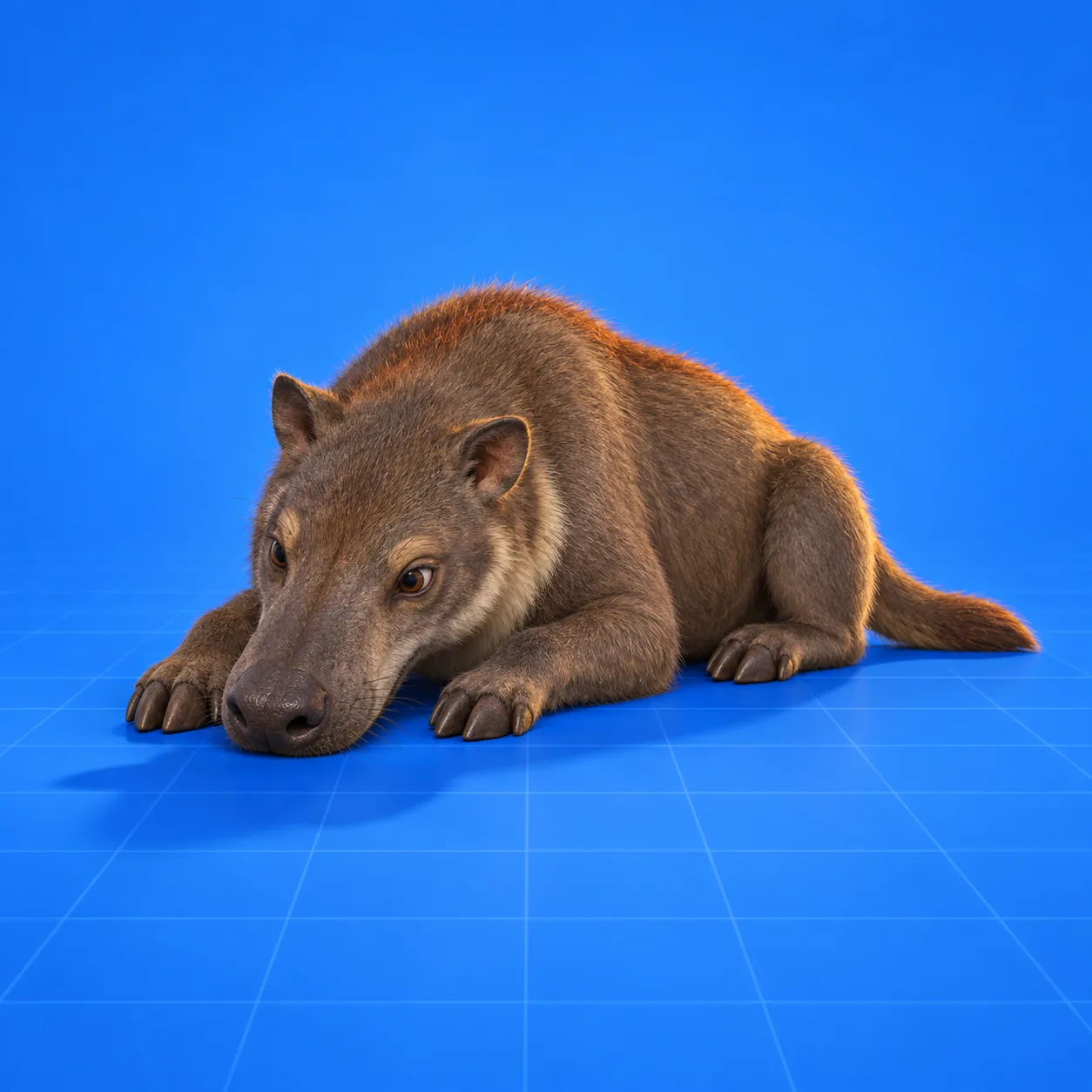
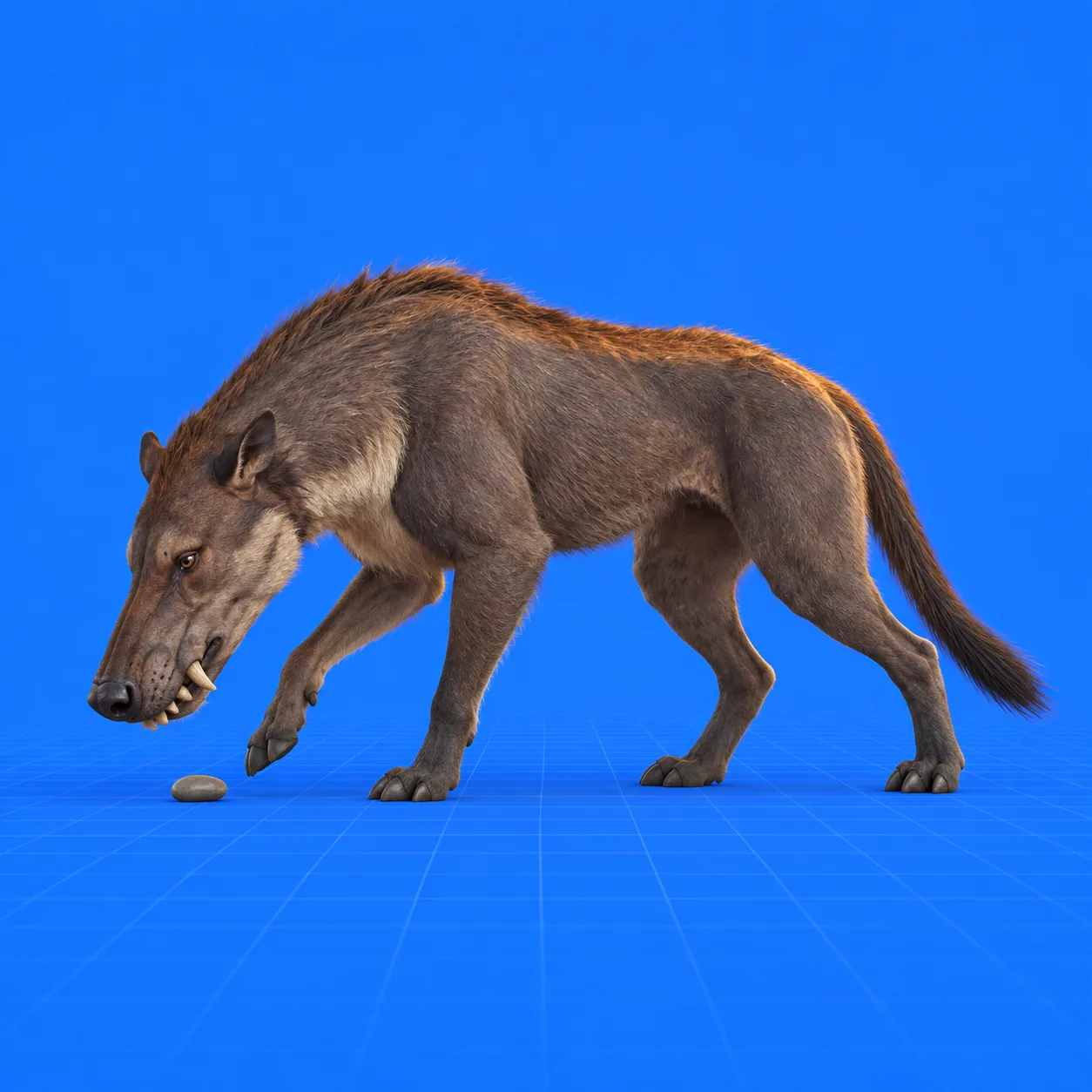
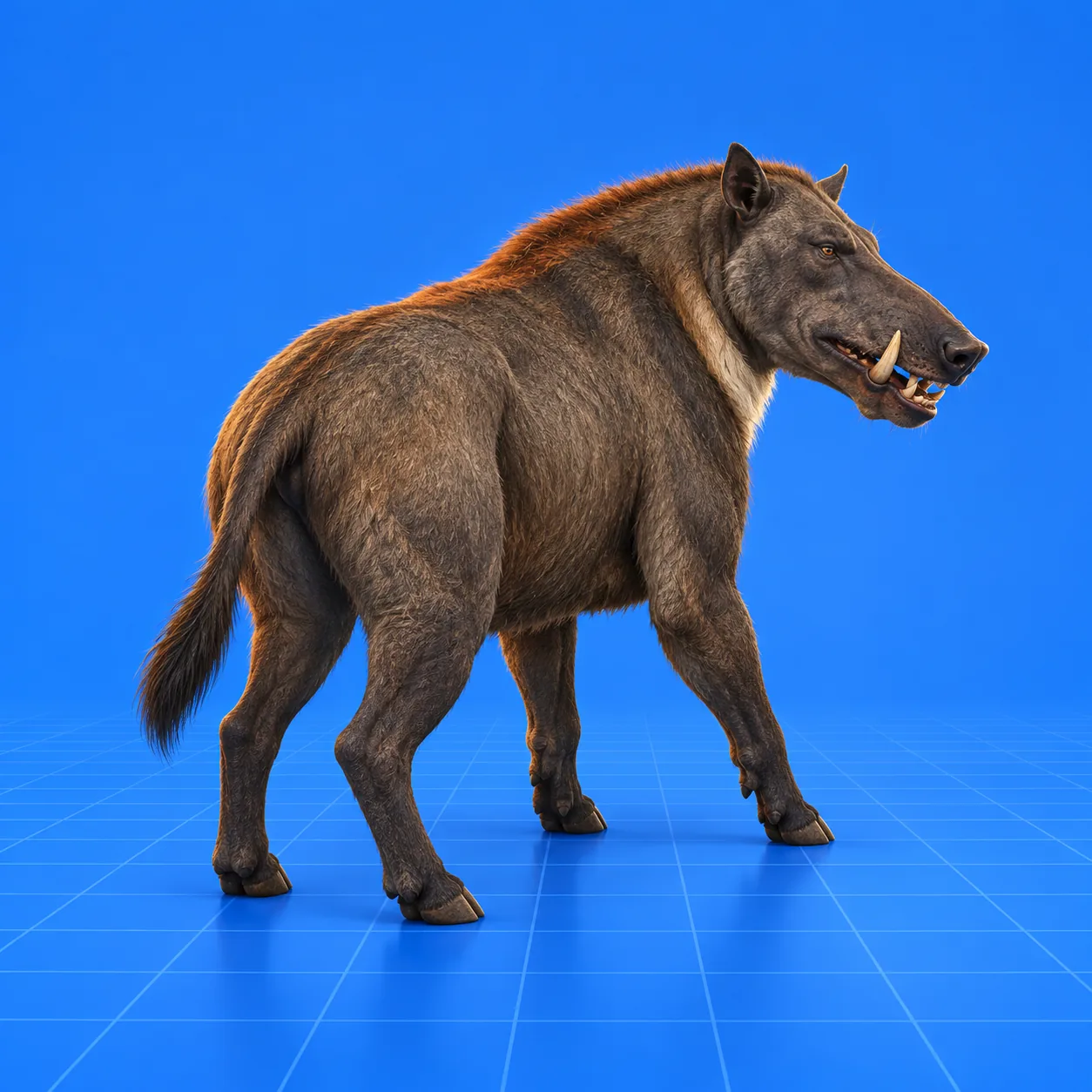
AI-generated, stylized game illustrations. These designs and growth stages are imaginative, not scientific reconstructions.
Andrewsarchus at a glance
- Diet
- Omnivore (interpreted)
- Its teeth are consistent with a varied diet. A robust skull or an imposing appearance should not be treated as proof of habitual hunting.
- When it lived
- Paleogene
- Group
- Artiodactyla
- Artiodactyls
- Fossil locations
- China
- Places where fossils have been found
Beyond the game
The real Andrewsarchus
Its reconstruction depends mainly on cranial material, so the body is much less known. Its evolutionary relationships have changed between studies and it is currently placed among the artiodactyls.
The specimen used to name it was a large skull discovered in 1923. With so little of the body known, reconstructions can have different outlines. Its family relationships have also been revised, and it is now studied among the artiodactyls, the even-toed hoofed mammal group.
This grouping describes evolutionary relationships. Its members share ancestors; they do not form a chain in which one must turn into another.
Fossil discoveries
Selected fossil records · present-day map
Map references
Map: Natural Earth, public domain. Fossil records: linked collections and publications.A note on the science
The specimen used to name it was a large skull discovered in 1923. With so little of the body known, reconstructions can have different outlines. Its family relationships have also been revised, and it is now studied among the artiodactyls, the even-toed hoofed mammal group.
Sources & text credits
Explore the references behind this profile.
- Andrewsarchus
Wikipedia contributors · Spanish source
Educational text adapted and translated from this article by Wikipedia contributors. The revision link, when captured in the source catalogue, identifies the source version.
- Andrewsarchus
Wikipedia contributors · English source
Educational text adapted and translated from this article by Wikipedia contributors. The revision link, when captured in the source catalogue, identifies the source version.
- Artiodactyla
Wikipedia contributors · English source
Educational text adapted and translated from this article by Wikipedia contributors. The revision link, when captured in the source catalogue, identifies the source version.
- Other artiodactyls
Wikipedia contributors · English source
Educational text adapted and translated from this article by Wikipedia contributors. The revision link, when captured in the source catalogue, identifies the source version.
Educational text adapted in English from the existing Wikipedia-backed Dinosgacha catalogue and linked articles by Wikipedia contributors.
Existing English translations have been selected and arranged for this encyclopedia. Repeated period and diet text is omitted where those fields already carry it. Unknown facts remain unfilled; unreviewed geological age phrases are omitted and period labels replace numerical ages.
The adapted educational text is available under CC BY-SA 4.0. This text license does not apply to the game illustrations.