Dinosaur
Pelecanimimus
Its mouth held a remarkable number of tiny teeth, a surprise among relatives of the ‘ostrich-mimic’ dinosaurs.
Its mouth held a remarkable number of tiny teeth, a surprise among relatives of the ‘ostrich-mimic’ dinosaurs. It had a long neck and legs, and a head packed with small teeth. This dentition sets it apart from many later ornithomimosaurs, whose mouths ended in toothless beaks.
Three stages. One companion.
Game artwork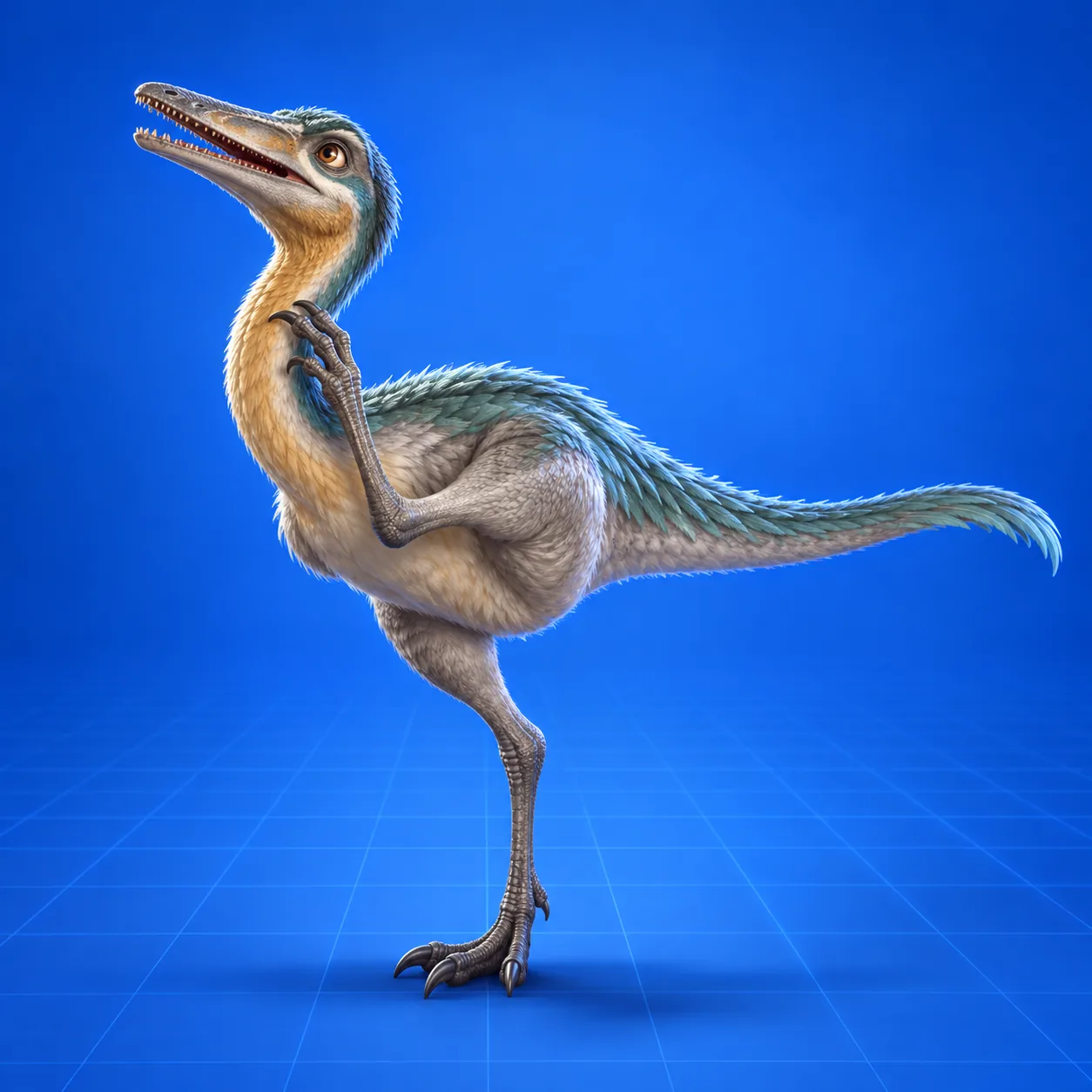
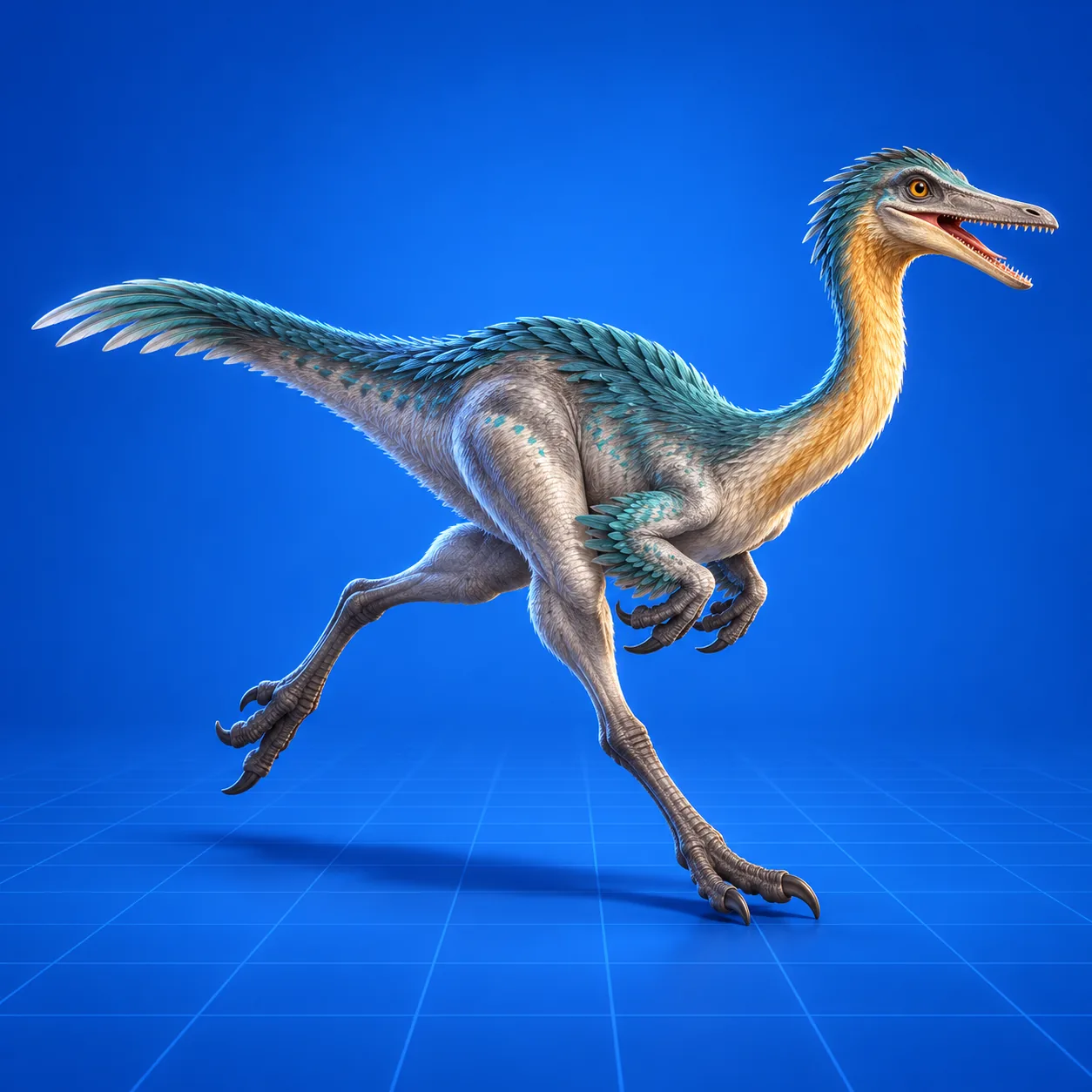
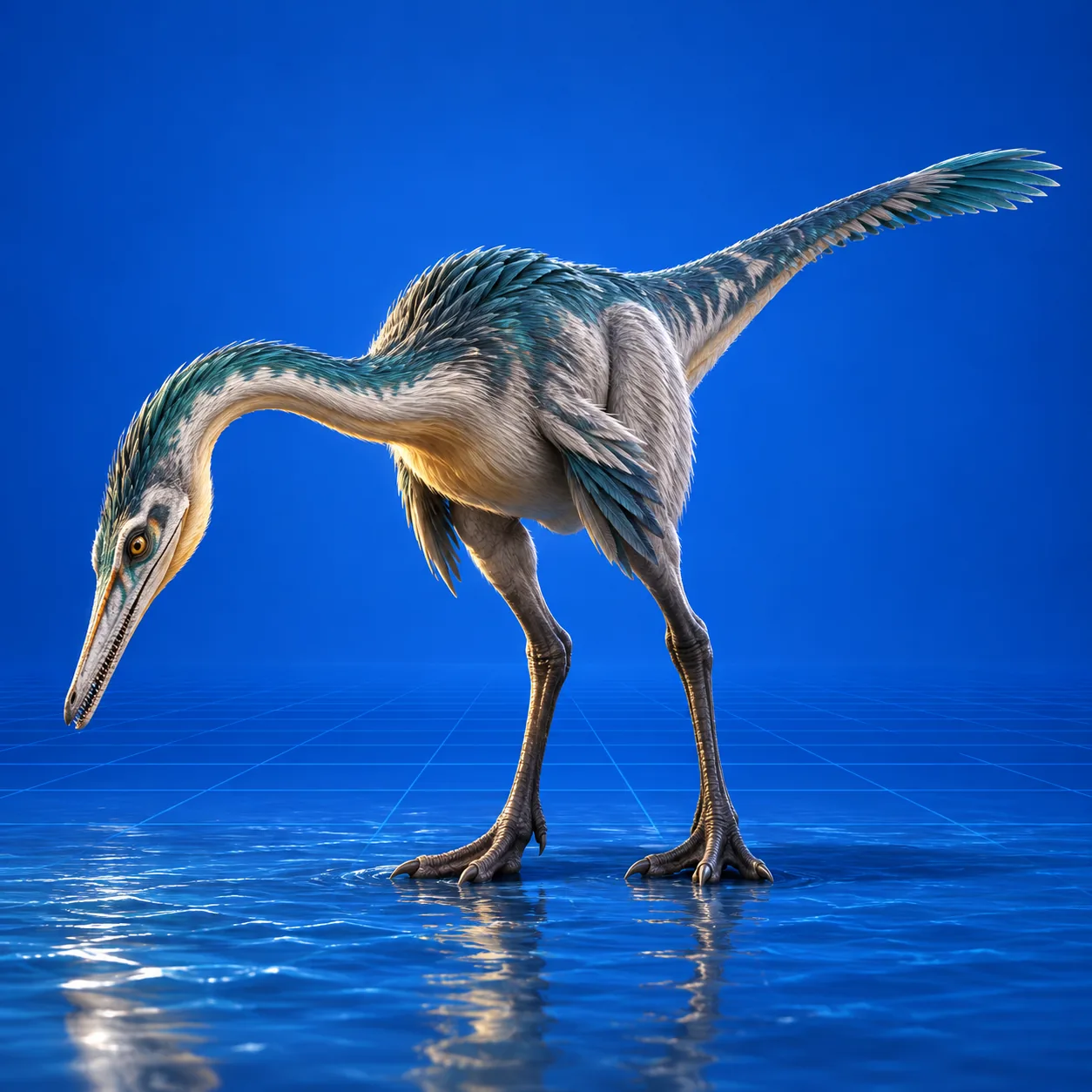
AI-generated, stylized game illustrations. These designs and growth stages are imaginative, not scientific reconstructions.
Pelecanimimus at a glance
- Diet
- Diet unresolved
- Its exact diet remains unresolved and is investigated through its bones and relatives.
- When it lived
- Cretaceous
- Group
- Ornithomimosauria
- Ornithomimosaurs
- Fossil locations
- Spain
- Places where fossils have been found
Beyond the game
The real Pelecanimimus
Pelecanimimus lived during the Early Cretaceous. Its exact diet remains unresolved and is investigated through its bones and relatives.
The fossil was found at Las Hoyas, in Cuenca, Spain. This site preserves animals and details of their bodies that help reconstruct an Early Cretaceous ecosystem.
Its name means ‘pelican mimic’, but resemblance does not prove it ate the same food as that bird. Its exact diet remains unresolved; the striking name must be kept separate from conclusions supported by fossils.
Its name means ‘pelican mimic’, but resemblance does not prove it ate the same food as that bird. Its exact diet remains unresolved; the striking name must be kept separate from conclusions supported by fossils.
Fossil discoveries
Selected fossil records · present-day map
Map references
Map: Natural Earth, public domain. Fossil records: linked collections and publications.A note on the science
The fossil was found at Las Hoyas, in Cuenca, Spain. This site preserves animals and details of their bodies that help reconstruct an Early Cretaceous ecosystem.
Sources & text credits
Explore the references behind this profile.
- Pelecanimimus
Wikipedia contributors · English source
Educational text adapted and translated from this article by Wikipedia contributors. The revision link, when captured in the source catalogue, identifies the source version.
Educational text adapted in English from the existing Wikipedia-backed Dinosgacha catalogue and linked articles by Wikipedia contributors.
Existing English translations have been selected and arranged for this encyclopedia. Repeated period and diet text is omitted where those fields already carry it. Unknown facts remain unfilled; unreviewed geological age phrases are omitted and period labels replace numerical ages.
The adapted educational text is available under CC BY-SA 4.0. This text license does not apply to the game illustrations.